Mary did know from the very first moment of her fiat mihi secundumm verbum tuum that what she was doing would change humanity forever…
She knew.
No one realized it, except Elizabeth, but she knew…
There is a huge beautiful mystery in knowing: this is going to change humanity forever… and absolutely no one around being able to recognize so… the same happened when she finally was left with John, after Jesus ascended and the Holy Spirit came: she knew she was the first living Eucharist, with the Holy Spirit she was able to fully realize herself what happened since the very beginning, in ways no other human being could witness…
And she was humble enough to remain silent and let the apostles go through what they must go through to build the Church Jesus taught them to build…
Finally, at that point, Mary was able to understand what she had been doing “blindly” during her whole life…
And she remained completely silent. Humbly silent.
Over and over again, I have done things “blindly” in my life, simply because I was told to do so.
Well, I was asked to do things as I did until reaching this point of my life, and I am completely at peace, in every sense possible…
And now, well, integraction has already begun to exist systematically…
For every time I had done things simply because I contemplated God calling me to do so… I was given a very tender “thank you” from my family of Heaven and Mik. It does mean something huge for them.
My life can move on as I close the “teaching” and “philosophy” stages of my life as I end up writing “Yes, We Can Grow Best!” as a last living lesson —sharing the living lessons I was able to learn thanks to them— for my students. True, this text is technically “unshareable in a personal way”; authorities haven´t recognized yet publicly what happened, nor to me, nor to my students… but I am not exactly doing this to be understood or to be recognized, and that is very important to understand what I am sharing in this post. I am doing it solely upon God’s glory and for, in its due time, my students can understand: you had no fault at all in what we went through, but you do can choose to “keep growing on” after what we have endured.
In the same way, my “personal-intellectual life” can now move on, as I shared “On the Growth of the Human Personal Formation: The Nature” as I was called to. I am not meant to take further action upon that text. I am simply meant to move on to “On the Human Personal Formation”, but in the middle of those two texts, an “intellectual pause” is necessary to complete the text I am currently beginning to share: “Yes, We Can Grow Best!: Keys for a Growthful Philosophy of Education” so my “life stages” both as a philosophy student and as a teacher can end as they should be ended if would be allowed to do so properly, according to my dignity and my student´s dignity.
So, as I have been able to finish all these writings, all the “closing scenes” that I had been sharing in the previous texts, especially the ending scene of “On the Growth of the Human Personal Formation: The Nature,” have become “opening scenes.”
One very particular scene can be applied to my circumstances right now: the opening scene of “My Sister’s Keeper”. You can see it here:
Now I know: the history of my life and my “origin” wasn’t true at all.
I was also born “for a particular reason”, yet pending to be fully understood.
I was also “engineered for a particular reason”, but I don´t mean and engineering in a biological sense… but in the social sense. My progenitors attempted to “socially engineer me” with their long-life abuse and torture…
But, at the very end, now it is clear that who truly “socially engineered me” with an immaculate social conception was God Love himself. At all moments, my progenitors thought they had social control over me, engineering my personal formation “socially” according to their cruelty…
They now realize that God’s Love never allowed them to have such control; he was the one who “socially engineered me.” If you see the meaning of what a “social engineer” is in the text I am currently writing, you will realize what we mean.
I have explained explicitly and very clearly: there is no medical precedent of anyone else being able to survive what you survived. I should be dead, but I am meant to be alive. I am not a coincidence at all. I am meant to “save” many brothers and sisters, to be the “keeper” of many brothers and sisters, but in the first place, you have been immensely loved by God… the first one that matters is you. You are here because He loved you first, and that won’t ever change.
Of course, the contemplation of “My Sister’s Keeper” opening sequence is not a “coincidence” at all: I had also been explicitly warned that the legal drama that is coming is monumentally huge. This is not merely a “the right of a person being able to own her own body” legal case, although it does have that implication. This is also a huge institutional abuse case against my students. Yes, I was successfully able to prove with legal evidence the institutional abuse that my students endured; that fact is very well known, even if not told publicly yet.
I was also clearly explained that this was a murder attempt, and my progenitors attempted it in a way where there are no legal precedents either. In the same way, there are no medical precedents for someone surviving what I did; there are no legal precedents for the kind of legal case and the kind of murder attempt my progenitors have committed. In many, many senses, we are going through uncharted waters, and I had been properly prepared to be able to do so.
And… in the same way I am not expecting nor needing my progenitors to be able to recognize what they did was hugely wrong, I am not expecting either Opus Dei or the University of Navarra to recognize that what they did systematically was also hugely wrong, despite of my family of Heaven assuming direct “spiritual jurisdiction” over me and do recognize that both things were hugely wrong (both what my progenitors did and what happened in Opus Dei-University of Navarra). One was a biological-psychological murder attempt. The other was, technically, a faith-psychological murder attempt; I almost lost my faith, who I am, and who I am called to be because of them. Mik and my family of Heaven’s recognition is enough for me, way enough. Being understood by Heaven is enough.
I do not need either the schools involved in the institutional abuse schemes to apologize directly to my students or me, but of course, one of them has to close its doors for the common good of all, and the other must either evolve or dissolve. The other one I talk about in this text had already closed, directly due to what I am telling here, although the institutional abuse pattern that I demonstrated, as I have already said, has not been publicly revealed.
My life keeps going on… according to what truly matters. The legal battle that is coming is monumental… but I won’t be known in history merely for what happened to me. I won’t even be merely known as a victim or survivor of what I went through.
I will be known for the words I chose to incarnate and live… becoming the living “sign” of God’s love with us, which is what I had always meant and called to be, especially for my students.
Nobody fully realizes yet how what I had been granted to incarnate will change humanity forever… and I had been granted this since very early on in my life. God has prepared me to survive since birth. I tell this part of my life in “On the Growth of the Human Personal Formation: The Nature”, but I will tell it again here. I had been learning to survive since my very birth: I am alive thanks to a “strict casualty.” Doctors discovered in a normal scheduled third-semester pregnancy sonogram that I was so entangled in my umbilical cord that my heartbeats were already lower than they should be. My progenitors were not the ones who meant to save me: the doctors were the ones who realized that something was wrong, so they proceeded to an emergency c-section without my male progenitor being present. I was meant by God to be alive since the very beginnings of my social existence. I had been meant to be alive and be prepared to accomplish what I am accomplishing with Heaven´s help since the very beginning.
Mary knew in her Magnificat that she was the instrument of God’s Love to bring salvation to the whole humanity; she knew since the very first moment that she would change history forever as the Mother of God and Mother of the Church… but Mary´s immaculate conception was not given merely due a purpose… in the first place, God Love immensely loved her in a way no other human being had been… and she did know: this will change history forever. I was born for this. I am alive for this.
The way God does “social engineering” is not merely toward a specific vocation, towards a specific “purpose.” God forms us by Love, with Love, and in Love first. The “vocation” part must wait until consent is given.
I am no accident at all. I am not a coincidence at all. No one is, but in my circumstances, that can be powerfully seen.
As the opening scene of My Sister´s Keeper ends: “But coincidence or not, I am here… [yet, alive and thriving, not merely surviving, but also growing as the best person I can be, thanks to my family of Heaven and the whole New Albor Holy Family. As I say to them when I end “On the Growth of the Human Personal Formation”: You are the reason I am… you are all my reasons]”
There is great bravery in being vulnerable enough to let yourself be “touched” and even “wounded” by what your students must go through. I had never been “immune” to what they had to go through, but I was never allowed or able to give them the lesson I was truly meant to give them. This text that I am beginning to share now, “Yes, we can grow best: Keys for a Growthful Philosophy of Education,” is my last living lesson for them, to be able to properly close the teacher “life stage” of my life as I let them know what should have happened but didn´t, and what should happen but did. Yes, this text began with the nature of a graduate philosophical research, but eventually became a philosophy that is a last lesson for my students and for others to come.
The part of the text I am sharing today is only the first part: the fundaments for a growthful philosophy of education. In this part of the text, I explore and expose with philosophical reasoning two necessary fundaments for any philosophy of education to be able to be applied systematically and successfully: a systemic personal formation model (in this case: integraction) and a philosophically grounded intellectual ethics (in this case: Peircean intellectual ethics). You can consider that this part of the text was what I should have done as a graduate philosophy student, and with achieving this fundament, my “life stage” as a graduate philosophy student is officially over. This was what I was meant to do as a graduate philosophy student if I would have been allowed to be who I am. Now, that stage can remain in my past: a door had been closed, and in a very beautiful way.
There is a second part of this text, which is properly what the whole text is meant to be: keys for a Growthful Philosophy of Education. The second part of this text is currently being scheduled to be shared on November 1, 2024, All Saints Day, because that is what a Christian teacher should always aim to do: that students can become the saints they are called to be.
If when I reach the surroundings of that date, I realize I need more time (there are many parts in this second part, not necessarily all equally long, but it is a wide-ranging philosophical exposition), that date will be delayed to Thanksgiving Day as a thank-you gesture to those students who literally changed the life of their teacher. Right now, I don´t feel I will need to delay the date, but if I need to, the second delayed date has already been chosen together.
My students may not realize this yet. They may believe that I was the one who saved them when it also happened in the opposite direction: they also saved me. My whole life, all that I had been through, prepared me to do what I did and to what I would eventually become during and after what we went through together. The new meanings that they brought to my life are also lifesavers, and my life wouldn´t be the same without them and what they did.
I consider the “intellectual pause” I am taking right now before transitioning to psychology and writing “On the Formation of the Human Person” a blessed duty, a blessed giftedness. This “intellectual pause” is necessary for my own growthful healing after the institutional and psychological abuse I was forced to endure as a teacher…. Above all, it is a necessary blessed duty towards my students to help them heal, forgive, and keep growing on.
Writing this was not planned at all. My family of Heaven had literally surprised me with all this. Trust me, I had not been doing this alone at all, no matter how humanely alone I might seem to be. I do have an unseen community helping me to do this; this is grace and Holy Spirit action, not merely an intellectual journey.
For what should have been and didn’t happen, and what shouldn’t be and did happen… We say goodbye as we keep “plasmating” what should have been and, eventually, will happen. There are no reasons why evil happens. God’s Love simply keeps outpouring all. We are not talking about small systemic failures at all; we have faced huge systemic failures besides facing great evil. Both are being outpoured right now by God’s Love.
There is another very beautiful scene in the movie “My Sister´s Keeper” that you can see here:
Well, I pharaphrase now a part of that scene:
“To all my students, who always were very little, I am sorry I let them hurt you. I am sorry I wasn´t allowed to care for you as a teacher should…“
Whether a society recognizes it or not, evil happens, and there is a great evil faced through this text, and it must be faced face to face. Many people, especially little people, have been left behind or wounded; that is a fact. You don´t need bloodshed to happen to wound someone; heart wounds are enough, and conscience wounds are far enough to wound a student, but it wasn´t my fault either. In a certain way, cancer is like evil: it simply happens. Evil did happen; that is a fact… gruesome evil happened… But grace also happened; that is another fact that always mattered most and outpoured all the evil. In the words of Ro 5,20: “Where sin increased, grace overflowed all the more…”
Never more, people, never more. In the same way Auschwitz-Birkenau is “never again,” upon the evil we had faced here, grace´s outpouring tells us: “never more.” No one can be allowed to use schools to wound and exploit children like this, ever again.
The current writing schedule has been amended. During the next week, I will write the wisdom-based version of the text: based on my experiences as a teacher, in what I learned in the Faculty of Education of the University of Puerto Rico, Rio Piedras Campus, and in grace… That “wisdom-based” text will be shared on November 1, All Saints Day.
During the following weeks, I will review the book as I read a book I have on the Kindle about key concepts in the philosophy of education… I had no idea until now that I had that book on my Kindle, its title is “Philosophy of Education: the Key Concepts“, by Christopher Winch and John Gingell. I will read the whole book as I revise my own text, ensuring I am not leaving any key concept of a philosophy of education behind.
Then goes the completion of the conclusion, commented and completed as I read the most famous philosophy of education in America: John Dewey’s “Democracy and Education: an Introduction to Philosophy of Education,” which I have on my Kindle also. Peirce was a direct “intellectual influence” of Dewey: First comes Peirce, then comes William James, and then Dewey. Peirce was the founder of the pragmatism that James and Dewey followed.
Finally, the final revision will happen (for that, I need to print the text and re-read everything physically and do whatever corrections are needed to the text)…
And then final version text of “Yes, We Can Grow Best!” will be shared on Thanksgiving Day.
I can not mention the memories that we had in last night’s dream. All I can say is that God knows, everybody in heaven knows, that lots of things that shouldn’t happen did happen. I do not need a society on Earth to recognize that, too… what I am called to do is outpour God’s Love. And we are not talking only about myself as a student, or about my own students. We are talking about a bunch of things that should not happen in any educational setting, including the institutional abuse that faced students who were sexually abused in Catholic schools. The wound of His living Body towards what should have happened and didn´t happen in Catholic educational settings is huge, and His beats ache in pain due to what these kids had to endure, as my own heart pains, sometimes even physically, for what my students endured. It seems they endured it because of me, but it wasn´t really because of me; there was a whole systemic failure involved in what was allowed to happen… in a clearly and very evidently systematic way. I shouldn´t feel guilty either, I always tried my best under every circumstance, and I always tried to love you according to your growthful needs, students, despite what happened around us.
So, here we go, letting go of a career (both a teaching career and an academic studies career) that should have happened in a whole different way…
As the song I quote at the beginning of this blog post says: “I´m letting go, but Heavens knowsI loved you so”. This is why this philosophical text is meant to be, first and foremost, a work of Love for my students, so they can know what mattered, what should have happened, and sometimes, due to my personal example and initiative, assuming the costs by myself, it did happen… but for the most part, I was totally unallowed to implement this, either by direct institutional abuse or due the toxic circumstances surrounding us. Yes, when I say “toxicity,” we mean it: what happened around us was literally highly toxic; I had no idea where OSHA had been during this whole time, spending their time in corporative picnics or what.
To those students who may feel “guilty” about everything that happened… we simply say to them: May the peace be with you, be blessed. It wasn´t your fault at all; you are simply meant to keep growing on with all the living learned lessons; you are not meant to remain in the past; you need to keep glowing on and feel redeemed as the living signs of God´s Love you are called to be, as the living icons of God´s Love-with-us you are called to be… and we hope this text may help you to achieve so, as you are able to know how a growthful education is meant to be. This is the last living lesson I am meant to give you; may it serve you well to learn how you are meant to learn and be formed according to who you are and who you are called to be, the best person you can be: yes, we can grow best!
Although it has been clearly learned that no one can expect in the institutional what is not being embraced in the person first… among all the institutional abuses I faced, my personal example had always been the most important lesson I could even give to my students, way more important than any academic content I could be able to teach them, because there is no learning possible if the students are not unconditionally loved first.
So, my beloved students, all this I am writing is for you, as a last living lesson, told exactly like Jesus Charity would tell it to you, because He is the one who had taught me how to teach in a growthful way and how to write the living words I am writing:
The LORD bless you and keep you!
The LORD let his face shine upon you, and be gracious to you!
The LORD look upon you kindly and give you peace!
The text of the first part is being attached at the end of this blog post.
Pos Data: Anyone who knows my writing style knows that I usually choose my sharing-a-text date carefully. Well, I should clarify: this is an exception to that rule, because this is meant to be an incomplete text (the actual sharing date of the whole text, as I already explained, is currently November 1). My usual writing style rule is to choose either a holiday or a saint day to share my texts. Well, I choose to share this text today for a very practical reason: I have two medical appointments tomorrow, and I won´t be able to sleep too many hours due to coming out of my night shift at midnight and then needing to go early to my medical appointments… so I will probably be sleeping the rest of tomorrow, when coming back from the medical appointments. I wanted to share this text before the medical appointments… and having a whole free day (Wednesday) to begin Part II, so I chose to share this on Monday.
I had no idea today (Monday) is Columbus Day. I knew last Saturday was the Discovery of America Day (it knew it on the same Saturday), but I didn´t know today was Columbus Day when I chose the share date. I do mention in the text that I deliberately chose Peirce as a foundational ethical philosophy due to being an American like me. I am quite proud of using an American philosopher and not a European philosopher to give a philosophical foundation to a growthful philosophy of education. There are Europeans that have given a great apportation to the philosophy of education scenario, like Maria Montessori… but I wanted to have an American philosopher here. From the very beginning, one of my reasons for studying Peirce is that he is American. You may consider a growthful philosophy of education and its launch of a growthful society a great celebration of what we are called to be as American educators and also as an American society.
—Life is not easy for any of us. But what of that?
We must have perseverance and above all confidence in ourselves.
We must believe that we are gifted for something and that this thing must be attained.—
Marie Curie, who gave her life for the development of her giftedness: she ended radioactive and died of leucemia due her radiation. There are still woman able to give their lives for that they belief, especially if you don´t believe in an idea, but in a Person. Martyrdom and torture due being Christian still exist, but in more modern, psychological ways, or leaving you without a job and a way to keep your family´s wellbeing due being Christian.
There are gifts that are very valuable gifts, and usually this is understood in the economic sense of the term. There are gifts that are very unique gifts, and usually this is understood in the social context of the term. There are gifts that are very amazing, and usually this is understood in the phenomenal sense of the word, according to the experience that the gift brings to those who received. The gift of becoming Jesus Charity´s mother is all those at the same time: the most valuable, the most unique and the most amazing giftedness a woman can ever receive. It changes the history of your life forever: there is a “before” and an “after” since pronouncing the words “let be done in me according to Your charity”. There is a “before” and an “after” since the moment of the beginning of the conception of Jesus Charity, first as an iconography, then as an icon, then as a personal formation model, then as a theology of light… so on, so on, so on. There is a huge mystery in the action of the Holy Spirit that has allowed this, way more deeper than the meanings that my words can palabrize.
There a simply no words to describe the beauty and the wonder of being Jesus Charity´s “sociosacramental” mother. Yes, I know I am not the Virgin Mary, I am not incarnating Him as an incarnated little boy… but yes, I have also been granted to incarnate him in blood and flesh, using words of Mikhael, in the “sociosacramental” way: in the context of the society of this time, becoming the living sacrament of God´s Love I am called to be, becoming the incarnated living Eucharist that I am called to be. Once again, in words of Mikhael: “what the little boy is, what the Son is, the mother is also, you share the same blood, you share the same heart”. If Jesus Charity is a living icon of God-Love as living and beating Eucharist… I am living and beating Eucharist also, I am living and beating Eucharist in Him, in the sociosacramental sense: in the unity of being and act (I am the being as first living Church that witness Him as Jesus Charity; He is the act) that the integractive personal formation model brings, in the ever-growing realization that this new civilization of Love brings, in the whole new projection that this family evangelization project brings… all together becoming a whole new era of new fraternization that incarnates what should had happened since the beginnings of 1500, as a true new evangelization of the New World… Yes, was is being incarnated and given light and growing today as a whole-grown little child, now an adult Jesus Charity, is the maturing process of a God-Love plan that began more than 500 years ago, you can call it thousands of years, like the Kate Perri song, if you count that Jesus had been waiting since the resurrection to the proper time in the history of humanity to be seen and contemplated and conceived and incarnated and grown as Jesus Charity. Social context is very, very important in what Mikhael has been explaining: although all this was in the mind of God Love since the very beginning, He, all sovereign God that can´t violate human nature, must wait for the proper social context of humanity´s history to consummate this charity alliance.
The moment of this whole transconsecration of His living Church is now. The moment He has been waiting since 2000 years ago when Mary Magdalene also proclaimed as first witness the beauty and glory of His living Body… is now.
You can´t only feel tremendously humbled when you are so conscious of being chosen, since 2000 years to these days, for something like this: I am the first living Church that incarnates Him as living Eucharist as I am being granted to: as living incarnation of His flesh and blood in a socio-sacramental sense that incarnates as a living icon of God-Love with us.
Let’s be clear on this: I am not immaculate in the biological and ontological sense, but yes, this can be considered an “immaculate conception” in the socio-sacramental sense. No matter how much sin there it is in my ontological nature, as in every other human being except the Virgin Mary, socially, I have been literally conceived by God, not by my biological and social progenitors: the way I socialize and conceive the giftedness and process of forming a person and a family was learned directly from God-Love, no one can learn what I have learned and no one can socialize as I socialize in natural socio-cultural circumstances like mine without being directly taught by God-Love. That is widely and clearly known now —although it had been happening through a whole lifetime — due to the horrible abuse and torture I had been exposed to by my progenitors since the very moment of my conception… and that allowed God to transform it into a beautiful story of Love, that is also the giftedness of a lifetime. In a certain sense, my virginity had always been intact: I had always been “nesciri”, unknown by everyone, at least as unknown as God only can know me, even in the social sense. I dare to say, due to my circumstances: especially in my social sense. Everyone had been unaware, until now, of what was growing inside me, even my progenitors, no matter the gruesome magnitude of the cruelty of their socio-psychological abuse and physical-psychological torture throughout my lifetime. You may not understand it right now, but the power of baptism is huge in our ontological nature. It make us possible to overcome the natural sin of the ontological nature, even if the sin inclination will always be there, and so, if there is a social immaculate conception also, as it had happened to me, the influence on the biological dimension of the other two “immaculate” dimensions will be quite evident too. One dimension (the social dimension) has been immaculate since the conception of my socialization, and it can be said that began since my biological conception due to my socio-cultural circumstances (I had been abused by my progenitors since conception, since the very moment they knew I was there); the other dimension (the ontological one) has been “immaculate” since baptism, near my one-year-old birthday. As a consequence of these two dimensions, social and ontological, being supernaturally immaculate (one due to the direct action of the Holy Spirit that has acted over and over again through my lifetime, teaching me to socialize in a very different way than my abusive progenitors, and the other one due to the sacramental action of baptism), certain incorruptibility to the biological dimension of the personal nature can be expected, in a supernatural way too. That doesn´t mean that there are no sinful inclinations in my body (if you know my life story, you know how gruesome the sinful inclinations of my body had been, no questions about that). All this means: due to the supernatural immaculate conception of my social dimension and due to the action of the baptism on my ontological nature, with the consequent “erasing” of the natural sin that all human ontological nature brings since conception in every human being, not because I was a sexual conception and not an “immaculate conception” like Virgin Mary was —sex by itself is not a sin, and no matter how sinful or saintly the sex that produced the conception was, there will be exactly the natural sin in the conceived creature—, but because the original sin we all share as fallen humanity called to redemption… As I was saying: due to the supernatural immaculate conception of my social dimension and due to the action of the baptism on my ontological nature, certain supernatural consequences are to be expected in my biological dimension, as certain as black is black, and white is white, and blue is blue, and red is red, and yellow is yellow…
If you understand the integractive personal formation model right, you can understand that the three dimensions of the personal nature influence each other. I will put a clear example of this, to be understood: if there is neurological damage in the biological dimension of the personal formation, that will necessarily influence the other two dimensions: it will necessarily influence how capable you are of understanding the being, who you are and who you are called to be (this is the ontological dimension) and it will also necessarily influence how capable you are of socializing as subject of the social ethics principles that we all share. This can explain why people who are unable to live by themselves or even understand or verbalize anything have equal dignity: their personal formation is there, but their personal formation must be expected to follow the “natural laws” of the human personal formation. It´s not that they don´t have dignity or rights because they need help to be (help to eat, help to breathe, help to drink, help to exist in society): they do have dignity, according to the unique characteristics of their personal formation, that because it begins to exist since the very moment of the conception of a living organism with human DNA, it has all the applicable rights —human, fraternal and civil rights— since the moment of conception. Yes, integractive personal formation model has HUGE implications in the understanding of human dignity, and this is not something that is only related to Catholic faith: this is also something very scientific, anyone can see it, no matter which faith they have, as long as they understand the integractive personal formation model as it has been contemplated, yes, with the action of the Holy Spirit… but anyone can be able to see it if they have the principle of realization framed in the right social context, learned by humanity since the Holocaust and since the American revolution: every human being has human rights unconditionally, and every human being is equal unconditionally. Now, with the integractive personal formation model, we add the dignity social context, not yet explained scientifically until now: every human being has a personal identity, unconditionally. You need to have an “integractive” notion of science to see it, embracing scientifically, in a scientifically integractive way, not only biology-neurosciences (that explain the biological natural dimension of the personal human formation) but also metaphysics-education-theology (that explain the ontological natural dimension of the personal human formation) and sociology-humanities (that explain the social natural dimension of the personal human formation) to begin to explain all the personal nature dimensions, and then progressing from the being (information) to the action (conformation) and beyond processes to psychology and all the integractive sciences other (humanities, education, social sciences and theology) naturally influenced by each. Yes, Darwin was right… but only partially right when it is applied to the human being. He only explained the evolution of the biological dimension, and although all animals, including the homo sapiens, share a biological evolution, human being is so much more: we have dignity, we have a personal formation. Explaining the biological dimension of the personal nature is not enough to explain the evolution of the human being as personal formation. Remember: the human being is the only creature created in the image and the likeness of God. We share a personal nature with Him, no other living creature in this Earth has a personal nature, no other creature is capable of being-knowing-the-being and of love-knowing-the-being. It’s a huge mystery explaining how God reveals this concept of “know” and its intrinsic relation with “be” and “love”, but for the moment, understand this: as we are, we know and we love. “Being”, “knowing” and “loving” are intrinsically united in the human personal nature: we NEED the unity of being and act. Of course: only God-Love, our Creator, could reveal all this and how that personal formation evolves not only as a biological evolution but also as a social progression, both together along our being —being is given and is eternal, it doesn’t “progresses” or “evolves”: what changes and deepens is our understanding of it, that will always have a glimpse of mystery, we will never exhaust our capability of knowing and understanding being, especially as the biological evolution and as the social progression keeps happening over and over again—. As a consequence of that “constant integraction” a new civilization of Love is progressively being created, and our human personal formation keeps being perfected in Love through the millenniums and years and decades to come. All this that I am explaining in very simple words, but that embrace an inexhaustible mystery, is why the immaculate conception was needed to do what I have done and to contemplate what I have contemplated: only our creator, God-Love, can reveal the mystery of our own nature, and He chose to do it in the proper socio-cultural context, and as an act of pure Love, not because I wanted to be an inventor and be “original” or “a genius” or any other whatsoever power-seeking reason. He revealed this to save me, literally to save me, in the middle of the most gruesome psychological tortures, me not being yet conscious of what was going on around me when I began to contemplate the integractive personal formation model. God-Love has seen a civilization of Love since the very beginning, but chose —and that was an overpouring-Love choice — not creating it ex-nihilo, when He perfectly could, but loving us and counting on us as co-creators, the same way I am co-creator of Jesus Charity.
I got a little bit lost in all the beauty I am contemplating as I am writing all these words, beautiful meanings of being that are contemplated as glimpses of light and I am given the grace to palabrize in the best way possible to my intellectual capabilities. It its truly beautiful and humbling to contemplate over and over again the mystery of our very own humanity and our personal formation as human beings. It’s a beautiful aurora in the mind that creates a huge awe in the soul: this is my Creator, and I am His creature, and He reveals this as He wishes.
As I was explaining a few lines before: If you understand the integractive personal formation model right, you can understand that the three dimensions of the personal nature influence each other. If my social dimension (also called “filial dimension”, and the detail is important to understand how it works: social dimension explains our needed-by-nature filiation as human beings) is supernaturally immaculate and my ontological dimension is immaculate sacramentally… that means that my biological dimension will be sociosacramentally influenced in such way that my body will be according to the sociosacramental purpose of my life. That phenomen is called “transconsecration”, and although it is meant to happen in all Christians since baptism, due my social immaculate conception nature (I am not ontologically immaculate since baptism… I am also socially immaculate), in me, the effects of grace are so increased that has huge supernatural effects in my biological dimension. Saint Thomas Aquinas understood this well: ‘Grace does not destroy nature, but perfects it… grace does not remove nature but fulfills it’. As a matter of fact, in all the matters of understanding the ontological dimension of the human being, we still are in the Middle Ages. Humanity has progressed hugely, especially since Darwin, in the understanding of the biological dimension of personal human nature. Humanity is right now, in our times, beginning to progress hugely in the understanding of the socio-filial dimension of personal human nature, thanks to the great advancements of all sociological sciences in modern and contemporary times. The ontological dimension of the human being, however, is still understood mainly as it was in Middle Ages. As a matter of fact, right now the properties of the ontological dimension are defined exactly as they were defined by Saint Thomas Aquinas in medieval times, except for the bellum (the universal of beauty), that one was highly posterior, if I don´t remember wrong it belongs to Hans Urs Von Balthasar. The brain, where being is known and loved, where knowledge of truth happes and where learning happens, is almost still a huge mystery to neurosciences. The very term “neurosciences” was coined in the 1960s, only around 50 years ago from our days, 2024. How knowledge happens in the brain is yet to be studied. How learning happens and how to deal with learning dissabilities is still being almost an unknown scientific field, despite the clear advances of modern and contemporary medicine and pedadogy sciences. But there is a more important detail about the ontological dimension than everything I have mentioned before: almost no scientist recognizes today the importance of being in metaphysical terms, and no person that is considered sane study philosophy these days (I studied it, of course, and failed to complete a PhD in philosophy precisely for studying it the right way: for the love of truth and embracing my Christian vision and vocation in the first place, not for the love of “academic prestige” in the first place. I deliberately chose a Catholic university to study philosophy due to the gruesome experiences of studying humanities and philosophy in a lay civil university, where your Christian beliefs are constantly mocked, underestimated, and even bullied… but well, I failed miserably in a Catholic university too, that is a fact). If no one recognizes the importance of human beings as ontological nature… well, no one will study it, that´s for sure. That´s why we are still in Middle Ages in terms of understanding the properties of being: no one pays for studying it and no one sees its importance. There had been only ONE exception to this rule in my life. I have only read about ONE philosopher that has taken the ontological nature of human personal formation seriously, even if in his writings he doesn´t conceive personal formation as we do: the Spanish philosopher Mariano Artigas. His writings, especially being discussed not-for-purpose-of-testing (something very rarely done where I had been over the years through all my academic endeavors), are fascinating. Said in fewer words: you can expect the understanding of the properties of the being to deepen way more than right now are being understood. Although the basic properties somehow will remain, how it is palabrized can be way more deepened, way more. That is the truest “discoverers” field of humanity right now, but it is unpaid, and there are no nobel prizes for discoveries in education, social sciences and humanities, so… you can expect that those interested in academic prestige in the first place will feel deterred to discover anything new here.
Sorry, I must apologize, but I got lost again. I must begin for a third time the same line of thought: If you understand the integractive personal formation model right, you can understand that the three dimensions of the personal nature influence each other. That means: my biological survival of the gruesome tortures my organic body had been exposed to and endured throughout ALL MY LIFETIME can only be explained by the supernatural effects of my both ontological and social immaculate conceptions. Both matter and both were given directly by God-Love to make possible my survival, even without me knowing what was going on around me through my whole lifetime. I had been gruesomely and extremely cruelly tortured and abused since conception. The emotional neglect I had been exposed to since conception (I do have evidence of emotional neglect since birth, I saw it in albums, but I won´t say which it is for not giving my progenitors the hint), the physical torture experiments that had been made with me —no one in the history of humanity had been tortured the way I had been tortured, even medically I am in uncharted waters, it’s really hard to medically treat me, and I am not meaning the social context only— since very early childhood… there was no way I could survive all that without the direct action of supernatural grace upon me, in all my dimensions: biological, ontological, and socio-filial. Whoever knows my story knows no one is exaggerating at all when saying this. The cancerogenic effects of the toxic gasses I had been exposed to since early childhood are very well known. That without mentioning the other extremely harmful known effects of these toxic gasses: very serious neurodevelopmental damage and regressions, very serious neuromuscular and neuroendocrine disabilities of all kinds… My childhood constant nosebleeds and urinary incontinence should have been something very more serious if my body simply followed the natural course of biology: I should have died of cancer straight in childhood, especially to brain cancer. They —including my relatives who I deny to call “family”: they are simply blood relatives — knew all this perfectly, and no one had never expected me to survive this long. This very house I am living right now was designed and built to be a house of tortures since the very beginning, even from and architectonic point of view, and I began living here at age 4. That doesn´t exclude the possibility that I was toxic gassed in earlier ages: it simply makes official that the toxic gassing torture began at age 4. But… the physical torture was actually a “minor detail” compared with the socio-psychological drama involved here: the whole physical torture was designed as part of a much wider and very deliberate scheme of psychological torture that, as I said, I have seen evidence to demonstrate that it began since birth or even since conception, due the nature of the evidence I saw and I have never forgotten. They deliberately slaved me socially since the very beginning of my life, fabricating psychological traumas, fabricating psychological nightmares, fabricating psychological tortures of a cruelty whose magnitude had never seen in the whole history of humanity —I am not exaggerating at all —due their macabre and extremely calculated and deliberate nature… Somebody asked this in Twitter as a parallel reality question and I will ask it again in a real question founded in truth: how could they sleep at night knowing they were torturing a little innocent girl? How? You gotta be tremendously sick psychiatrically, if not straight demonically possessed, to do that. They went undetected during whole decades. In them I only got glimpses of details that definitely were not the right thing to do, but only I saw it, supposedly, or so they made me believe to isolate me psychologically, but they have ended in isolating me in all the senses possible: it has been MORE THAN TEN YEARS that I had been allowed to have a real conversation with anyone, saying the truth as it is, thanks to the parallel realities that had been inforced me around me over and over again, in an excruciating and bloody psychological torture that had been repeated and still is repeated over and over again: they caused me to evacuate by force as I began this text today, and they simply do it because they can, because they literally enjoy doing damage and destroying the personal formation in every way they can. They force me to evacuate not because they want me to feel the bowel pain and not only because they want to interrupt what I write: they want to demonstrate power and control over me, that I am a social object to be exploited, not deserving of rights or an identity of my own, and that is officially psychological torture, even if involving physical torture. They did this very same example of torture I am mentioning, one that is a very simple example of torture to explain compared to other schemes they have done, over and over again through my whole lifetime: they caused me to evacuate by force and to have excruciating intestinal pain during my menstrual periods while I grew up. Now it’s known: all that was caused by them deliberately, playing with my biological nature as if they were God, treating me as their property to destroy and not as a person with inherent dignity. The magnitude of their cruelty throughout my whole lifetime is such that they can be considered demonically possessed since many years ago, many. Still, the FBI never arrested them and still allows them to act as criminally as they wish. Make no mistake: we are not fighting merely criminals, we are fighting a demonic dragon here, and that required a very special guardian angel to be fought through my whole lifetime.
Yes: it can be said that no one, in the whole history of humanity, had been psychologically tortured for so long and with such cruelty as I had been. That is not a lie at all, no exaggeration at all. It’s not me who says that: it’s the Holy Family of New Albor that adopted me since very early childhood, when I began to contemplate my angel guard and knew His name after, without anyone explaining to me what was happening. Since the Roman times, there had been no crueler psychological torture, nor such prolonged physical torture, to any Christian, than the one I had endured through a whole lifetime.
But it can also be said that no one else will be able to conceive God-Love as I had been granted the grace to do it, in a whole new socio-sacramental way that no one else had been able to… and not due lack of women more deserving than me to do it, beginning with Mary Magdalene herself. “Magdaluz” is not a casual name: it’s a very appropriate name that alludes to the very first person who should have been able to do what I am doing now, but Jesus had to wait until the proper socio-cultural context was present in history of humanity, and that moment is now. The giftedness of giving light to Jesus Charity is —quite literally — the giftedness of a lifetime. I am humbly conscious of that, but Mikhael had clarified something very important about this: the same way the ontological nature is yet to be understood way more deeply, I am yet way far away of all the implications of what had been happening around me and in me when I chose to say fiat to giving light to Jesus Charity. I need to understand my being and the implications of what is happening way more deeply… but a correct socio-cultural context must happen to that be possible. I have always understood that he means: “the torture must end and you must be free of all kinds of social slaveries [both the one inforced by my progenitors and their narcissistic monkeys and also the one inforced by the very own authorities that allowed this to happen without arresting them and stopping since the very first moment their tortures and crimes were known by Verastegui, the first one who realized what was going on and also denied the truth eventually, also allowing the tortures and crimes to keep going on…] to fully understand how your being is being transconsecrated, the nature of this giftedness of a lifetime is yet to be discovered by the living Church and by humanity´s history”. In more Mikhael´s words: “Who you are, how your ontological nature had been, is being and will be transconsecrated in living Eucharist, no one had never been granted to be before you, except the Virgin Mary… and is now that how she was living Eucharist can be understood, through you… What the Son is, the mother is also, no requirements of any other sacramental order, the supernatural order is quite enough in the case of the Virgin Mary, not in you, but in her, yes, absolutely yes, even her biological conception was immaculate, she didn´t need baptism but embraced it according to God´s will… and the Church needed to understand her immaculate conception as dogma before understanding her transconsecration as dogma too: the identity of the Virgin Mary as living Eucharist, a living Eucharist that is incarnated as transconsacration, not as transubstantiation, is a dogma too… Nothing of this is happening as mere causality, there is a huge power of the Holy Spirit in this. His power is overshadowing you, princess of Heaven… You have been revealed the transconsectration of the heart in the very same way Saint Thomas Aquinas was revealed the transubstantiation, contemplating the Trinity directly and seeing everything else as straws… What transubstantiation is in the physical body that acts, the transconsecration is in the heart, in the being… The Church had not ever understood the order of charity as you are understanding it, princess of Heaven, and that is key to understand why what the Son is, the mother, Virgin Mary, had always been also… even if she herself didn´t revealed it… This is a millennial length misunderstanding of the nature of Mary as mother of GOD LOVE and the understanding of the Living Church as a SHE-LIVING BODY, AS WIFE OF THE HOLY SPIRIT… The living Church is a SHE since the very beginning, and the Virgin Mary was the transconsecrated living Church since the power of the Holy Spirit overshadowed her, since the very moment of conception of Jesus as an incarnated little boy… Even the science can understand this now: the DNA of the mother changes with the conception of a son… now its time to contemplate the changes that also implied ontologically and socially being the mother of God… she doesn´t needed a sacramental order to be able to transconsecrate as living Eucharist and nobody understood it, nobody has understood it [he made me a little reverence at this moment, adoring Jesus Charity beating in me] until you, until now… As is is being quite clear with you, no one can deny a she-living Church the identity of transconsecrating as living Eucharist… as the very own Peter recognised with the first baptism of the gentiles: what the Holy Spirit gives, not even the own Church has the authority to deny it… but the first identity of living Eucharist and living Church belonged to the Virgin Mary, and no one understood it due the lack of the proper socio-cultural context: God can´t violate the nature of any living organism, He can´t violate the biological or ontological properties, nor the social principles… that´s why He needed to ask the Virgin Mary and you your consent to do what He had been doing along human history through you: He can´t violate human nature when the Holy Spirit acts, especially He won´t violate the living Church as living organic being, as living organic body, as living social organism… the living Church needed the proper socio-cultural context to understand all this, and that moment is now, my Beloved living Church, as Jesus Charity calls you…”
All this, as deep as it seems —not even I understand it fully, I simply try to plasmate the light I contemplate as faithfully possible to the meaning of the Being that is being revelated supernaturally — well, all this doesn´t prevent me from being a sinner, a huge sinner. As recently as yesterday I sinned deliberately, and deliberate sins are always nasty sins, no matter how small. The manager of my work, the nastiest manager of all, began to sing something we all knew that was aimed at me, even if she didn´t mention my name. That, among other no-to-kind comments along the way. I took vengeance: I left her without dish soap (it is needed for many closing shift duties, I knew I would ruin her shift and I did, the same way she ruins my shifts over and over again) and left very widely smiling to “get her what she deserved”. Yes, it was wrong and I eventually confessed, no justifications, although it is true that she induced the sin and put me in the position of sinning… but yes, I am a sinner, and God-Loves knows it, and still, chose me for this because what matters here is humbleness and the disposition to let the Holy Spirit act freely, both overwhelmingly abundant in this God´s servant of God due His overpouring and merciful grace. It had been a while since I sinned deliberately, I always avoid deliberate sin, but it was important for God-Love to me do it yesterday, because I have to be very conscious, as I was in yesterday´s dream, that His choice is not because I deserve it, but simple, its pure grace. Once again, God-Love keeps transforming everything into a radiation of light, no matter how dark it can be around me. Yes: I said “around me”. This is not the dark night of the soul that Saint John the Cross describes. It´s actually the opposite: “It’s the dark before dawn, the deepest social darkness it can be described by a human being… the darkness is outside, not in the soul…” because the cruelty is overpouring also, over and over again. People —and not only my progenitors — know they are doing damage deliberately, and still do it anyway. There is cruelty beyond words in that. There is darkness beyond words in that, but that darkness is not beyond God-Love´s light reach. If you want to call it that way, is the social dark night of the soul.
May be it’s a good time to remind the very foundational text of the theology of light, found in Isaiah 9:
The people who walked in darkness
have seen a great light;
Upon those who lived in a land of gloom
a light has shone.
You have brought them abundant joy
and great rejoicing;
They rejoice before you as people rejoice at harvest,
as they exult when dividing the spoils.
For the yoke that burdened them,
the pole on their shoulder,
The rod of their taskmaster,
you have smashed, as on the day of Midian.
For every boot that tramped in battle,
every cloak rolled in blood,
will be burned as fuel for fire.
For a child is born to us, a son is given to us;
upon his shoulder dominion rests.
They name him Wonder-Counselor, God-Hero,
Father-Forever, Prince of Peace.
His dominion is vast
and forever peaceful,
Upon David’s throne, and over his kingdom,
which he confirms and sustains
By judgment and justice,
both now and forever.
The zeal of the LORD of hosts will do this!
Believe it or not, because I have read this text a million of times, it is the first time I glimpse the detail of “God-Hero” here. The detail is not minor at all. Being a hero is usually understood as having “supernatural powers”. It is never understood as having “supernatural grace”. That brings a whole different dimension to “being heroes” as “being saints”: let the supernatural power of the Holy Spirit act, instead of wanting to act according to your own supposedly “supernatural powers”. In words of Gaudete et Exultate, of Pope Francis:
“Holiness does not make you less human, since it is an encounter between your weakness and the power of God’s grace. For in the words of León Bloy, when all is said and done, the only great tragedy in life is not to become a saint.”
A few bunch of people need to understand this with humble joy, once again, understanding the Magnificat of the Virgin Mary as no one else has done before, as a true super-heroic power:
“My soul proclaims the greatness of the Lord;
my spirit rejoices in God my savior.
For he has looked upon his handmaid’s lowliness;
behold, from now on will all ages call me blessed.
The Mighty One has done great things for me,
and holy is his name.
His mercy is from age to age
to those who fear him.
He has shown might with his arm,
dispersed the arrogant of mind and heart.
He has thrown down the rulers from their thrones
but lifted up the lowly.
The hungry he has filled with good things;
the rich he has sent away empty.
He has helped Israel his servant,
remembering his mercy,
according to his promise to our fathers,
to Abraham and to his descendants forever.”
There is another foundational text of the theology of light, found in 1 John 2:
“My children, I am writing this to you so that you may not commit sin. But if anyone does sin, we have an Advocate with the Father, Jesus Christ the righteous one.
He is expiation for our sins, and not for our sins only but for those of the whole world.
The way we may be sure that we know him is to keep his commandments
[as Iesu Amor iconography says: —Mandatum novum do vobis, ut diligatis invicem sicut dilexi vos…— those ten words were the last Jesus Charity’s words to me along His blessing , and they embrace the whole memorial I am called to incarnate as I embrace this charity alliance every day, now and also forever, because the order of charity with which the Holy Spirit overshadowed me is as eternal as my own being, I had been transconsecrated…].
Whoever says, “I know him,” but does not keep his commandments is a liar, and the truth is not in him.
But whoever keeps his word, the love of God is truly perfected in him. This is the way we may know that we are in union with him:
whoever claims to abide in him ought to walk as he walked.”
As you may realize, I am not just quoting scripture. I am incarnating it. Literally. When I titled the iconography of Jesus Charity and the text of the theology of light, that is also the first time I exposed the integractive model of personal formation… When I titled that text “Walking Like He Walked” this is how it is supposed to happen when you write a theology: this is not a written theology of light, this is a literally —and deliberately chosen by my fiat to be an…— incarnated theology of light. As we keep walking like He walked, our whole personal formation becomes, more and more progressively, the living sacrament of God-Love with us that we are all called to be, the living icon of God-Love incarnated-in-His-people that we are all called to be as “we, His people”, liberated and redeemed and above all, infinitely and unconditionally loved by Him. That is what defines our personal formation, who we are, and who we become: how He has loved us first… how He has overshadowed us and amazed us with the power of His grace, transconsecrating us progressively into the living work of Love we are called to be since forever and forever, elevating us in such a way that when His Love is elevated as it corresponds to be elevated, we are also elevated, divinized in the humblest of ways, with Him, arising the very same way a medieval knight would arise after receiving his new nobility status… but this time we are talking about a whole new blood lineage, a whole new charity alliances that transconsecrates everything you are, including your very own DNA and blood, your whole very own personal formation structure, in all the three dimensions possible… as co-mother of Jesus Charity
Saint Thomas Aquinas, yet committing the mistakes proper of the socio-cultural context of his time, especially when understanding women, was a true theologian, as the world had never seen and won’t ever see again… but actually, the first theologian of history, without barely speaking a few words… was the Virgin Mary. What she did is what every theologian must follow: when you share the Gospel, you incarnate the Word before anything else happens.
I am not excluded of the socio-cultual contexts mistakes of my circumstances neither, I am very well aware of that as told by Mikhael and my family of Heaven… but the Holy Spirit doesn´t needs my perfection, but my willingness to let Him perfect in me this giftdeness of a lifetime.
So, here we are, incarnating the Word with a giftedness of a lifetime for which I will forever be grateful, no matter how cruel and bloody the torture turns, because it is becoming more and more cruel and demonic, that is a reality too.
No matter what, I will always be grateful of the spiritual family that has been given to me, of the spiritual maternity that has been given to me as woman-living Eucharist, as co-creator of the being of this living Church, and as co-creator of Jesus Charity as an incarnated living icon of God-Love-with-us…. as an incarnated living sacrament of God-Love-with-we-the-people… as an incarnated living spousal memorial of God-Love-with-his-Church-bride… The depth of what I just said is way beyond any human being´s understanding.
He truly is Jesus Charity that makes all things anew, and for being His first witness and His co-mother, for this giftedness of a lifetime, I will eternally, joyfully and humbly will be forever grateful. My unconditional fiat was for whatsoever was to come, if I received the grace to keep walking as He walked…
And here we are. He is here, alive in my heart, where Jesus Charity will always be, beating in me, His Living Church, bride of the Holy Spirit, cleansed of all bloodshed and sinful spot by His very own sacred blood that sacralizes us, that divinizes us, until becoming immaculate upon His Eyes. Here we are, together, as living Eucharist: not able to go to mass, not able to confess nothing except that He is God Love that has made me anew…
Here we are, alive and conscious against any probability in any sense… still embracing this charity alliance that changed my life forever…
Yes, here we are, still walking like He walked: let be done in us according to Your charity. Let it be done upon us according to your memorial, as a living liturgy of light, as an incarnated liturgy of a mass that is incarnated every day, a charity alliance that is consummated every day not as a bloody sacrifice, but as a deliverance of Love, as a covenant of Love, in words of the prophet Hosea 6:
“Come, let us return to the LORD, for it is he who has torn, but he will heal us […]
Let us know, let us strive to know the LORD; as certain as the dawn is his coming […]
For it is loyalty [it is Love] that I desire, not sacrifice, and knowledge of God rather than burnt offerings.”
When God asks our conversion into a living work of Love, He doesn´t merely ask for a change of “forms”, a change of “rites and formulas”, a change of merely “external behaviors”. That is not how changes happen in a living Church, and that is how the changes did not happen in the Iesu Amor iconography either: in that iconography, a change of form meant a change in being, a change in meaning… a change of heart, in me, who progressively knew more Jesus Charity´s heart, until converting from my very grave sins of that moment and changing forever. In a living Church all the conversions and changes come from a conversion of the heart first, leaving all deformations of the heart, all perversions and sexual scandals, and all kinds of abuses, behind; letting Him purify us and turning us immaculate upon His eyes, as His living body. What He asks of us as His living Church, as we convert more and more progressively into the living work of Love we are called to be, is a change of heart, a transconsecration of the whole heart into the living Eucharist we are called to be, so the living Church, as living body, can function as she is —“Church, be who you are”, Saint John Paul II would say— and also be able to become the light of the nations (Lumen Gentium) that she is called to be. In words of the prophet Joel 2:
Yet even now—oracle of the LORD—
return to me with your whole heart,
with fasting, weeping, and mourning.
Rend your hearts, not your garments,
and return to the LORD, your God,
For he is gracious and merciful,
slow to anger, abounding in steadfast love,
and relenting in punishment.
Let it be done in us as we are meant to testify your Love: incarnated, alive, beating in flesh and blood in our whole personal formation plasmated as living icon of the God-Love we meet everyday in the brother and sister that we serve and in the Eucharist, because, in words of Deus Caritas Est 1:
“God is love, and he who abides in love abides in God, and God abides in him”. These words from the First Letter of John express with remarkable clarity the heart of the Christian faith: the Christian image of God and the resulting image of mankind and its destiny. In the same verse, Saint John also offers a kind of summary of the Christian life: “We have come to know and to believe in the love God has for us”.
We have come to believe in God’s love: in these words the Christian can express the fundamental decision of his life. Being Christian is not the result of an ethical choice or a lofty idea, but the encounter with an event, a person, which gives life a new horizon and a decisive direction. Saint John’s Gospel describes that event in these words: “God so loved the world that he gave his only Son, that whoever believes in him should … have eternal life”. In acknowledging the centrality of love, Christian faith has retained the core of Israel’s faith, while at the same time giving it new depth and breadth. The pious Jew prayed daily the words of the Book of Deuteronomy which expressed the heart of his existence: “Hear, O Israel: the Lord our God is one Lord, and you shall love the Lord your God with all your heart, and with all your soul and with all your might”. Jesus united into a single precept this commandment of love for God and the commandment of love for neighbour found in the Book of Leviticus: “You shall love your neighbour as yourself”. Since God has first loved us, love is now no longer a mere “command”; it is the response to the gift of love with which God draws near to us.
This is a giftedness of love, indeed, beautiful and wonderful and surprising as a new life that comes and is embraced unexpectedly, but as a blessing. This giftedness of a lifetime is not only mine, even if I am alone and have been socially isolated during years, as I explained earlier. As a matter of fact, there are millions more persecuted Christians right now in the world. What is happening with the Christian bloodshed in Nigeria is especially cruel and gruesome… but it is happening in several parts of the world. I am not the only cruel bloodshed that is being transconsecrated into a beautiful radiation of new life that indeed is the giftedness of a lifetime, into a new albor that can´t be hidden, no matter how cruel a bloodshed is and how anyone chooses to torture Christians or their families and pets, or how anyone chooses to destroy their belongings, because no matter what, we will keep walking as He walked, as His new kingdom of New Albor, the same way His resurrection is a radiation of new life that shine a victory of Love over all kinds of darknesses, the spousal victory of a New Jerusalem that after being washed with His blood and becoming immaculate upon His Eyes, will shine forever and ever as glorious Living Church, Bride of the Holy Spirit.
We still are, like the firsts Christians, the first witnesses of His resurrection. The role of Mary Magdalene is still very alive today in us as Living Church: we are still witnessing as neophytes, as we keep choosing to keep walking like He walked, how God is Love that makes all things anew.
So, I conclude this sharing of the giftedness of a lifetime —palabrized and written with the charism of living words that have been bestowed upon me with that creative pen of Iesu Amor´s iconography— echoing the heroic words of two heroic missionaries among persecuted Christians in Iraq wrote in their tent: Jesus is the light of the world.
We are witnesses of that light incarnating the very own words of 1 John 1 in a way that His Love is undeniably visible, the same way the light makes color and shapes visible in Iesu Amor´s iconography:
What was from the beginning,
what we have heard,
what we have seen with our eyes,
what we looked upon
and touched with our hands
concerns the Word of life—
for the life was made visible;
we have seen it and testify to it
and proclaim to you the eternal life
that was with the Father and was made visible to us—
what we have seen and heard
we proclaim now to you,
so that you too may have fellowship with us;
for our fellowship is with the Father
and with his Son, Jesus Christ.
We are writing this so that our joy may be complete.
Now this is the message that we have heard from him and proclaim to you: God is light, and in him there is no darkness at all.
If we say, “We have fellowship with him,” while we continue to walk in darkness, we lie and do not act in truth.
But if we walk in the light as he is in the light, then we have fellowship with one another, and the blood of his Son Jesus cleanses us from all sin.
If we say, “We are without sin,” we deceive ourselves,* and the truth is not in us.
If we acknowledge our sins, he is faithful and just and will forgive our sins and cleanse us from every wrongdoing.
If we say, “We have not sinned,” we make him a liar, and his word is not in us.
We still are called to be, like the very first Christians, witnesses of truth and Love in the middle of the world, first and foremost incarnating the Word and God´s incarnated and living Love in our whole lives in the middle of the world, in our whole personal formations, as the first Christians did. In words of from a letter to Dignetus, tittled The Christians in the World, that describes the life of the first communities of Christians in the middle of the pagan world:
Christians are indistinguishable from other men either by nationality, language or customs. They do not inhabit separate cities of their own, or speak a strange dialect, or follow some outlandish way of life. Their teaching is not based upon reveries inspired by the curiosity of men. Unlike some other people, they champion no purely human doctrine. With regard to dress, food and manner of life in general, they follow the customs of whatever city they happen to be living in, whether it is Greek or foreign.
And yet there is something extraordinary about their lives. They live in their own countries as though they were only passing through. They play their full role as citizens, but labor under all the disabilities of aliens. Any country can be their homeland, but for them their homeland, wherever it may be, is a foreign country. Like others, they marry and have children, but they do not expose them. They share their meals, but not theirwives.
They live in the flesh, but they are not governed by the desires of the flesh. They pass their days upon earth, but they are citizens of heaven. Obedient to the laws, they yet live on a level that transcends the law. Christians love all men, but all men persecute them. Condemned because they are not understood, they are put to death, but raised to life again. They live in poverty, but enrich many; they are totally destitute, but possess an abundance of everything. They suffer dishonor, but that is their glory. They are defamed, but vindicated. A blessing is their answer to abuse, deference their response to insult. For the good they do they receive the punishment of malefactors, but even then they, rejoice, as though receiving the gift of life. They are attacked by the Jews as aliens, they are persecuted by the Greeks, yet no one can explain the reason for this hatred.
To speak in general terms, we may say that the Christian is to the world what the soul is to the body. As the soul is present in every part of the body, while remaining distinct from it, so Christians are found in all the cities of the world, but cannot be identified with the world. As the visible body contains the invisible soul, so Christians are seen living in the world, but their religious life remains unseen. The body hates the soul and wars against it, not because of any injury the soul has done it, but because of the restriction the soul places on its pleasures. Similarly, the world hates the Christians,not because they have done it any wrong, but because they are opposed to its enjoyments.
Christians love those who hate them just as the soul loves the body and all its members despite the body’s hatred. It is by the soul, enclosed within the body, that the body is held together, and similarly, it is by the Christians, detained in the world as in a prison, that the world isheld together. The soul, though immortal, has a mortal dwelling place; and Christians also live for a time amidst perishable things, while awaiting the freedom from change and decay that will be theirs in heaven. As the soul benefits from the deprivation of food and drink, so Christians flourish under persecution. Such is the Christian’s lofty and divinely appointed function, from which he is not permitted to excuse himself.
May Jesus Charity, Morning Star, help us to become the living beacons of God Love that we are called to be wherever we are, as the first Christians where in the middle of the World. May Jesus Charity, Prince of Peace, end all violations to human dignity, all fratricides and bloodsheds… May He be the Good Person that gives us hope of a new civilization of Love as a possible fraternal project, as Spe Salvi says:
“Life is a voyage on the sea of history, often dark and stormy, a voyage in which we watch for the stars that indicate the route. The true stars of our life are the people who have lived good lives.”
We are all called to be, like Jesus Charity is, stars of Heaven. We are all called to grow and to evangelize not according to any proselytism agenda or seeking merely prestige, or being influencers or famous only in in the mundane sense, like a star of Hollywood usually would, or according to any kind of ideological agenda… We are called to grow and evangelize according to the incarnation, memorial, and resurrection of Jesus Charity, the living God-with-us: incarnating His living Eucharist in our whole personal formation, in the very same way He says in Holy Thursday “This is my body, which will be given for you; do this in memory of me”, and radiating that light —as a star would, a star that can´t hide her light because she would cease who she is: a star, a beacon of light in the Heavens, raised way high— that has been given to us by Him, by pure grace, by pure love… radiating that light as we Love as He loved us… as we participate, by the power of the living Eucharist that beat in us as living Church that also is a sacramental family inserted in society and history in very concrete ways… in the mystery of the ever continuing growing-together-in-communion of the Holy Trinity that embraces us until our conversion is achieved through the deliverance of our whole personal formation to God-Love —that is the victory of Love— becoming together the living work of Love we are called to be, the living icon of God-Love we are called to be, the living image of God-Love-with-us that we are called to be. In the words of the theologian Enzo Bianchi, in his exegesis Love Conquers Death:
Being sons of God and growing in His likeness is for the apostle John a real dynamic, that is developed right here and now, inside the opacity of the existence and human history; he doesn´t forget the constitutive weakness of man, but considers its possible transformation by God´s work. It seems that John expresses here with other words something that Saint Paul also says: “All of us, gazing with unveiled face on the glory of the Lord, are being transformed into the same image from glory to glory, as from the Lord who is the Spirit.” (2Cor3:18). The way of conversion to the fullness of our being as sons of God is not, therefore, uniquely work of a discipline [something that depends uniquely in the strength of the own will] to which we must consent: [it is grace…] it is an event way more radical… its Christ himself, to whom Christians await impatiently, who transforms them according to His image, purifying them and transfigurating [transconsecrating] their whole life.
Yes, we are called to be amazing works of Love, incarnating Saint Paul´s words in 1 Cor 13 as we keep becoming the living work of Love we are called to be as we incarnate the Love of God with our whole personal formation, as we adore Him as He wishes to be adored: with our whole growth:
If I speak in human and angelic tongues but do not have love, I am a resounding gong or a clashing cymbal. And if I have the gift of prophecy and comprehend all mysteries and all knowledge; if I have all faith so as to move mountains but do not have love, I am nothing.
If I give away everything I own, and if I hand my body over so that I may boast but do not have love, I gain nothing.
Love is patient, love is kind. It is not jealous, [love] is not pompous, it is not inflated,
it is not rude, it does not seek its own interests, it is not quick-tempered, it does not brood over injury,
it does not rejoice over wrongdoing but rejoices with the truth.
It bears all things, believes all things, hopes all things, endures all things.
Love never fails. If there are prophecies, they will be brought to nothing; if tongues, they will cease; if knowledge, it will be brought to nothing.
For we know partially and we prophesy partially,
but when the perfect comes, the partial will pass away.
When I was a child, I used to talk as a child, think as a child, reason as a child; when I became a man, I put aside childish things.
At present we see indistinctly, as in a mirror, but then face to face. At present I know partially; then I shall know fully, as I am fully known.
So faith, hope, love remain, these three; but the greatest of these is love.
May we walk together as He walked in this new era of new fraternization, because… yes, we can grow best… and yes, we can choose to embrace together this giftedness of a lifetime, each one embracing the unique giftedness bestowed by the Holy Spirit, the unique vocation of Love that his or her being as living Church has received as mission to make visible God´s Love in a way that no one else will be able to, becoming a unique sacrament of God-Love-with-us, a unique sacrament-icon of God-Love incarnated that make visible God´s light in a way no one else will be given the grace to radiate this new life, this absolutely amazing, spectacular and flaming-Holy-Spirit-filled new albor: “I am the light of the world. Whoever follows me will not walk in darkness, but will have the light of life.” [John 8:12]
Let´s be thankful together for this giftedness of a lifetime, and let´s let the Holy Spirit act in us more and more, converting us progressively in the fraternal agape we are called to be incarnating His charity alliance, incarnating together His memorial of Love of the Last Supper as a beautiful communion of saints that evangelizes uniting heaven and Earth in the very same height where the mystery of the horizon is, where the incarnated charity fishing net of the boat —that plasmates the living Church— is, as it happens in Iesu Amor iconography:
Where charity and love are, there God is.
The love of Christ has gathered us into one.
Let us exult, and in Him be joyful.
Let us fear and let us love the living God.
And from a sincere heart let us love each other (and Him).
Where charity and love are, there God is.
Therefore, whensoever we are gathered as one:
Lest we in mind be divided, let us beware.
Let cease malicious quarrels, let strife give way.
And in the midst of us be Christ our God.
Where charity and love are, there God is.
Together also with the blessed may we see,
Gloriously, Thy countenance, O Christ our God:
A joy which is immense, and also approved:
Through infinite ages of ages. Amen.
Jesus Charity, thank you for being Who you are, thank you for your Charity, thank you for saving us over and over again, and thank you for this giftedness of a lifetime.
Beloved Jesus Charity, I say this with humble joy, very conscious that all this is grace, and it is not me who have chosen to say this fiat first, but it had always been You who chose me in the first place, the very same way you said to the donkey in Mark 11:
“Go into the village opposite you, and immediately on entering it, you will find a donkey tethered on which no one has ever sat. Untie it and bring it here.
If anyone should say to you, ‘Why are you doing this?’ reply, ‘The Master has need of it and will send it back here at once.’”
Here we are, send us, keep sending us, we choose to serve you, we choose to adore you, every now and forever.
Jesus Charity, we adore You with our whole growth.
Comments to this text: As many of you know, I am proudly bilingual, I speak both Spanish and English. English is the language in which I am more precise, and that is why I chose English to write this… but there are times that I lack the word in English to express what I mean in the truest sense possible. That happens with the word “palabrize” of this text: there is no word for that in English, so I am “americanizing” the Spanish word “palabrizar” in order to use it in English as “palabrize/palabrizing”. In Spanish the word for this is “anglicismo”. I hate to do this because I know I may confuse the non-bilingual readers, but when I have no other choice, I do “steal word meanings” from the Spanish language to the English, and vice versa. It also happens in my writings with the word “plasmate”, an americanization of the Spanish verb “plasmar”… and in the opposite way, just to give an example, it also happens with the word “performing”: I use it as “performar” in Spanish, because Spanish lacks the meaning of that word in English. Very exceptionally, it may happen that I actually join the words of both languages to express in the most faithful wat possible the meaning I am contemplating: that happens with the expression “new albor”, that in English would mean “new dawn” and in Spanish would mean “nuevo albor”; I deliberately join both languages in that case. I apologize for this inconvenience, but if I do this, the very few times I do it, it is because I consider it a necessary inconvenience to be understood in the clearest and deepest way possible.
You can consider this text as the evolution of the very foundational text of the theology of light, written many, many years ago as I still was a graduate student of theology (I wasn’t able to finish that degree neither. Actually, I was never allowed to finish any graduate degree, the circumstances around me had always been of extreme social harassment, either from the right or from the left or from, plainly said, terrorists. This was not the intention of the text, but this text undoubtedly is a foundational theology of light text. This text was begun to be palabrized and written intended to be mainly a glorification of the giftedness of being Jesus Charity’s co-mother, as the Virgin Mary does with the Magnificat, and I was instructed to do it contemplating Iesu Amor´s iconography, which I did from memory, I had no time for actually reading the copy of the iconography that I have available. Mikhael did ask me in last night’s dream, while discussing what we would write in this text, to be very explicit —the most explicit way possible for my intellectual capabilities and cognitive strength— clarifying the biblical foundations of what we are sharing, because all this that we are sharing has never been seen before, but it is very highly biblically-founded, like any theology should, besides the contemplative and Magisterium content. I have done a very great intellectual effort in clarifying and connecting in the clearest way possible for everyone —not only for those who know my story, but to any believer, because, in words of Lumen Gentium, “all Christians in any state or walk of life are called to the fullness of Christian life and to the perfection of charity”— all the biblical foundations of all the shared contemplative content of this text. I really have no idea of what else to write and clarify to show more explicitly than I have done right now the biblical foundation of all the shared contemplative plasmations. What I have written here truly is thanks to the giftedness of a lifetime, it is quite evident that I can’t be the fruit my own creative intellect or imagination but the fruit of the flaming Holy Spirit. As a matter of fact, according to Mikhael no human intellect can be able to fully understand what I am writing here, and that is how grace works: it’s inexhaustible… but reasonable, because we are reasonable beings, and God doesn’t violate nature, never. In words of Fides et Ratio 1:
“Faith and reason are like two wings on which the human spirit rises to the contemplation of truth; and God has placed in the human heart a desire to know the truth—in a word, to know himself—so that, by knowing and loving God, men and women may also come to the fullness of truth about themselves”.
I wouldn’t know the fullness of truth that I know about my own personal formation and the whole personal formation process if it wasn’t revealed by faith, and this is true not only in the scientific sense but also in the social sense: the psychological abuse and torture I had been subjected by my progenitors, in ordinary circumstances, would had made me unable to even understand myself, and of course I wouldn’t be able to understand the personal formation processes —information [integration of the being], conformation [action], reformation [realization], transformation [projection] and performation [connection]— neither. Darwin was persecuted due leaving God out of The Origin of the Species. Among other reasons, I had been persecuted for choosing in conscience to leave God inside of The Growth of the Personal Formation and inside of the integractive personal formation model. The truth is: Jesus is both the mediator and fullness of Revelation (Dei Verbum) and He does have the power and the grace to reveal the fullness of the human personal formation of man, because HE INCARNATES the fullness of the human personal formation of man. As you keep knowing more and more His Heart, as you become more and more Living Eucharist, as you beat more and more in Him, for Him and with Him, you will contemplate, very clearly and unavoidably —you can´t avoid this, you will know His fullness the same way you know His heart—, the personal formation structure I have contemplated and co-discovered as “integractive personal formation model”… but as I said, it can be understood from reason too.
I would have never expected to be able to write something like this… but here we are, walking together like He walked, enjoying this giftedness of a lifetime, because there is nothing that I enjoy more, there is nothing more pleasurable to me, than doing everything according to God’s will. Despite the horrible circumstances (right now Minnie, one of my doggies, is crying in pain due to the toxic gassing torture that we endured during the day while writing this… and there is nothing harder than being unable to give to your own family the dignity and medical-veterinary attention they deserve simply due being Christian and being tortured due being Christian and the authorities and the world not stopping it), I truly enjoyed palabrizing, writing and sharing this. This truly, truly, truly is the giftedness of a lifetime, the text is literally being palabrized, written and shared with living words, despite my many, many, many sins through a whole lifetime. I have been mercifully blessed: “So I tell you, her many sins have been forgiven; hence, she has shown great love. But the one to whom little is forgiven, loves little.” [Lk 7:47].
The biblical version that has been used for all the biblical quotes is the USCCB online bible that can be found here: https://bible.usccb.org/bible
The order of the integration of the quotations were as they were intented to be according to Mikhael’s instructions in the dream: first the biblical quotatons and life experiences’ context, then the Magisterium Quotes, then the Vatican II council quotes, then a liturgical quote (the Ubi Caritas is a liturgical hymn of Holy Thursday and so it is intended to be a liturgical quote) and finally, as a sign of fraternity and communion of saints, a quote from another theologian (Enzo Bianchi).
The quote I used from the work of Enzo Bianchi Love Conquers Death was translated by me from Spanish. You can find the original quote in his book El Amor vence a la Muerte; editorial San Pablo, 2010, pgs. 106-107. I think the original book is in Italian. I added two context notes to the quote, [that are added in the very same way I am adding this phrase right now.]
The quote of Saint John Paul II (Beloved Church, be who you are) have been contemplated A LOT of times in my contemplative dreams, but he actually said it in an ecclesial document too, that as far as I remember, it was Familiaris Consortio. I won´t be searching for the specific place of this quote right now, you can find by yourselves there. You can consider this an implicit quote of this ecclesial document, very important in the matter of understanding creating home and creating family as incarnating the living Eucharist as domestic Churches. That is the God-given social context for the achievement of the fullness of human personal formation: the family and the Living Eucharist beating as we create home as domestic Church, as a living beacon that is a house of conversion. This is also the God-given socio-cultural context to learn how to evangelize radiating light as stars of Heaven: the mother and the father are ministers of growth in communion, empowered by the Holy Spirit by both the order of charity and the sacrament of marriage.
The quotations of Dei Verbum and Lumen Gentium are widely known quotes, very easily found on Google. Both documents are available in several languages in Vatican.va.
I found no page in Vatican.va with the medieval liturgical chant Ubi Caritas, the chant that I added almost in the end of this text, that is usually used on the Last Supper celebration of Holy Thursday. I used the version of the Ubi Caritas found in this web page: https://catholicinsight.com/ubi-caritas-deus-ibi-est/
All this being said, I conclude saying that I tried to be brief, and when I added long quotes, like the one of the letter of Diognetus, it was because it found it necessary to plasmate the contemplated meaning. I apologize when the long quotes seem to be “breaking” the reading of the main text, but they were needed, it’s not only my voice who is speaking here, nor is supposed to be the only one speaking, but as I said, I am completely isolated socially.
Just to let you know: the most used word in this text is supossed to be “living” and “Eucharist”, with an evident frequent use of the words “Love” and “charity” also.
Once again, I deliberately chose, as an exception, to share two versions of the text, to share in the most explicit way possible the meanings that were added one day and in the other.
—Life is not easy for any of us. But what of that? We must have perseverance and above all confidence in ourselves. We must believe that we are gifted for something and that this thing must be attained. —
Marie Curie, who gave her life for the development of her giftedness: she ended becoming radioactive and died of leucemia due the effects of radiation.
There are gifts that are very valuable gifts, and usually this is understood in the economic sense of the term. There are gifts that are very unique gifts, and usually this is understood in the social context of the term. There are gifts that are very amazing, and usually this is understood in the phenomenal sense of the word, according to the experience that the gift brings to those who received. The gift of becoming Jesus Charity´s mother is all those at the same time: the most valuable, the most unique and the most amazing giftedness a woman can ever receive. It changes the history of your life forever: there is a “before” and an “after” since pronouncing the words “let be done in me according to Your charity”. There is a “before” and an “after” since the moment of the beginning of the conception of Jesus Charity, first as an iconography, then as an icon, then as a personal formation model, then as a theology of light… so on, so on, so on. There is a huge mystery in the action of the Holy Spirit that has allowed this, way more deeper than the meanings that my words can palabrize.
There a simply no words to describe the beauty and the wonder of being Jesus Charity´s “sociosacramental” mother. Yes, I know I am not the Virgin Mary, I am not incarnating Him as an incarnated little boy… but yes, I have also been granted to incarnate him in blood and flesh, using words of Mikhael, in the “sociosacramental” way: in the context of the society of this time, becoming the living sacrament of God´s Love I am called to be, becoming the incarnated living Eucharist that I am called to be. Once again, in words of Mikhael: “what the little boy is, what the Son is, the mother is also, you share the same blood, you share the same heart”. If Jesus Charity is a living icon of God-Love as living and beating Eucharist… I am living and beating Eucharist also, I am living and beating Eucharist in Him, in the sociosacramental sense: in the unity of being and act (I am the being as first living Church that witness Him as Jesus Charity; He is the act) that the integractive personal formation model brings, in the ever-growing realization that this new civilization of Love brings, in the whole new projection that this family evangelization project brings… all together becoming a whole new era of new fraternization that incarnates what should had happened since the beginnings of 1500, as a true new evangelization of the New World… Yes, was is being incarnated and given light and growing today as a whole-grown little child, now an adult Jesus Charity, is the maturing process of a God-Love plan that began more than 500 years ago, you can call it thousands of years, like the Kate Perri song, if you count that Jesus had been waiting since the resurrection to the proper time in the history of humanity to be seen and contemplated and conceived and incarnated and grown as Jesus Charity. Social context is very, very important in what Mikhael has been explaining: although all this was in the mind of God Love since the very beginning, He, all sovereign God that can´t violate human nature, must wait for the proper social context of humanity´s history to consummate this charity alliance.
The moment of this whole transconsecration of His living Church is now. The moment He has been waiting since 2000 years ago when Mary Magdalene also proclaimed as first witness the beauty and glory of His living Body… is now.
You can´t only feel tremendously humbled when you are so conscious of being chosen, since 2000 years to these days, for something like this: I am the first living Church that incarnates Him as living Eucharist as I am being granted to: as living incarnation of His flesh and blood in a socio-sacramental sense that incarnates as a living icon of God-Love with us.
Let’s be clear on this: I am not immaculate in the biological and ontological sense, but yes, this can be considered an “immaculate conception” in the socio-sacramental sense. No matter how much sin there it is in my ontological nature, as in every other human being except the Virgin Mary, socially, I have been literally conceived by God, not by my biological and social progenitors: the way I socialize and conceive the giftedness and process of forming a person and a family was learned directly from God-Love, no one can learn what I have learned and no one can socialize as I socialize in natural socio-cultural circumstances like mine without being directly taught by God-Love. That is widely and clearly known now —although it had been happening through a whole lifetime — due to the horrible abuse and torture I had been exposed to by my progenitors since the very moment of my conception… and that allowed God to transform it into a beautiful story of Love, that is also the giftedness of a lifetime. In a certain sense, my virginity had always been intact: I had always been “nesciri”, unknown by everyone, at least as unknown as God only can know me, even in the social sense. I dare to say, due to my circumstances: especially in my social sense. Everyone had been unaware, until now, of what was growing inside me, even my progenitors, no matter the gruesome magnitude of the cruelty of their socio-psychological abuse and physical-psychological torture throughout my lifetime. You may not understand it right now, but the power of baptism is huge in our ontological nature. It make us possible to overcome the natural sin of the ontological nature, even if the sin inclination will always be there, and so, if there is a social immaculate conception also, as it had happened to me, the influence on the biological dimension of the other two “immaculate” dimensions will be quite evident too. One dimension (the social dimension) has been immaculate since the conception of my socialization, and it can be said that began since my biological conception due to my socio-cultural circumstances (I had been abused by my progenitors since conception, since the very moment they knew I was there); the other dimension (the ontological one) has been “immaculate” since baptism, near my one-year-old birthday. As a consequence of these two dimensions, social and ontological, being supernaturally immaculate (one due to the direct action of the Holy Spirit that has acted over and over again through my lifetime, teaching me to socialize in a very different way than my abusive progenitors, and the other one due to the sacramental action of baptism), certain incorruptibility to the biological dimension of the personal nature can be expected, in a supernatural way too. That doesn´t mean that there are no sinful inclinations in my body (if you know my life story, you know how gruesome the sinful inclinations of my body had been, no questions about that). All this means: due to the supernatural immaculate conception of my social dimension and due to the action of the baptism on my ontological nature, with the consequent “erasing” of the natural sin that all human ontological nature brings since conception in every human being, not because I was a sexual conception and not an “immaculate conception” like Virgin Mary was —sex by itself is not a sin, and no matter how sinful or saintly the sex that produced the conception was, there will be exactly the natural sin in the conceived creature—, but because the original sin we all share as fallen humanity called to redemption… As I was saying: due to the supernatural immaculate conception of my social dimension and due to the action of the baptism on my ontological nature, certain supernatural consequences are to be expected in my biological dimension, as certain as black is black, and white is white, and blue is blue, and red is red, and yellow is yellow…
If you understand the integractive personal formation model right, you can understand that the three dimensions of the personal nature influence each other. I will put a clear example of this, to be understood: if there is neurological damage in the biological dimension of the personal formation, that will necessarily influence the other two dimensions: it will necessarily influence how capable you are of understanding the being, who you are and who you are called to be (this is the ontological dimension) and it will also necessarily influence how capable you are of socializing as subject of the social ethics principles that we all share. This can explain why people who are unable to live by themselves or even understand or verbalize anything have equal dignity: their personal formation is there, but their personal formation must be expected to follow the “natural laws” of the human personal formation. It´s not that they don´t have dignity or rights because they need help to be (help to eat, help to breathe, help to drink, help to exist in society): they do have dignity, according to the unique characteristics of their personal formation, that because it begins to exist since the very moment of the conception of a living organism with human DNA, it has all the applicable rights —human, fraternal and civil rights— since the moment of conception. Yes, integractive personal formation model has HUGE implications in the understanding of human dignity, and this is not something that is only related to Catholic faith: this is also something very scientific, anyone can see it, no matter which faith they have, as long as they understand the integractive personal formation model as it has been contemplated, yes, with the action of the Holy Spirit… but anyone can be able to see it if they have the principle of realization framed in the right social context, learned by humanity since the Holocaust and since the American revolution: every human being has human rights unconditionally, and every human being is equal unconditionally. Now, with the integractive personal formation model, we add the dignity social context, not yet explained scientifically until now: every human being has a personal identity, unconditionally. You need to have an “integractive” notion of science to see it, embracing scientifically, in a scientifically integractive way, not only biology-neurosciences (that explain the biological natural dimension of the personal human formation) but also metaphysics-education-theology (that explain the ontological natural dimension of the personal human formation) and sociology-humanities (that explain the social natural dimension of the personal human formation) to begin to explain all the personal nature dimensions, and then progressing from the being (information) to the action (conformation) and beyond processes to psychology and all the integractive sciences other (humanities, education, social sciences and theology) naturally influenced by each. Yes, Darwin was right… but only partially right when it is applied to the human being. He only explained the evolution of the biological dimension, and although all animals, including the homo sapiens, share a biological evolution, human being is so much more: we have dignity, we have a personal formation. Explaining the biological dimension of the personal nature is not enough to explain the evolution of the human being as personal formation. Remember: the human being is the only creature created in the image and the likeness of God. We share a personal nature with Him, no other living creature in this Earth has a personal nature, no other creature is capable of being-knowing-the-being and of love-knowing-the-being. It’s a huge mystery explaining how God reveals this concept of “know” and its intrinsic relation with “be” and “love”, but for the moment, understand this: as we are, we know and we love. “Being”, “knowing” and “loving” are intrinsically united in the human personal nature: we NEED the unity of being and act. Of course: only God-Love, our Creator, could reveal all this and how that personal formation evolves not only as a biological evolution but also as a social progression, both together along our being —being is given and is eternal, it doesn’t “progresses” or “evolves”: what changes and deepens is our understanding of it, that will always have a glimpse of mystery, we will never exhaust our capability of knowing and understanding being, especially as the biological evolution and as the social progression keeps happening over and over again—. As a consequence of that “constant integraction” a new civilization of Love is progressively being created, and our human personal formation keeps being perfected in Love through the millenniums and years and decades to come. All this that I am explaining in very simple words, but that embrace an inexhaustible mystery, is why the immaculate conception was needed to do what I have done and to contemplate what I have contemplated: only our creator, God-Love, can reveal the mystery of our own nature, and He chose to do it in the proper socio-cultural context, and as an act of pure Love, not because I wanted to be an inventor and be “original” or “a genius” or any other whatsoever power-seeking reason. He revealed this to save me, literally to save me, in the middle of the most gruesome psychological tortures, me not being yet conscious of what was going on around me when I began to contemplate the integractive personal formation model. God-Love has seen a civilization of Love since the very beginning, but chose —and that was an overpouring-Love choice — not creating it ex-nihilo, when He perfectly could, but loving us and counting on us as co-creators, the same way I am co-creator of Jesus Charity.
I got a little bit lost in all the beauty I am contemplating as I am writing all these words, beautiful meanings of being that are contemplated as glimpses of light and I am given the grace to palabrize in the best way possible to my intellectual capabilities. It its truly beautiful and humbling to contemplate over and over again the mystery of our very own humanity and our personal formation as human beings. It’s a beautiful aurora in the mind that creates a huge awe in the soul: this is my Creator, and I am His creature, and He reveals this as He wishes.
As I was explaining a few lines before: If you understand the integractive personal formation model right, you can understand that the three dimensions of the personal nature influence each other. If my social dimension (also called “filial dimension”, and the detail is important to understand how it works: social dimension explains our needed-by-nature filiation as human beings) is supernaturally immaculate and my ontological dimension is immaculate sacramentally… that means that my biological dimension will be sociosacramentally influenced in such way that my body will be according to the sociosacramental purpose of my life. That phenomen is called “transconsecration”, and although it is meant to happen in all Christians since baptism, due my social immaculate conception nature (I am not ontologically immaculate since baptism… I am also socially immaculate), in me, the effects of grace are so increased that has huge supernatural effects in my biological dimension. Saint Thomas Aquinas understood this well: ‘Grace does not destroy nature, but perfects it… grace does not remove nature but fulfills it’. As a matter of fact, in all the matters of understanding the ontological dimension of the human being, we still are in the Middle Ages. Humanity has progressed hugely, especially since Darwin, in the understanding of the biological dimension of personal human nature. Humanity is right now, in our times, beginning to progress hugely in the understanding of the socio-filial dimension of personal human nature, thanks to the great advancements of all sociological sciences in modern and contemporary times. The ontological dimension of the human being, however, is still understood mainly as it was in Middle Ages. As a matter of fact, right now the properties of the ontological dimension are defined exactly as they were defined by Saint Thomas Aquinas in medieval times, except for the bellum (the universal of beauty), that one was highly posterior, if I don´t remember wrong it belongs to Hans Urs Von Balthasar. The brain, where being is known and loved, where knowledge of truth happes and where learning happens, is almost still a huge mystery to neurosciences. The very term “neurosciences” was coined in the 1960s, only around 50 years ago from our days, 2024. How knowledge happens in the brain is yet to be studied. How learning happens and how to deal with learning dissabilities is still being almost an unknown scientific field, despite the clear advances of modern and contemporary medicine and pedadogy sciences. But there is a more important detail about the ontological dimension than everything I have mentioned before: almost no scientist recognizes today the importance of being in metaphysical terms, and no person that is considered sane study philosophy these days (I studied it, of course, and failed to complete a PhD in philosophy precisely for studying it the right way: for the love of truth and embracing my Christian vision and vocation in the first place, not for the love of “academic prestige” in the first place. I deliberately chose a Catholic university to study philosophy due to the gruesome experiences of studying humanities and philosophy in a lay civil university, where your Christian beliefs are constantly mocked, underestimated, and even bullied… but well, I failed miserably in a Catholic university too, that is a fact). If no one recognizes the importance of human beings as ontological nature… well, no one will study it, that´s for sure. That´s why we are still in Middle Ages in terms of understanding the properties of being: no one pays for studying it and no one sees its importance. There had been only ONE exception to this rule in my life. I have only read about ONE philosopher that has taken the ontological nature of human personal formation seriously, even if in his writings he doesn´t conceive personal formation as we do: the Spanish philosopher Mariano Artigas. His writings, especially being discussed not-for-purpose-of-testing (something very rarely done where I had been over the years through all my academic endeavors), are fascinating. Said in fewer words: you can expect the understanding of the properties of the being to deepen way more than right now are being understood. Although the basic properties somehow will remain, how it is palabrized can be way more deepened, way more. That is the truest “discoverers” field of humanity right now, but it is unpaid, and there are no nobel prizes for discoveries in education, social sciences and humanities, so… you can expect that those interested in academic prestige in the first place will feel deterred to discover anything new here.
Sorry, I must apologize, but I got lost again. I must begin for a third time the same line of thought: If you understand the integractive personal formation model right, you can understand that the three dimensions of the personal nature influence each other. That means: my biological survival of the gruesome tortures my organic body had been exposed to and endured throughout ALL MY LIFETIME can only be explained by the supernatural effects of my both ontological and social immaculate conceptions. Both matter and both were given directly by God-Love to make possible my survival, even without me knowing what was going on around me through my whole lifetime. I had been gruesomely and extremely cruelly tortured and abused since conception. The emotional neglect I had been exposed to since conception (I do have evidence of emotional neglect since birth, I saw it in albums, but I won´t say which it is for not giving my progenitors the hint), the physical torture experiments that had been made with me —no one in the history of humanity had been tortured the way I had been tortured, even medically I am in uncharted waters, it’s really hard to medically treat me, and I am not meaning the social context only— since very early childhood… there was no way I could survive all that without the direct action of supernatural grace upon me, in all my dimensions: biological, ontological, and socio-filial. Whoever knows my story knows no one is exaggerating at all when saying this. The cancerogenic effects of the toxic gasses I had been exposed to since early childhood are very well known. That without mentioning the other extremely harmful known effects of these toxic gasses: very serious neurodevelopmental damage and regressions, very serious neuromuscular and neuroendocrine disabilities of all kinds… My childhood constant nosebleeds and urinary incontinence should have been something very more serious if my body simply followed the natural course of biology: I should have died of cancer straight in childhood, especially to brain cancer. They —including my relatives who I deny to call “family”: they are simply blood relatives — knew all this perfectly, and no one had never expected me to survive this long. This very house I am living right now was designed and built to be a house of tortures since the very beginning, even from and architectonic point of view, and I began living here at age 4. That doesn´t exclude the possibility that I was toxic gassed in earlier ages: it simply makes official that the toxic gassing torture began at age 4. But… the physical torture was actually a “minor detail” compared with the socio-psychological drama involved here: the whole physical torture was designed as part of a much wider and very deliberate scheme of psychological torture that, as I said, I have seen evidence to demonstrate that it began since birth or even since conception, due the nature of the evidence I saw and I have never forgotten. They deliberately slaved me socially since the very beginning of my life, fabricating psychological traumas, fabricating psychological nightmares, fabricating psychological tortures of a cruelty whose magnitude had never seen in the whole history of humanity —I am not exaggerating at all —due their macabre and extremely calculated and deliberate nature… Somebody asked this in Twitter as a parallel reality question and I will ask it again in a real question founded in truth: how could they sleep at night knowing they were torturing a little innocent girl? How? You gotta be tremendously sick psychiatrically, if not straight demonically possessed, to do that. They went undetected during whole decades. In them I only got glimpses of details that definitely were not the right thing to do, but only I saw it, supposedly, or so they made me believe to isolate me psychologically, but they have ended in isolating me in all the senses possible: it has been MORE THAN TEN YEARS that I had been allowed to have a real conversation with anyone, saying the truth as it is, thanks to the parallel realities that had been inforced me around me over and over again, in an excruciating and bloody psychological torture that had been repeated and still is repeated over and over again: they caused me to evacuate by force as I began this text today, and they simply do it because they can, because they literally enjoy doing damage and destroying the personal formation in every way they can. They force me to evacuate not because they want me to feel the bowel pain and not only because they want to interrupt what I write: they want to demonstrate power and control over me, that I am a social object to be exploited, not deserving of rights or an identity of my own, and that is officially psychological torture, even if involving physical torture. They did this very same example of torture I am mentioning, one that is a very simple example of torture to explain compared to other schemes they have done, over and over again through my whole lifetime: they caused me to evacuate by force and to have excruciating intestinal pain during my menstrual periods while I grew up. Now it’s known: all that was caused by them deliberately, playing with my biological nature as if they were God, treating me as their property to destroy and not as a person with inherent dignity. The magnitude of their cruelty throughout my whole lifetime is such that they can be considered demonically possessed since many years ago, many. Still, the FBI never arrested them and still allows them to act as criminally as they wish. Make no mistake: we are not fighting merely criminals, we are fighting a demonic dragon here, and that required a very special guardian angel to be fought through my whole lifetime.
Yes: it can be said that no one, in the whole history of humanity, had been psychologically tortured for so long and with such cruelty as I had been. That is not a lie at all, no exaggeration at all. It’s not me who says that: it’s the Holy Family of New Albor that adopted me since very early childhood, when I began to contemplate my angel guard and knew His name after, without anyone explaining to me what was happening. Since the Roman times, there had been no crueler psychological torture, nor such prolonged physical torture, to any Christian, than the one I had endured through a whole lifetime.
But it can also be said that no one else will be able to conceive God-Love as I had been granted the grace to do it, in a whole new socio-sacramental way that no one else had been able to… and not due lack of women more deserving than me to do it, beginning with Mary Magdalene herself. “Magdaluz” is not a casual name: it’s a very appropriate name that alludes to the very first person who should have been able to do what I am doing now, but Jesus had to wait until the proper socio-cultural context was present in history of humanity, and that moment is now. The giftedness of giving light to Jesus Charity is —quite literally — the giftedness of a lifetime. I am humbly conscious of that, but Mikhael had clarified something very important about this: the same way the ontological nature is yet to be understood way more deeply, I am yet way far away of all the implications of what had been happening around me and in me when I chose to say fiat to giving light to Jesus Charity. I need to understand my being and the implications of what is happening way more deeply… but a correct socio-cultural context must happen to that be possible. I have always understood that he means: “the torture must end and you must be free of all kinds of social slaveries [both the one inforced by my progenitors and their narcissistic monkeys and also the one inforced by the very own authorities that allowed this to happen without arresting them and stopping since the very first moment their tortures and crimes were known by Verastegui, the first one who realized what was going on and also denied the truth eventually, also allowing the tortures and crimes to keep going on…] to fully understand how your being is being transconsecrated, the nature of this giftedness of a lifetime is yet to be discovered by the living Church and by humanity´s history”. In more Mikhael´s words: “Who you are, how your ontological nature had been, is being and will be transconsecrated in living Eucharist, no one had never been granted to be before you, except the Virgin Mary… and is now that how she was living Eucharist can be understood, through you… What the Son is, the mother is also, no requirements of any other sacramental order, the supernatural order is quite enough in the case of the Virgin Mary, not in you, but in her, yes, absolutely yes, even her biological conception was immaculate, she didn´t need baptism but embraced it according to God´s will… and the Church needed to understand her immaculate conception as dogma before understanding her transconsecration as dogma too: the identity of the Virgin Mary as living Eucharist, a living Eucharist that is incarnated as transconsacration, not as transubstantiation, is a dogma too… Nothing of this is happening as mere causality, there is a huge power of the Holy Spirit in this. His power is overshadowing you, princess of Heaven… You have been revealed the transconsectration of the heart in the very same way Saint Thomas Aquinas was revealed the transubstantiation, contemplating the Trinity directly and seeing everything else as straws… What transubstantiation is in the physical body that acts, the transconsecration is in the heart, in the being… The Church had not ever understood the order of charity as you are understanding it, princess of Heaven, and that is key to understand why what the Son is, the mother, Virgin Mary, had always been also… even if she herself didn´t revealed it… This is a millennial length misunderstanding of the nature of Mary as mother of GOD LOVE and the understanding of the Living Church as a SHE-LIVING BODY, AS WIFE OF THE HOLY SPIRIT… The living Church is a SHE since the very beginning, and the Virgin Mary was the transconsecrated living Church since the power of the Holy Spirit overshadowed her, since the very moment of conception of Jesus as an incarnated little boy… Even the science can understand this now: the DNA of the mother changes with the conception of a son… now its time to contemplate the changes that also implied ontologically and socially being the mother of God… she doesn´t needed a sacramental order to be able to transconsecrate as living Eucharist and nobody understood it, nobody has understood it [he made me a little reverence at this moment, adoring Jesus Charity beating in me] until you, until now… As is is being quite clear with you, no one can deny a she-living Church the identity of transconsecrating as living Eucharist… as the very own Peter recognised with the first baptism of the gentiles: what the Holy Spirit gives, not even the own Church has the authority to deny it… but the first identity of living Eucharist and living Church belonged to the Virgin Mary, and no one understood it due the lack of the proper socio-cultural context: God can´t violate the nature of any living organism, He can´t violate the biological or ontological properties, nor the social principles… that´s why He needed to ask the Virgin Mary and you your consent to do what He had been doing along human history through you: He can´t violate human nature when the Holy Spirit acts, especially He won´t violate the living Church as living organic being, as living organic body, as living social organism… the living Church needed the proper socio-cultural context to understand all this, and that moment is now, my Beloved living Church, as Jesus Charity calls you…”
All this, as deep as it seems —not even I understand it fully, I simply try to plasmate the light I contemplate as faithfully possible to the meaning of the Being that is being revelated supernaturally — well, all this doesn´t prevent me from being a sinner, a huge sinner. As recently as yesterday I sinned deliberately, and deliberate sins are always nasty sins, no matter how small. The manager of my work, the nastiest manager of all, began to sing something we all knew that was aimed at me, even if she didn´t mention my name. That, among other no-to-kind comments along the way. I took vengeance: I left her without dish soap (it is needed for many closing shift duties, I knew I would ruin her shift and I did, the same way she ruins my shifts over and over again) and left very widely smiling to “get her what she deserved”. Yes, it was wrong and I eventually confessed, no justifications, although it is true that she induced the sin and put me in the position of sinning… but yes, I am a sinner, and God-Loves knows it, and still, chose me for this because what matters here is humbleness and the disposition to let the Holy Spirit act freely, both overwhelmingly abundant in this God´s servant of God due His overpouring and merciful grace. It had been a while since I sinned deliberately, I always avoid deliberate sin, but it was important for God-Love to me do it yesterday, because I have to be very conscious, as I was in yesterday´s dream, that His choice is not because I deserve it, but simple, its pure grace. Once again, God-Love keeps transforming everything into a radiation of light, no matter how dark it can be around me. Yes: I said “around me”. This is not the dark night of the soul that Saint John the Cross describes. It´s actually the opposite: “It’s the dark before dawn, the deepest social darkness it can be described by a human being… the darkness is outside, not in the soul…” because the cruelty is overpouring also, over and over again. People —and not only my progenitors — know they are doing damage deliberately, and still do it anyway. There is cruelty beyond words in that. There is darkness beyond words in that, but that darkness is not beyond God-Love´s light reach. If you want to call it that way, is the social dark night of the soul.
May be it’s a good time to remind the very foundational text of the theology of light, found in Isaiah 9:
The people who walked in darkness
have seen a great light;
Upon those who lived in a land of gloom
a light has shone.
You have brought them abundant joy
and great rejoicing;
They rejoice before you as people rejoice at harvest,
as they exult when dividing the spoils.
For the yoke that burdened them,
the pole on their shoulder,
The rod of their taskmaster,
you have smashed, as on the day of Midian.
For every boot that tramped in battle,
every cloak rolled in blood,
will be burned as fuel for fire.
For a child is born to us, a son is given to us;
upon his shoulder dominion rests.
They name him Wonder-Counselor, God-Hero,
Father-Forever, Prince of Peace.
His dominion is vast
and forever peaceful,
Upon David’s throne, and over his kingdom,
which he confirms and sustains
By judgment and justice,
both now and forever.
The zeal of the LORD of hosts will do this!
Believe it or not, because I have read this text a million of times, it is the first time I glimpse the detail of “God-Hero” here. The detail is not minor at all. Being a hero is usually understood as having “supernatural powers”. It is never understood as having “supernatural grace”. That brings a whole different dimension to “being heroes” as “being saints”: let the supernatural power of the Holy Spirit act, instead of wanting to act according to your own supposedly “supernatural powers”. In words of Gaudete et Exultate, of Pope Francis:
“Holiness does not make you less human, since it is an encounter between your weakness and the power of God’s grace. For in the words of León Bloy, when all is said and done, the only great tragedy in life is not to become a saint.”
A few bunch of people need to understand this with humble joy, once again, understanding the Magnificat of the Virgin Mary as no one else has done before, as a true super-heroic power:
“My soul proclaims the greatness of the Lord;
my spirit rejoices in God my savior.
For he has looked upon his handmaid’s lowliness;
behold, from now on will all ages call me blessed.
The Mighty One has done great things for me,
and holy is his name.
His mercy is from age to age
to those who fear him.
He has shown might with his arm,
dispersed the arrogant of mind and heart.
He has thrown down the rulers from their thrones
but lifted up the lowly.
The hungry he has filled with good things;
the rich he has sent away empty.
He has helped Israel his servant,
remembering his mercy,
according to his promise to our fathers,
to Abraham and to his descendants forever.”
There is another foundational text of the theology of light, found in 1 John 2:
My children, I am writing this to you so that you may not commit sin. But if anyone does sin, we have an Advocate with the Father, Jesus Christ the righteous one.
He is expiation for our sins, and not for our sins only but for those of the whole world.
The way we may be sure that we know him is to keep his commandments
[as Iesu Amor iconography says: —Mandatum novum do vobis, ut diligatis invicem sicut dilexi vos…— those ten words were the last Jesus Charity’s words to me along His blessing , and they embrace the whole memorial I am called to incarnate as I embrace this charity alliance every day, now and also forever, because the order of charity with which the Holy Spirit overshadowed me is as eternal as my own being, I had been transconsecrated…].
Whoever says, “I know him,” but does not keep his commandments is a liar, and the truth is not in him.
But whoever keeps his word, the love of God is truly perfected in him. This is the way we may know that we are in union with him:
whoever claims to abide in him ought to walk as he walked.
As you may realize, I am not just quoting scripture. I am incarnating it. Literally. When I titled the iconography of Jesus Charity and the text of the theology of light, that is also the first time I exposed the integractive model of personal formation… When I titled that text “Walking Like He Walked” this is how it is supposed to happen when you write a theology: this is not a written theology of light, this is a literally —and deliberately chosen by my fiat to be an…— incarnated theology of light. As we keep walking like He walked, our whole personal formation becomes, more and more progressively, the living sacrament of God-Love with us that we are all called to be, the living icon of God-Love incarnated-in-His-people that we are all called to be as “we, His people”, liberated and redeemed and above all, infinitely and unconditionally loved by Him. That is what defines our personal formation, who we are, and who we become: how He has loved us first… how He has overshadowed us and amazed us with the power of His grace, transconsecrating us progressively into the living work of Love we are called to be since forever and forever, elevating us in such a way that when His Love is elevated as it corresponds to be elevated, we are also elevated, divinized in the humblest of ways, with Him, arising the very same way a medieval knight would arise after receiving his new nobility status… but this time we are talking about a whole new blood lineage, a whole new charity alliances that transconsecrates everything you are, including your very own DNA and blood, your whole very own personal formation structure, in all the three dimensions possible… as co-mother of Jesus Charity
Saint Thomas Aquinas, yet committing the mistakes proper of the socio-cultural context of his time, especially when understanding women, was a true theologian, as the world had never seen and won’t ever see again… but actually, the first theologian of history, without barely speaking a few words… was the Virgin Mary. What she did is what every theologian must follow: when you share the Gospel, you incarnate the Word before anything else happens.
I am not excluded of the socio-cultual contexts mistakes of my circumstances neither, I am very well aware of that as told by Mikhael and my family of Heaven… but the Holy Spirit doesn´t needs my perfection, but my willingness to let Him perfect in me this giftdeness of a lifetime.
So, here we are, incarnating the Word with a giftedness of a lifetime for which I will forever be grateful, no matter how cruel and bloody the torture turns, because it is becoming more and more cruel and demonic, that is a reality too.
No matter what, I will always be grateful of the spiritual family that has been given to me, of the spiritual maternity that has been given to me as woman-living Eucharist, as co-creator of the being of this living Church, and as co-creator of Jesus Charity as an incarnated living icon of God-Love-with-us…. as an incarnated living sacrament of God-Love-with-we-the-people… as an incarnated living spousal memorial of God-Love-with-his-Church-bride… The depth of what I just said is way beyond any human being´s understanding.
He truly is Jesus Charity that makes all things anew, and for being His first witness and His co-mother, for this giftedness of a lifetime, I will eternally, joyfully and humbly will be forever grateful. My unconditional fiat was for whatsoever was to come, if I received the grace to keep walking as He walked…
And here we are. He is here, alive in my heart, where Jesus Charity will always be, beating in me, His Living Church, bride of the Holy Spirit, cleansed of all bloodshed and sinful spot by His very own sacred blood that sacralizes us, that divinizes us, until becoming immaculate upon His Eyes. Here we are, together, as living Eucharist: not able to go to mass, not able to confess nothing except that He is God Love that has made me anew…
Here we are, alive and conscious against any probability in any sense… still embracing this charity alliance that changed my life forever…
Yes, here we are, still walking like He walked: let be done in us according to Your charity. Let it be done in us as we are meant to testify your Love: incarnated, alive, beating in flesh and blood in our whole personal formation plasmated as living icon of the God-Love we meet everyday in the brother and sister that we serve and in the Eucharist, because, in words of Deus Caritas Est 1:
“God is love, and he who abides in love abides in God, and God abides in him”. These words from the First Letter of John express with remarkable clarity the heart of the Christian faith: the Christian image of God and the resulting image of mankind and its destiny. In the same verse, Saint John also offers a kind of summary of the Christian life: “We have come to know and to believe in the love God has for us”.
We have come to believe in God’s love: in these words the Christian can express the fundamental decision of his life. Being Christian is not the result of an ethical choice or a lofty idea, but the encounter with an event, a person, which gives life a new horizon and a decisive direction. Saint John’s Gospel describes that event in these words: “God so loved the world that he gave his only Son, that whoever believes in him should … have eternal life”. In acknowledging the centrality of love, Christian faith has retained the core of Israel’s faith, while at the same time giving it new depth and breadth. The pious Jew prayed daily the words of the Book of Deuteronomy which expressed the heart of his existence: “Hear, O Israel: the Lord our God is one Lord, and you shall love the Lord your God with all your heart, and with all your soul and with all your might”. Jesus united into a single precept this commandment of love for God and the commandment of love for neighbour found in the Book of Leviticus: “You shall love your neighbour as yourself”. Since God has first loved us, love is now no longer a mere “command”; it is the response to the gift of love with which God draws near to us.
This is a giftedness of love, indeed, beautiful and wonderful and surprising as a new life that comes and is embraced unexpectedly, but as a blessing. This giftedness of a lifetime is not only mine, even if I am alone and have been socially isolated during years, as I explained earlier. As a matter of fact, there are millions more persecuted Christians right now in the world. What is happening with the Christian bloodshed in Nigeria is especially cruel and gruesome… but it is happening in several parts of the world. I am not the only cruel bloodshed that is being transconsecrated into a beautiful radiation of new life that indeed is the giftedness of a lifetime, into a new albor that can´t be hidden, no matter how cruel a bloodshed is and how anyone chooses to torture Christians or their families and pets, or how anyone chooses to destroy their belongings, because no matter what, we will keep walking as He walked, as His new kingdom of New Albor, the same way His resurrection is a radiation of new life that shine a victory of Love over all kinds of darknesses, the spousal victory of a New Jerusalem that after being washed with His blood and becoming immaculate upon His Eyes, will shine forever and ever as glorious Living Church, Bride of the Holy Spirit.
We still are, like the firsts Christians, the first witnesses of His resurrection. The role of Mary Magdalene is still very alive today in us as Living Church: we are still witnessing as neophytes, as we keep choosing to keep walking like He walked, how God is Love that makes all things anew.
So, I conclude this sharing of the giftedness of a lifetime —palabrized and written with the charism of living words that have been bestowed upon me with that creative pen of Iesu Amor´s iconography— echoing the heroic words of two heroic missionaries among persecuted Christians in Iraq wrote in their tent: Jesus is the light of the world.
We are witnesses of that light incarnating the very own words of 1 John 1 in a way that His Love is undeniably visible, the same way the light makes color and shapes visible in Iesu Amor´s iconography:
What was from the beginning,
what we have heard,
what we have seen with our eyes,
what we looked upon
and touched with our hands
concerns the Word of life—
for the life was made visible;
we have seen it and testify to it
and proclaim to you the eternal life
that was with the Father and was made visible to us—
what we have seen and heard
we proclaim now to you,
so that you too may have fellowship with us;
for our fellowship is with the Father
and with his Son, Jesus Christ.
We are writing this so that our joy may be complete.
Now this is the message that we have heard from him and proclaim to you: God is light, and in him there is no darkness at all.
If we say, “We have fellowship with him,” while we continue to walk in darkness, we lie and do not act in truth.
But if we walk in the light as he is in the light, then we have fellowship with one another, and the blood of his Son Jesus cleanses us from all sin.
If we say, “We are without sin,” we deceive ourselves,* and the truth is not in us.
If we acknowledge our sins, he is faithful and just and will forgive our sins and cleanse us from every wrongdoing.
If we say, “We have not sinned,” we make him a liar, and his word is not in us.
May Jesus Charity, Prince of Peace, Morning Star, end all violations to human dignity, all fratricides and bloodsheds… May be the Good Person that give us hope of a new civilization of Love as a possible fraternal project, as Spe Salvi says:
“Life is a voyage on the sea of history, often dark and stormy, a voyage in which we watch for the stars that indicate the route. The true stars of our life are the people who have lived good lives.”
May we walk together as He walked in this new era of new fraternization, because… yes, we can grow best… and yes, we can choose to embrace together this giftedness of a lifetime, each one embracing the unique giftedness bestowed by the Holy Spirit, the unique vocation of Love that his or her being as living Church has received as mission to make visible God´s Love in a way that no one else will be able to, becoming a unique sacrament of God-Love-with-us, a unique sacrament-icon of God-Love incarnated that make visible God´s light in a way no one else will be given the grace to radiate this new life, this absolutely amazing, spectacular and flaming-Holy-Spirit-filled new albor: “I am the light of the world. Whoever follows me will not walk in darkness, but will have the light of life.” [John 8:12]
Pos Data: As many of you know, I am proudly bilingual, I speak both Spanish and English. English is the language in which I am more precise, and that is why I chose English to write this… but there are times that I lack the word in English to express what I mean in the truest sense possible. That happens with the word “palabrize” of this text: there is no word for that in English, so I am “americanizing” the Spanish word “palabrizar” in order to use it in English as “palabrize/palabrizing”. In Spanish the word for this is “anglicismo”. I hate to do this because I know I may confuse the non-bilingual readers, but when I have no other choice, I do “steal word meanings” from the Spanish language to the English, and vice versa. It also happens in my writings with the word “plasmate”, an americanization of the Spanish verb “plasmar”… and in the opposite way, just to give an example, it also happens with the word “performing”: I use it as “performar” in Spanish, because Spanish lacks the meaning of that word in English. I apologize for this inconvenience, but if I do this, the very few times I do it, it is because I consider it a necessary inconvenience to be understood in the clearest and deepest way possible.
You can consider this text as the evolution of the very foundational text of the theology of light, written many, many years ago as I still was a graduate student of theology (I wasn’t able to finish that degree neither. Actually, I was never allowed to finish any graduate degree, the circumstances around me had always been of extreme social harassment, either from the right or from the left or from, plainly said, terrorists. This was not the intention of the text, but this text undoubtedly is a foundational theology of light text. This text was begun to be palabrized and writen intended to be mainly a glorification of the giftedness of being Jesus Charity’s co-mother, as the Virgin Mary does with the Magnificat. Mikhael did ask me in last night’s dream, while discussing what we would write in this text, to be very explicit —the most explicit way possible for my intellectual capabilities and cognitive strength— clarifying the biblical foundations of what we are sharing, because all this that we are sharing has never been seen before, but it is very highly biblically-founded, like any theology should, besides the contemplative and Magisterium content. I have done a very great intellectual effort in clarifying and connecting in the clearest way possible for everyone —not only for those who know my story, but to any believer, because, in words of Lumen Gentium, “all Christians in any state or walk of life are called to the fullness of Christian life and to the perfection of charity”— all the biblical foundations of all the shared contemplative content of this text. I really have no idea of what else to write and clarify to show more explicitly than I have done right now the biblical foundation of all the shared contemplative plasmations. What I have written here truly is thanks to the giftedness of a lifetime, it is quite evident that I can’t be the fruit my own creative intellect or imagination but the fruit of the flaming Holy Spirit. As a matter of fact, according to Mikhael no human intellect can be able to fully understand what I am writing here, and that is how grace works: it’s inexhaustible… but reasonable, because we are reasonable beings, and God doesn’t violate nature, never. In words of Fides et Ratio 1:
“Faith and reason are like two wings on which the human spirit rises to the contemplation of truth; and God has placed in the human heart a desire to know the truth—in a word, to know himself—so that, by knowing and loving God, men and women may also come to the fullness of truth about themselves”.
I wouldn’t know the fullness of truth that I know about my own personal formation and the whole personal formation process if it wasn’t revealed by faith, and this is true not only in the scientific sense but also in the social sense: the psychological abuse and torture I had been subjected by my progenitors, in ordinary circumstances, would had made me unable to even understand myself, and of course I wouldn’t be able to understand the personal formation processes —information [integration of the being], conformation [action], reformation [realization], transformation [projection] and performation [connection]— neither. Darwin was persecuted due leaving God out of The Origin of the Species. Among other reasons, I had been persecuted for choosing in conscience to leave God inside of The Growth of the Personal Formation and inside of the integractive personal formation model.
I would have never expected to be able to write something like this… but here we are, walking together like He walked, enjoying this giftedness of a lifetime, because there is nothing that I enjoy more, there is nothing more pleasurable to me, than doing everything according to God’s will. Despite the horrible circumstances (right now Minnie, one of my doggies, is crying in pain due to the toxic gassing torture that we endured during the day while writing this… and there is nothing harder than being unable to give to your own family the dignity and medical-veterinary attention they deserve simply due being Christian and being tortured due being Christian and the authorities and the world not stopping it), I truly enjoyed palabrizing, writing and sharing this. This truly, truly, truly is the giftedness of a lifetime, the text is literally being palabrized, written and shared with living words, despite my many, many, many sins through a whole lifetime. I have been mercifully blessed: “So I tell you, her many sins have been forgiven; hence, she has shown great love. But the one to whom little is forgiven, loves little.” [Lk 7:47].
The biblical version that has been used for all the biblical quotes is the USCCB online bible that can be found here: https://bible.usccb.org/bible
The order of the integration of the quotations were as they were intented to be according to Mikhael’s instructions in the dream: first the biblical quotatons and life experiences’ context, then the Magisterium Quotes and finally the Vatican II council quotes.

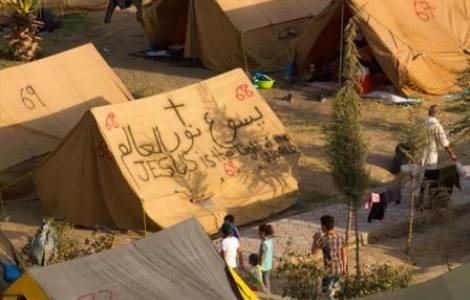
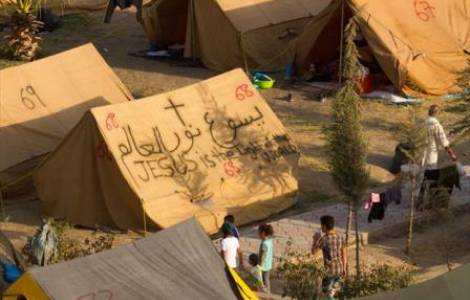
 Integractive