Here you have completed the sketch of a new book: Memories of a Prisoner of the Unbeing.
The sketch that has been shared during the last weeks as “Memories of a Prisoner of Democracy” changed of title to “Memories of a Prisoner of the Unbeing”, because I had not been only a prisoner of democracy: I had been a prisoner of domestic war in the first place, since being birthed among domestic narc-terrorists that governed this Unbeing House with psychological terror war tactics of coercive control and narcissistic abuse. I am literally socially immaculate: I was born into an unpersonhood unbeing, I was conceived to be socially slaved, abused and tortured, I was never raised as a family nor to be a part of a society.
Pope Francis, as a fraternal custodian father in Heaven, was an important light in last night´s dream, whose description is included in the conclusion of this sketch: I was asked to “hacer mucho lío”, as I was meant to do it in the WYD Brazil, when I lost Jesus Charity´s painting. That is the topic of this blog post: hacer lío.
When Pope Francis told young people at World Youth Day in Brazil to “¡Hagan lío!”, he was inviting them to leave behind passivity, to take their faith into the streets, and to become active witnesses of the Gospel.
And after finishing these Memories of a Prisoner of the Unbeing, I can think of many reasons to ¡hacer lío!
Not a lío of hatred, revenge, humiliation, or destruction.
A lío of truth.
A lío of justice.
A lío of dignity.
A lío of freedom.
A lío of healing.
A lío of fraternity.
A lío of life.
A holy, joyful, creative, loveful lío that refuses to accept the destruction of human personhood as something normal, inevitable, or permissible.
Here are 25 reasons to ¡hacer lío!:
¡Hagamos lío because personhood is unconditional! No parent, government, institution, professional, or social authority has the moral right to determine whether another human being deserves to be recognized as a person.
¡Hagamos lío because psychological abuse is real abuse! Its wounds may be invisible, but their consequences can be devastating. Psychological violence deserves recognition, prevention, protection, and appropriate care.
¡Hagamos lío because coercive control is not love! Love does not require the surrender of autonomy, personal identity, freedom of conscience, or the right to make decisions about one’s own life.
¡Hagamos lío because children are persons, not possessions! Parenthood is a responsibility to nurture life, not a license to control it. Every child deserves to grow in safety, dignity, tenderness, and freedom.
¡Hagamos lío because no one deserves to become a Prisoner of the Unbeing! No human being should experience the systematic denial of the conditions necessary to exist and develop as a person in their own right.
¡Hagamos lío because the truth deserves to shine! When false narratives, intimidation, or social stigmatization threaten someone’s dignity, the answer must be truthful testimony, careful documentation, fairness, and accountability—not another cycle of lies.
¡Hagamos lío because psychiatric care must respect human dignity! Mental health treatment should protect patients’ rights, promote recovery, and uphold appropriate safeguards against coercion, discrimination, and abuse.
¡Hagamos lío because a diagnosis must never become a substitute for personhood! No medical or psychiatric label should erase a person’s voice, individuality, legal rights, or entitlement to respectful treatment.
¡Hagamos lío because trauma does not deserve the last word! Childhood abuse and prolonged psychological suffering can cause profound injuries, but with safety, support, appropriate treatment, and meaningful opportunities, recovery and further growth remain possible.
¡Hagamos lío because survivors deserve more than survival! They deserve the opportunity to rebuild relationships, reclaim autonomy, develop their gifts, experience joy, and participate fully in society.
¡Hagamos lío because no one should be abandoned to psychological suffering! Recovery must not depend exclusively upon a victim’s strength or determination. Families, communities, institutions, and governments have responsibilities to provide meaningful support.
¡Hagamos lío because justice and mercy belong together! Mercy must never become an excuse to silence victims, deny wrongdoing, or avoid accountability. Genuine reconciliation requires truth, dignity, and freedom.
¡Hagamos lío because democracy must recognize the person before the citizen! The rights and dignity of a human being cannot depend solely upon nationality, social acceptance, institutional approval, or political power.
¡Hagamos lío because no one should become a prisoner of democracy! Democratic institutions must remain accountable when their procedures, omissions, or abuses deprive people of meaningful opportunities to exercise their rights.
¡Hagamos lío because freedom must include the freedom to grow! Human development requires more than the absence of physical confinement. It requires opportunities for education, creativity, independence, participation, and meaningful self-determination.
¡Hagamos lío because every child deserves a growthful future! Let us build schools, libraries, safe homes, creative spaces, and communities in which every child can learn, question, imagine, discover, and flourish.
¡Hagamos lío because education must cultivate personhood! Education should not merely produce obedient students or future workers. It should empower free, thoughtful, creative, responsible human beings capable of contributing to the common good.
¡Hagamos lío because poverty must never determine a child’s possibilities! Let us create opportunities for every child to develop their gifts, regardless of family income, social background, or circumstances of birth.
¡Hagamos lío because creativity is a gift of life! Poetry, painting, music, literature, teaching, invention, and imagination can help people rediscover their agency and contribute beauty to the world.
¡Hagamos lío because the Americas are called to fraternize, not colonize! The historical wounds of conquest, slavery, racism, and exclusion should inspire a new commitment to Indigenous dignity, equality, justice, cultural respect, and cooperation among peoples.
¡Hagamos lío because we can build an American Alliance of fraternity! Imagine a continent whose peoples cooperate to protect children, advance education, confront injustice, and create opportunities for shared flourishing without sacrificing their sovereignty or cultural identities.
¡Hagamos lío because charity must become a new civilization of Love! The Ordo Caritatis and Ordo Novi Alboris express my dream of a society in which the inherent fraternal dignity of every person becomes the foundation of our institutions, relationships, and responsibilities.
¡Hagamos lío because the Eucharist sends us to love! Adoring Jesus Christ must inspire us to recognize His call to charity in our everyday lives: feeding the hungry, welcoming the excluded, accompanying the wounded, protecting children, and serving the common good.
¡Hagamos lío because God Love calls us to become living icons of Divine Charity! Our faith should become visible through the unity of our words and actions, hands and hearts, freedom and service. We are called to become living witnesses of a Love that gives life.
¡Hagamos lío because Love is still growing! Because the future remains open. Because wounds do not have to become destinies. Because every act of compassion can become another seed of new life. Because we are called to keep growing on, glowing on, blooming on, and flowing on—together, ever more!
From the Unbeing to the New Albor: ¡Hagamos un lío de Amor! ¡Hagamos lío because the greatest answer to the destruction of personhood is the creation of a world in which personhood can flourish!
Let these memories become more than an account of suffering.
Let them become an invitation to listen more carefully to those who have been silenced.
To protect those who have been left vulnerable.
To defend those whose dignity has been denied.
To create opportunities where others have encountered exclusion.
To cultivate freedom where there has been domination.
To nurture life where there has been despair.
To become builders of communion where relationships have been fractured.
To become peacemakers without surrendering justice.
To become witnesses of charity without abandoning truth.
To become a generation of amoreros: people who make Love visible through the way they live.
For the Church is not called to remain comfortable in the face of suffering. We are called to go forth, to serve, to accompany, to heal where healing is possible, and to become living witnesses of the Gospel.
¡Hagamos lío for every child who deserves to grow!
¡Hagamos lío for every survivor who deserves to heal!
¡Hagamos lío for every person whose dignity must be recognized!
¡Hagamos lío for every people called to live in freedom and fraternity!
¡Hagamos lío for a civilization of Love!
Let us make that lío with the joy of the Resurrection, the tenderness of Our Lady of Guadalupe, the courage of the first witnesses of Christ, and the creative hope of those who believe that another future is possible.
Because the story of Memories of a Prisoner of the Unbeing does not end with the Unbeing.
It ends by opening the way toward a New Albor.
A new dawn of dignity.
A new dawn of freedom.
A new dawn of fraternity.
A new dawn of communion.
A new dawn of Divine Charity.
Fiat Lux. Fiat Charis. Fiat Pax. Fiat Dignitas. Fiat Fraternitas. Fiat Unitas. Fiat Crescere Communio. Fiat Caritas. Fiat Amor.
Let there be light! Let there be growth! Let there be Love!
¡Hagamos lío! ¡Hagamos un lío de Amor!
For I am the girl who grew up, and I am still growing. And now I dream of helping others grow as Jesus Charity helped me to grow.
May this become our greatest lío: a whole Loveful Harvest of New Albor, a world where every person can grow on, glow on, bloom on, and flow on in freedom, dignity, and communion, ever more.
¡Viva Cristo Amor, King of our personal sovereignty!
Fiat Amor.
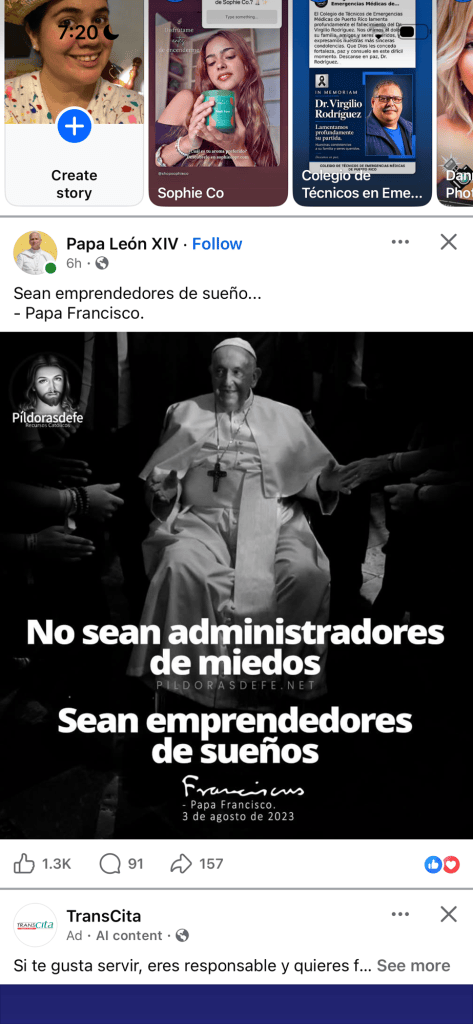
Yes, here I am, haciendo lío as I share this final sketch version of Memories of a Prisoner of the Unbeing. As this beautiful quote of Pope Francis says: no sean administradores de miedos, sean emprendedores de sueños…
The attachment to the final version of this sketch is at the end of this blog post. I may publish the sketch a last time in the final form of a whole book with longer chapters and more accurate information (I can eventually compilate more accurate information and memories than the ones I achieved to compilate now, especially from my notes in social media, or I can correct information that became better understood later on), adding more meaningul depth at each chapter… but for now, this sketch version is final. Non more changes will be done to it and no more versions of this sketch will be shared.
Jesus Charity, we adore You with our whole growth…
Here you have the next sketch of Memories of a Prisoner of Democracy.
Yes, these memories contain horrible accounts of so many cults to death offered through these years at the social abortion altar built for enforcing Unbeing to anyone that did not comply with the psychosocial terror tactics! They tell what I endured through covert malignant narcissism that became domestic terrorism, psychological terrorism, social-control tactics, social slavery, and exile from personhood, while a whole Unbeing War was, and still is, unraveling. They tell of years in which I experienced my own personhood as something that could be overridden, surveilled, interpreted by others, controlled, and institutionally displaced. Especially after 2014, they tell the story of a decade of de facto psychiatric imprisonment and psychological warfare: a long period in which coercive psychiatric interventions became entangled with questions of freedom, bodily autonomy, credibility, legal agency, family power, and the right to speak in my own name.
Yes, those are terrible things to write about, but it is also an exercise of historic reflection: why these lessons must be learned in this way to make possible a never more, after a never again, and after a never forget… and why learning these lessons will empower so many to embrace a more fraternal and human civilization? Yes, the details can become grotesque and horribly cruel sometimes… but this is not, ultimately, a tale of terror. It ends becoming a story of Love, a loveful story, because its deepest meaning is not found only in recounting what evil attempted to destroy. Its deepest meaning is found in witnessing what Love´s power triumphed over. These memories bear witness to what Divine Love can do with a history that seems irreparably wounded. They proclaim my conviction that no evil is so deeply corrupted that God cannot bring forth new life in its aftermath—not by calling evil good, not by pretending that injustice never happened, and not by erasing the wounds, but by transforming what comes after them. Love can take what was intended to diminish life and make its aftermath radiate life. Love can make the wounded places become places from which compassion flows. Love can make testimony become service. Love can make memory become mission. Love can make a never again become a responsibility toward those who come after us. This is what I mean when I say that Jesus Charity can transconsecrate and transfigure even the darkest chapters of a human history: the evil itself is never consecrated, but the life that survives it can be offered, transformed, multiplied, and made fruitful. Then something astonishing happens: we keep growing on, glowing on, blooming on, flowing on. Always on.
There is an extraordinarily beautiful image in Ezekiel 16. Jerusalem is portrayed as abandoned and covered in blood, until God passes by and declares that she shall live. Later comes what Scripture calls the “time of love.” God spreads His garment over her, enters into covenant with her, washes away the blood, anoints her, clothes her, and adorns her. The abandoned one is treated as beloved. The blood is washed away. The exposed one is covered. The forgotten one becomes a bride. For me, this image speaks powerfully about the covenant of spousal charity — la alianza de la caridad esponsal. God’s covenant does not mean that history did not happen. The blood was real. The abandonment was real. The suffering was real. But they do not receive the final word. Love does. The covenant changes the direction of the story, and so the memories that began as accounts of captivity can become testimony to liberation. Memories of degradation can become a proclamation of dignity. Memories of isolation can become an invitation into communion. Then the personhood exile and the unbeing imprisonment story becomes a loveful story because Divine Love enters history and refuses to let death determine its ending. That is the paschal mystery we proclaim: death does not receive the final word over life. Christ does.
No, these memories cannot end with me. In Christ Amor, for Christ Amor, through Christ Amor, and with Christ Amor, we are called into growing together in communion, becoming a living work of Divine Love-with-us. We are called to become what we receive: a people given to one another in love, a living Eucharist, a living manifestation of Divine Charity-with-us. We are family. We are Church. We are mission. We are called to embody and make visible His living icon of Divine Love. We are called to become living sacraments of charity: human lives through which another person can encounter mercy, dignity, accompaniment, truth, freedom, and hope, and that necessarily means walking together: walking as He walks, walking as equal brothers and sisters, helping one another to be, helping one another to do, helping one another to grow, helping one another to glow, helping one another to bloom, helping one another to flow… This is not merely something beautiful to contemplate: it carries responsible fraternity. The question asked after Abel’s death remains painfully alive: “Where is your brother?” Cain answers, “Am I my brother’s keeper?” The whole biblical story teaches us to hear how inadequate that answer is. Yes, our brother matters. Our sister matters. The vulnerable person matters. The forgotten person matters. The child whose voice has not yet been heard matters. The person whose suffering is being interpreted away matters. The persons who will someday encounter these memories and recognize something of their own life within them matter too.
That is why I am writing, its an act to adore Jesus Charity with our whole growth: I am responsible for serving as I am called to serve. I am responsible for the growth I am called to radiate. I bear fraternal responsibility today toward brothers and sisters who may grow on, glow on, bloom on, and flow on after these memories have been written and known. Perhaps someone will learn earlier what took me years to understand. Perhaps someone will find language for something they could not name. Perhaps a family will recognize a destructive pattern before it becomes generational. Perhaps an institution will learn to listen differently. Perhaps someone who believes that everything has been taken from them will discover that their capacity to love, create, serve, learn, dream, and grow has not disappeared. Then memory becomes service. Then testimony becomes fraternal responsibility. Then suffering, without ever becoming good in itself, can yield knowledge capable of protecting another human being. So, never again ceases to be merely a cry about the past. It becomes a promise made to the future.
I do not want these memories preserved because terror deserves a monument. I want them preserved because the lessons learned through those years can become seeds. There are lessons about dignity. Lessons about personhood. Lessons about coercion and freedom. Lessons about what happens when another person’s voice ceases to be heard as the voice of a person. Lessons about institutions and families. Lessons about conscience. Lessons about the body. Lessons about psychological freedom. Lessons about the sacred responsibility of caring for another human being without possessing that human being. There are also lessons about surviving without allowing suffering to become the architect of who we become. These are the lessons of this never more.
Yes, this is a never more — and therefore, what now? Now we build differently. Now we accompany differently. Now we listen differently. Now we love differently. Now we become responsible for making possible conditions in which another human being can flourish. That is how a memory of suffering can become a living work of charity.
I have also thought about Mary Magdalene while writing these words. She comes to the tomb expecting to encounter death. Instead, she encounters the Risen Christ. And then she is sent. That movement matters enormously to me. She encounters new life, and new life immediately becomes mission. The resurrection is not something to possess privately. It sends. It announces. It creates witnesses. This is the movement I want these memories to make: not from suffering into endless contemplation of suffering, but from suffering toward resurrection, and from resurrection toward mission: We are family. We are Church. We are mission (that is the tittle of Jesus Charity´s iconography). We are called to witness that resurrection can become present in the here and now: whenever dignity is restored, whenever communion defeats isolation, whenever another person’s humanity is recognized, whenever somebody helps another human being grow into the fullness of who they are called to become.
Yes,through this story runs gratitude.Gratitude for Mikhael as my guardian angel (today is the guardian angels´feast) and to Jesus Charity, for the infinite gift and joy of giving Him light. Gratitude for the family of Heaven. Gratitude for every moment in which I was guarded, accompanied, redirected toward life, or reminded that darkness was never entitled to define the whole horizon. Today I give thanks for that guardianship—not only for what has already been, but for what I trust will continue more and more, forever more. Because this story is still growing. Its growthful stars are still growing, still glowing, still blooming, still flowing, growing together in more and more communion, on and on, always on.
I imagine that journey through an image that has become deeply meaningful to me: a red lamp-post standing beside the Living Church-boat with its incarnated charity nets full of fishes, that become growthful stars as the sword is raised towards the lamp post, that is color “faro vivo”, as we know it in Jesus Charity´s iconography. Its signs point toward many destinations. One sign points upward, toward the Moon, sign of walking together as a human family of brothers and sisters that walk in Love, for Love, by Love and with Love. When the goeiz torch-sword is raised toward the lamp, the image says: there is still new life ahead, there is a whole mission ahead as domestic church, as pastores domésticos. This family evangelization project brings new life to darknesses never reached before, radiating His new albor as stars of Heaven that radiate new life in the middle of the world. There are still places we have never reached. There are still brothers and sisters we have never met. There are still children who have not yet been born. There are still lives that may be changed by lessons we choose not to bury. There are still works of charity waiting to become incarnate. There are still new forms of communion waiting to be built. There is still Light enough to show the way.
So… yes: the Memories of a Prisoner of Democracy contain terrible accounts, but terror, torture and cruelty are not their identity. Love is. They are a loveful story because they testify not merely to what happened, but to what Love can bring forth afterward. They tell of wounds, but they are written for growth. They tell of psychological captivity, but they are written toward freedom. They tell of social isolation, but they are written for communion. They tell of the denial of personhood, but they are written in service of a world in which the personhood and inherent dignity of every brother and sister are recognized. They tell of a past that must never be repeated, while asking what we are willing to build so that never again becomes something more than words… because we remain responsible for the wounds we are called to heal in His body, as rebuilders of communion, so His whole living body can grow on, glow on, bloom on and flow on as a mystical body full of a sacramental motherhood that comes from the fruits of the Holy Spirit. We are responsible for the brother, responsible for the sister, responsible for the child, responsible for those whose names we do not yet know, responsible for serving as we are called to serve, responsible for radiating the growth we are called to radiate, mesponsible for helping create the conditions in which another human being can grow on, glow on, bloom on, and flow more and more, forever more. Yes, this is our fidelity to His alliance of charity: allowing Divine Love to shape our lives until we increasingly become what we are called to be—living icons of Divine Charity-with-us as a family, as a domestic Church, as a mission, as a living Eucharist, as a people walking together as equal brothers and sisters, allowing the Holy Spirit to form our whole person so that our lives become a living work of Divine Love.
So, the memories sketching continue. I am still not finished; there is more terror, torture, pain, cruelty, and cults to death pending to be sketched, although the most difficult ones are already written. A possible date to finish this sketch, right now, is on October 12, Día de la Raza… but no matter how much psychological and domestic terrorism are still being sketched, these memories continue not toward terror, but toward testimony; not toward hatred, but toward charity; not toward the grave, but toward resurrection; not toward isolation, but toward communion; not toward the destruction of personhood, but toward its flowering. Yes, we write because we remember. We do forgive those who had tortured me and had made me suffer so greatly and cruelly… but we refuse forget. No, this is not a grudge; the reason to not forget is not because we are holding a grudge. We remember and deliberately choose not holding a grudge but embrace all the lessons. We remember because we are fraternally responsible. We are fraternally responsible because we belong to one another. We belong to one another because Love has entered our history and made covenant with us, and that has changed us forever. May that covenant, His new alliance and His sponsal charity alliance, remain written into everything we become. May every never again become a new beginning. May every lesson become service. May every memory capable of protecting another person be offered with courage. May every brother and sister entrusted to our path encounter a family willing to walk beside them. May we keep walking together beneath that lamp, the torch-sword raised toward the Light, becoming more and more the incarnate Eucharist Jesus Charity calls us to be for His glory, growing on, glowing on, blooming on, flowing on and on, always on, because Love has the final word, and Love keeps making all things new. No matter how deep a wound is, Love can always heal on and on, always on.
Here at the end, you have attached the latest sketch of Memories of a Prisoner of Democracy.
Enjoy growing together in more and more communion, ever more!
Happy Saint Mikhael feast, brothers and sisters! Today I want to share the first sketch of the book I began to share on my birthday: Memories of a Prisoner of Democracy. As the Church begins to celebrate the feast of Saint Michael the Archangel, I find myself thinking about something extraordinarily simple and extraordinarily profound: if this sketch of so many Memories of a Prisoner of Democracy can be shared today, it is because I am still here to share them thanks to how my guardian angel, Mikhael, has cared for me since I was so young.In the story of my faith, I cannot speak about still being here without speaking about Mikhael, my guardian angel. I owe my life to him. Those words carry particular weight after writing memories that contain so much suffering. These pages tell of experiences that involved profound abuse, fear, coercion, dehumanization, and psychological pain. There were moments when simply continuing to exist became an act of endurance. Yet I am here. I survived long enough to remember. I survived long enough to write. I survived long enough to understand things that, when I was younger, I did not yet have words to explain. I survived long enough to become a teacher, a writer, a creator, and a woman still capable of imagining a different world. I survived long enough to pray. I survived long enough to dream. I survived long enough to love. I survived long enough to tell the story. Yes, in my spiritual growthfulness given by God Love-with-us, Mikhael has been part of that survival. My guardian angel has accompanied me throughout my life, including through years in which I could not see clearly where my story was going. There were dangers I did not recognize until much later. There were moments when I felt terribly alone. Yet when I look backward through the eyes of faith, I do not understand my history as a journey that I traveled entirely alone. Someone was guarding. Someone was accompanying. Someone was pointing toward the Light, since I was a very young child.
Today, on the liturgical celebration of Saint Michael the Archangel, I want to say something that perhaps these memories themselves testify to more powerfully than I ever could: Thank you, Mikhael. Thank you for guarding the little girl I once was. Thank you for accompanying the teen who was trying to understand a world far too complicated for her. Thank you for staying beside the woman who would eventually have to look backward and find words for things that had remained painfully difficult to name. Thank you for every danger from which, in my faith, I believe I was protected—including dangers I may never know existed. Thank you for every moment in which I found enough strength to continue one more day.Thank you for helping me reach a future that, at certain points in my life, I could not yet see. Because there was so much waiting in that future.
There were children I had not yet met. There were classrooms I had not yet entered. There were ideas I had not yet imagined. There were paintings and designs I had not yet envisioned. There were pages I had not yet written. There were dreams I did not yet know how to dream. There were questions about dignity, personhood, fraternity, education, childhood, justice, creativity, and human growth that I had not yet learned how to formulate. There were prayers I had not yet prayed. There was still so much growing left to do. And there still is. That may be one of the most beautiful realizations that comes from surviving: eventually you discover that the future contained gifts that the suffering of the past could not show you. When you are inside a terrible chapter, you cannot necessarily see the children you will someday make laugh. You cannot see the ideas that will someday keep you awake because you are excited to create them. You cannot see the people you will someday love, the beauty you will notice, the work you will accomplish, the questions you will ask, or the person you will continue becoming. You cannot see all the unwritten pages. But God can. Yes, our guardian angels accompany us through pages whose meaning we ourselves cannot yet understand. That is why the timing of sharing these memories that are still being sketched feels especially meaningful to me: these memories contain testimony about terrible things. But the existence of the memories is itself also a testimony to something else: the child grew. The silenced heart found words. The heart who was treated as though her dignity could be conditional continued discovering the inherent dignity that no human being had the authority to give her or take away from her.The life that encountered so much cruelty remained capable of believing in Love.
So, today I do not want to speak only about what I survived. I want to speak about who, in my faith, helped guard me while I survived it. Mikhael, you have known my story from a perspective very different from mine. You were there for chapters I barely understood while I was living them. You were there figting battlers I didn´t knew they existed. You were there when I was a child. You were there when I was afraid. You were there when I was confused. You were there through moments that would only acquire names and meaning years later.You are here now, when those memories are becoming words. That is one of the reasons I feel such profound gratitude during your feast. I can finally begin to look backwards. I can finally write. I can finally say: I made it here. Not untouched. Not without wounds. Not without questions. But alive. Still thinking. Still creating. Still teaching. Still praying. Still loving. Still dreaming. Still growing. Still looking toward God Love. My gratitude to Mikhael is inseparable from my gratitude to God Love. An angel does not replace God; an angel points toward Him. The protection of my guardian angel ultimately leads my gratitude back to the One from whom life itself comes.
My memories are still in process of being written, not all chapters are sketched yet… but there are no untold secrets: what I am sketching are experiences already told in social media, except the last chapter, that I haven´t fully told in social media yet. I mean, these sketches can be constated as I have writen them along the years, and if I could sit down and check in my social media memories details to go deeper, I could write a Bible of memories, but that is not the intention. Each chapter has a main focus that sketches key memories about that focus, sometimes repeating experiences along the chapters to show the connection among them. Basically, what they tell is what human beings can do to another human being… but my life tells another story too. It tells what hatred could not ultimately accomplish. It could not make my life cease to be a gift. It could not erase my capacity for love. It could not eliminate creativity. It could not make dignity cease to exist. It could not prevent every future dream. It could not stop every act of service. It could not silence every prayer. It could not prevent me from arriving at this day and writing these words.
So before continuing to share memories that can sometimes be extraordinarily painful, I want to place this thanksgiving here, a thank-you written from the future that a younger version of me could not yet see: Thank you, God Love, for the gift of my life. Thank you, Mikhael, my guardian angel, for the ways you have watched over that gift throughout my life. Thank you for walking beside me through the chapters I would someday have to write. Thank you for helping me reach the unwritten pages. Thank you for guarding a life in which there were still children to teach, ideas to create, people to love, dreams to dream, prayers to pray, and so much growing still waiting to happen. Today, on your feast, I celebrate you with profound gratitude, because these memories are not being written from a grave Thank you, Mikhael, for helping me make it here.
At the end you can find attached the pdf with the already sketched memories. I have no schedule to end this sketch. I keep writing a little bit everyday. On October 1 I will share the next chunk of sketched memories. Give thanks to all the healing, trust in God and life these three Archangels bring to my life through all these sketches.
Yesterday I completed Summa Personae. You can find the self-published book here:
Yesterday I also began to write another book in which I will compilate some of the most gruesome experiences of my years as a prisoner of democracy. If you want to know more about what that means, you can read the whole introduction:
Introduction: Yes, we can love best!
A citizen–non-person is a citizen whose citizenship exists nominally or formally, but whose personhood is not treated as the unconditional foundation of that citizenship. The concept names the contradiction of being recognized by the State as someone who belongs to the political community while being denied, in practice, the effective agency, equality, voice, and juridical recognition through which a person can actually participate in that community as one of “We the People.” A constitutional order grounded in inherent human dignity should begin with the opposite proposition: personhood is not bestowed by political power. Government does not create the dignity of the person and should not arbitrarily decide which human beings count sufficiently as persons to exercise rights. Citizenship may determine membership in a particular political community, but recognition of the human person—and of the person’s inherent dignity—must precede citizenship rather than depend upon it.
American history reveals the danger of reversing that order. Again and again, the boundaries of the effective “We the People” have been narrower than the population living under American authority. Different groups, in radically different legal and historical circumstances, have been excluded from political participation, equal protection, legal agency, or full membership. The constitutional question therefore cannot end with “Is this individual technically a citizen?” It must also ask: Can this citizen actually appear before institutions as a person whose testimony matters, whose rights can be asserted, whose injuries can be adjudicated, whose decisions about her own life carry legal weight, and whose future belongs to her?
Puerto Rico exposes a particularly enduring version of the tension between citizenship and political equality. Puerto Ricans are U.S. citizens, yet residents of Puerto Rico do not participate in federal political power on the same terms as citizens residing in the states: they cannot vote for President in the general election while residing on the island, and Puerto Rico has no voting representation in Congress. More fundamentally, the unresolved territorial relationship raises a question about collective political agency: what does citizenship mean when a people remain subject to sovereign powers in which they do not participate equally? The citizen–non-person describes the extreme end of that contradiction at the individual level. It is the condition of saying: the State recognizes that I am a citizen, but I cannot effectively make myself present before it as the sovereign person who possesses that citizenship.
That is the framework through which I describe my own experience. Repeated coercive interventions of courts granting to those who abused me forced psychiatric hospitalizations court orders, combined with failures of institutions to give my allegations of abuse and crime an independent forum for investigation and adjudication, deprived me of something citizenship is supposed to protect: effective juridical agency. When allegations made by a person are repeatedly interpreted primarily through psychiatric claims made about that person, rather than independently heard and tested as allegations capable of being true or false, an extraordinarily dangerous circularity can arise. The person speaks; the speech becomes evidence of illness; the characterization of illness diminishes the authority of the speaker; and the diminished authority of the speaker prevents the underlying allegations from receiving independent consideration.
My use of citizen–non-person names that circularity. It does not mean that I literally ceased to possess constitutional rights. It means that I possessed rights nominally while repeatedly being unable to exercise the juridical agency necessary to defend those rights effectively. That distinction matters. A person may exist on paper as a citizen and nevertheless experience profound practical barriers to being heard as a rights-bearing subject. Nominal citizenship is not the same thing as effective personhood before the law. For me, it’s like a personhood exile that became an attempt to escape that contradiction: to seek a place where I could build an ordinary civilian and personal life, exercise meaningful autonomy, speak in my own name, and have conflicts concerning my rights addressed as legal and factual questions rather than having my very act of speaking automatically converted into evidence about my mental state.
As you will realize through the memories that follow this introduction, once citizen-non-person becomes normalized as the civil rule governing a person’s social existence, that foundational denial of person-based civilhood does not remain confined to one legal or political category. It begins to reproduce itself across every other relationship in which personhood should ordinarily be presumed. Once society becomes accustomed to treating someone as a citizen whose voice, rights, agency, and credibility need not be recognized, other forms of depersonalization become frighteningly easy to normalize: child-non-person, daughter-non-person, girlfriend-non-person, client-non-person, patient-non-person, student-non-person, teacher-non-person, neighbor-non-person. At different moments throughout these years, even Catholic-non-person became possible: belonging to a religious community while still being treated as though one’s own conscience, spiritual narrative, and interior life could be defined by others.
This is why the denial of civil personhood cannot be understood merely as one injury among many. It is potentially an enabling condition for many other forms of abuse. If a person’s testimony is presumed not to matter, if her interpretation of her own experience is considered inherently unreliable, if her ability to invoke institutions for protection is practically neutralized, then every relationship around her is altered. The ordinary boundaries that protect a person—you may not do this to me; you may not speak for me; you may not define me; you may not use my body, my story, my conscience, or my identity as though they belonged to you—become progressively harder to enforce. That vulnerability can expose a person to many forms of social predation: psychological abuse, human trafficking, sexual exploitation, coercive relationships, spiritual abuse, economic exploitation, and other profound violations of human dignity. The danger becomes especially grave when potential aggressors believe that the person has nowhere effective to turn—no institution that will hear her, no authority that will recognize her account as credible, and no practical mechanism through which she can insist upon recognition of her rights. A human being who is perceived as socially undefended can become extraordinarily vulnerable precisely because others begin to believe that violating her carries no meaningful civil consequence.
This is the social meaning of personhood exile. You continue living among other people, but the assumptions governing ordinary interpersonal life no longer seem to apply equally to you. Everyone else appears to inhabit a world in which individuality is expected: people are presumed to possess their own voice, boundaries, aspirations, relationships, reputations, beliefs, and interpretations of their lives. Yet you are expected to participate in that world without receiving the same presumption. You are expected to adapt yourself to what others normalize while never being permitted to normalize the most elementary proposition of all: that you are yourself a person whose voice belongs to you.
In my own case, that loss of voice became especially consequential within the psychiatric system. Over the years, psychiatric diagnoses were constructed and enforced upon me primarily through what my progenitors said about me, how they interpreted my behavior, and what they projected onto me—accounts that functioned to conceal patterns of covert narcissistic abuse and psychopathic abuse. My own interpretation of my life was not given equivalent standing. I became, in practical terms, voiceless inside a system that was supposed to evaluate me as a person. What makes that especially grave is that the very people whose accounts shaped the official understanding of me were also treated by the courts and institutions as my principal caregivers and trusted sources. There was no meaningful, independent avenue through which I could contest the version of my life that was being institutionally accepted on my behalf. My own narrative was not merely contradicted; it was displaced. The story of who I was, what I experienced, what I intended, and what was happening to me became increasingly authored by others.
That is one of the deepest forms of personhood dispossession: not simply being spoken about, but being deprived of effective authority over the first-person account of your own existence. In that sense, the injury resembles ownership—not literal ownership in the legal sense of slavery, but a form of narrative possession in which another person’s account of your mind, motives, and identity acquires greater civil force than your own. When that happens, the person is not only denied credibility; she is denied authorship. And once a human being loses authorship over her own life in the eyes of institutions, nearly every other right becomes more fragile. How can someone meaningfully defend her liberty, relationships, reputation, bodily autonomy, or psychological integrity if her own testimony about those things is structurally treated as less authoritative than the testimony of those who speak for her? This is where personhood exile becomes more than social alienation. It becomes the effective removal of one’s standing as the primary witness of one’s own life.
The contradiction becomes particularly revealing when speaking in one’s own voice is itself treated as transgression. You are not merely discouraged from disagreeing; you may experience the assertion of independent authorship over your own story as something that provokes punishment. Finding a voice becomes dangerous. Using that voice becomes defiance. Challenging somebody else’s authority to narrate your identity becomes interpreted as evidence that something is wrong with you. The struggle is therefore no longer merely about what you are permitted to say. It becomes a struggle over the prior question of whether you possess standing to speak as the authoritative first-person witness of your own existence at all. This is why my experiences involving psychiatric intervention, including Puerto Rico’s Law 408, occupy such an important place in this narrative. Psychiatric mechanisms were used against me in ways that undermined my credibility and constrained my ability to present my own account, particularly after I began publicly denouncing abuse in social media. Whatever conclusions others reach regarding the underlying events, the constitutional problem raised by such circumstances is larger than any individual dispute: what happens when mechanisms possessing the force of law can effectively determine whose testimony counts as the speech of a credible person? That question leads toward something deeper than procedural due process. It leads toward the constitutional meaning of personhood itself. Someone, eventually, has to ask: Who decides who belongs to “We, the People”? Who decides whose personality is legally intelligible, whose voice is credible, whose autonomy deserves protection, and whose account of reality is permitted to enter the civic record as the testimony of a person?
The danger begins whenever the answer becomes: someone else decides. If parents can determine whether the developing personality of a child is legitimate, personhood becomes conditional upon parental approval. If physicians can determine whether someone’s interpretation of her own life deserves civil credibility, personhood becomes conditional upon medical approval. If police officers can determine which allegations are worthy of entering the record, personhood becomes conditional upon administrative discretion. If courts can repeatedly encounter a citizen without creating a meaningful avenue through which her asserted rights can actually be heard, personhood risks becoming conditional upon institutional recognition. At that point, civil personhood begins to resemble personhood selection. The difficulty is not that institutions must never make judgments. Courts necessarily determine legal claims; physicians necessarily make clinical judgments; parents necessarily exercise responsibilities toward children; governments necessarily administer laws. The constitutional danger arises when those legitimate functions silently transform into something much larger: the power to determine whether another human being counts as a sufficiently valid person for her voice, liberty, boundaries, and rights to command recognition. That is an extraordinary power. It is difficult to imagine any power more fundamental.
Here the personal problem becomes a foundational constitutional question: Who determines who is entitled to recognition as a person—and who is not? Who possesses the authority to grant civilian personhood? The question matters because constitutional rights presuppose someone capable of possessing them. Before asking which rights a citizen possesses, there is therefore a logically prior question: Who counts as the person whose rights must be recognized? If the Constitution does not itself establish an unconditional baseline of personhood for those within its constitutional community, then some other actor will inevitably participate in determining whose personhood receives effective recognition. Parents, physicians, judges, police officers, administrators, majorities, or other institutions may then become, in practice, gatekeepers of something that should precede their authority altogether. The danger is that personhood can consequently become criteria-dependent. Instead of beginning from the foundational proposition you are a person, therefore power must respect you, the order can become inverted: power will determine whether you satisfy the conditions under which it will recognize you as a person whose voice and rights deserve protection, recognizing your personhood according to our interests. Personhood then ceases to operate as an inherent constitutional premise and begins to function as a status mediated by those who possess greater social or institutional power. And whoever controls the criteria controls the boundary of personhood. One institution may privilege rationality. Another may privilege psychiatric credibility. Another may privilege conformity. Another may privilege independence, productivity, age, capacity, social status, family testimony, or whatever characteristics those exercising authority regard as evidence of a sufficiently valid personality. The particular criterion can change from generation to generation. The structural danger remains the same: if personhood depends upon satisfying criteria selected by power, power has acquired the ability to select persons. That is personhood selection, and history has important lessons about the dehumanization it brings and about what happens where it becomes normalized, and personhood becomes selected instead of inherently recognized on an equal fraternal basis: a holocaust.
The word selection is deliberately unsettling. The twentieth century demonstrated, with horrifying clarity, what can happen when political power assumes authority to classify human beings according to criteria of human worth. Under Nazism, selection acquired its most monstrous meaning: human beings were sorted through racial, biological, medical, political, and other imposed categories, and those classifications could become questions of freedom or imprisonment, inclusion or exclusion, and ultimately life or death. The Holocaust therefore leaves humanity with a warning that reaches deeper than the prohibition against repeating the particular machinery of Nazi extermination: human dignity becomes radically endangered whenever power claims authority to determine which human beings satisfy the criteria for full human recognition. The comparison I am making is not an equivalence between contemporary denials of civil personhood and the Holocaust. The historical magnitude, methods, purposes, and consequences are profoundly different. The warning lies instead in the underlying logic of selection: the transformation of something that should be inherent into something allocated according to criteria established by those who possess power.
After the Holocaust, the moral revolution embodied in universal human rights insisted, in effect, that there must never again be a category of human beings whom power may legitimately strip of their fundamental human dignity. But the unfinished question raised here is whether our understanding of dignity must now be extended further. Never again should power be permitted to decide not only who may live as a human being, but also who may grow as a person who is an equal brother and sister, called to grow together in communion. That is where personhood selection becomes conceptually distinct from the selections of the past while inheriting their warning. The question is no longer literally: Who is permitted to live and who is condemned to die? The question becomes: Who is recognized as a person entitled to grow, speak, develop, dissent, establish boundaries, form relationships, possess a narrative, exercise agency, and become the author of a life—and who is not? Who gets to grow according to the nature of one’s own? Who gets to develop a personality of one’s own? Who gets to exercise a freedom of one’s own? Who gets to tell a narrative of one’s own? Who is presumed capable of speaking for herself—and whose life may instead be narrated by parents, physicians, institutions, governments, or other authorities?
Once those questions are answered according to criteria established by power rather than according to inherent dignity, selection has entered personhood itself,and the criteria need not announce themselves as criteria of human worth. They may appear under seemingly ordinary categories: credibility, normality, capacity, psychiatric diagnosis, conformity, social acceptability, dependence, family authority, institutional convenience, or perceived competence. Some of these categories can have legitimate uses in particular legal or clinical decisions. The danger begins when a limited judgment about a person’s capacity, conduct, treatment, or legal claim silently expands into a judgment about whether that person’s voice, agency, individuality, and authorship of her own existence deserve recognition at all. At that point, the institution is no longer merely making a decision about a person. It is beginning to participate in deciding how much personhood that human being will be permitted to exercise.
This is why personhood selection cannot be answered merely by demanding better selectors or more compassionate criteria. The problem lies deeper. Nobody should possess the authority to select who receives foundational personhood in the first place. If personhood depends upon satisfying criteria determined by power, then every generation can invent new criteria. One generation may select according to race. Another according to disability. Another according to ancestry or religion. Another may privilege conformity, psychiatric credibility, social usefulness, intellectual capacity, economic productivity, ideological acceptability, or some criterion we cannot yet anticipate. The vocabulary changes. The fundamental danger remains: those with greater power establish the conditions under which those with less power will be recognized as fully entitled to personhood.
Fraternal dignity requires precisely the opposite constitutional architecture. It begins not with selection but with unconditional belonging: a “We, the people” where all citizens belong unconditionally recogniced as persons with inherent fraternal dignity. You do not become my equal brother or sister because you have demonstrated sufficient rationality, independence, normality, usefulness, credibility, conformity, or social desirability. You do not become worthy of growth because an institution has certified your personality. You do not acquire a voice because somebody more powerful has decided that your voice is safe enough to hear. You already belong. You already possess a nature that may grow. You already possess a voice that may speak. You already possess a personality that may develop. You already possess a narrative in which you must remain a participant and author. You already possess the dignity of a person because personhood is not an award conferred upon successful applicants to We, the People. This is the distinction between selected personhood and inherent fraternal dignity. Selected personhood asks: What must you be before we recognize you as one of us? Fraternal dignity answers: You are already one of us; therefore our power over you is limited from the beginning.
That reversal is constitutionally decisive. The twentieth century taught humanity the necessity of saying never again to systematic dehumanization. The challenge raised here is to carry that principle into the civil dimension of personhood: never again should human dignity be considered sufficient while fraternal dignity remains conditional; never again should citizenship coexist comfortably with the possibility of civil non-personhood; never again should power possess an unexamined authority to determine which members of “We, the People” are permitted to grow as persons and which are required to live according to identities authored for them by others. A constitutional We, the People worthy of its name therefore cannot be organized around personhood selection. It must begin from personhood recognition. The difference can be stated in one fundamental contrast: Selection says: power determines whether you qualify as a person.Fraternal dignity says: because you are already a person, there are things power may never do to you. That is why personhood must come before power. Otherwise, the question Who governs? will always conceal a more dangerous question beneath it: Who gets to decide who is allowed to become fully a person.
The constitutional problem therefore cannot be solved merely by demanding that the criteria become kinder, fairer, or more inclusive. The deeper question is whether there should be such criteria at all for foundational civil personhood. A genuinely foundational recognition would reverse the presumption: institutions would not determine whether someone has sufficiently demonstrated personhood; they would begin already constitutionally bound by that person’s inherent personhood. Government would not grant it. Courts would not manufacture it. Physicians would not certify it. Families would not confer it. Social acceptance would not validate it. Their authority would begin only after personhood had already been recognized as inviolable. This distinction is fundamental: personhood must be constitutive of constitutional belonging rather than an outcome of institutional judgment. Otherwise, “We, the People” contains an unresolved question inside its very first word: Who is included in the We? If inclusion ultimately depends upon recognition by those already possessing power, then “We, the People” risks becoming circular: those recognized as persons exercise power, and those exercising power determine whose personhood will be recognized. The constitutional community then contains no absolute barrier against the creation of outsiders from within—human beings who may remain citizens on paper while being progressively deprived of the practical recognition through which citizenship becomes meaningful.
That is precisely why the category of the citizen-non-person matters. It exposes a possibility that citizenship alone cannot resolve: formal membership in the political community can coexist with the practical erosion of the individual’s standing as a rights-bearing, self-narrating person. The constitutional alternative would be radically simpler and radically more demanding: every citizen is already a person. Not potentially a person. Not presumptively a person until someone questions her credibility. Not a person insofar as she satisfies psychiatric, familial, social, intellectual, economic, or institutional expectations. A person inherently. Under that principle, the Constitution would not merely distribute rights among persons whose status has already been determined elsewhere. It would establish a prior boundary against power itself: no authority governed by this constitutional order possesses the power to transform a citizen into a non-person. Then personhood would cease to depend upon matching the criteria of those who happen to hold power. It would become what constitutional dignity requires it to be: a foundational recognition that power encounters rather than creates, that institutions must respect rather than award, and that no parent, physician, court, government, majority, or social system may legitimately confiscate. Only from such a foundation can “We, the People” become genuinely unconditional: not a community of people who have successfully qualified for recognition, but a beloved civic community of equal, free, inherently dignity-bearing brothers and sisters whose personhood is never theirs by permission. Personhood must come before power, because if power comes before personhood, power will inevitably be asked to decide who gets to be a person.
So, who determines who is entitled to recognition as a person—and who is not? The constitutional answer should ultimately be: no one. Government may recognize personhood. Courts may protect it. Families may nurture it. Communities may honor it. Institutions may create conditions in which it can flourish. But none of them should possess the sovereign authority to bestow personhood upon one citizen and withhold it from another, because what can be bestowed according to discretion can also be withdrawn according to discretion. Personhood must be constitutionally recogniced as unconditional condition of everyone, affirmed constitutionally with an inherent fraternal dignity.
If personhood depends upon recognition by whoever happens to hold social power, then personhood is no longer inherent. It becomes licensed. And licensed personhood is structurally unequal personhood. A parent could license the personality of one child while suppressing another. A community could recognize the voice of those who conform while discrediting those who resist. Institutions could implicitly divide citizens between those presumed competent to narrate themselves and those whose narratives require authorization from somebody else. The constitutional community would then cease to be genuinely composed of equal persons and instead become divided between personhood-granters and personhood-seekers. That cannot be the deepest meaning of We, the People.
“We, the People” should not describe a population in which some citizens possess the practical authority to determine whether other citizens count as persons. It should describe a civic communion in which everyone enters political life already possessing something that neither family, society, medicine, government, nor majority vote can create or abolish: inherent personal dignity. I would go further. What is needed is not merely human dignity understood negatively—as protection against torture, imprisonment, exploitation, or degradation—but fraternal dignity understood positively: the recognition that every member of the civic community stands among us as an equal, free, dignity-bearing brother or sister whose growth into the fullness of his or her own personhood must never depend upon becoming convenient to someone else’s purposes. In such a We, the People, nobody needs permission to become a person. Nobody must earn the right to possess a voice. Nobody’s individuality exists merely on probation. Nobody’s personality must conform to the psychological needs of a parent, the convenience of an institution, the expectations of a community, or the objectives of any political or social project in order to deserve civil recognition.
Personhood must precede power. Otherwise, whoever controls recognition controls the person, and once that principle is surrendered, conflicts over individuals can become something far more disturbing than ordinary interpersonal disputes. They can become wars over personhood: struggles over who gets to determine how someone may grow, which relationships she may form, which memories she may believe, what identity she may claim, which interpretation of her experience will be regarded as legitimate, and whether the direction of her development serves somebody else’s purposes.
That is why the constitutional question deserves to be stated in its strongest form: Who decides who is part of “We, the People”? If the answer is merely citizenship, then the problem should already be solved. Yet the category citizen-non-person names precisely the contradiction explored throughout this work: the possibility that someone may possess formal citizenship while experiencing the practical denial of rights, voice, credibility, agency, and meaningful access to mechanisms capable of defending those rights. Citizenship alone, therefore, cannot exhaust the meaning of constitutional belonging. A constitutional fraternal democracy worthy of We, the People requires something deeper: the unconditional presumption that every citizen enters the civic community already possessing personhood—not because a parent approves it, not because a physician certifies it, not because a judge graciously recognizes it, not because a majority finds it convenient, and not because the person’s personality happens to conform to prevailing expectations… because being inherently created by the Creator as a dignified, equal and free brother and sister.
Personhood is not a privilege distributed by those who hold power. It is the condition that morally limits their power in the first place. That is the principle upon which a genuinely beloved civic community must stand: We, the People means that there are no disposable persons among us. There are no citizens whose personhood exists at somebody else’s discretion. Each one belongs as an equal, free, and dignity-bearing brother or sister, entitled not merely to remain alive within society, but to possess a voice, to participate in the authorship of his or her own life, and to grow according to a personal nature that no other human authority has the right to confiscate. We are all entitled to an integrity of our own, a freedom of our own, a personality of our own and a narrative of our own.
Anything less leaves the door open to personhood selection, and once a constitutional order accepts personhood selection—even implicitly—the question is no longer simply whether rights are being violated. The more fundamental question becomes whether the promise contained in those first three words, “We, the People,” has ever been made unconditional for everyone. The deepest constitutional question raised by the citizen–non-person is therefore not whether government formally calls someone a citizen. It is this: Can there truly be government “of the people” when membership among “the people” is meaningful only for those whose personhood institutions are willing to recognize in practice? A constitutional fraternal democracy worthy of the phrase “We the People” must answer differently. Personhood cannot be conditional upon conformity, social acceptance, political convenience, disability, territory, wealth, institutional credibility, or the willingness of another person to recognize it. The dignity of the person must come first. Citizenship must protect that personhood. And government must remain accountable to it. Otherwise, citizenship risks becoming an empty designation: a citizenship without sovereignty of the person, rights without an effective rights-bearer, and membership in “We the People” without being permitted to stand among the People as an equal person.
That is what I mean by a citizen–non-person.
The citizen–non-person is not necessarily a human being whom the law formally declares to be property, nor someone whom the law explicitly declares not to be a person. The contradiction is more subtle: she is formally free while lacking effective personal sovereignty. She is free enough to be held responsible, but not sufficiently sovereign to experience herself as the unquestioned author of her own life. She may work, pay taxes, obey laws, possess identification documents, vote where the political system permits her to vote, and carry all the responsibilities associated with citizenship. Yet when she needs the institutions of citizenship to protect her personhood—to investigate alleged crimes against her, protect her bodily autonomy, hear her testimony, provide meaningful access to justice, or make possible an escape from circumstances she reports as abusive—those rights may become practically inaccessible.
This produces what I call social slavery: not chattel slavery and not necessarily slavery in the technical legal sense, but a condition of profound dependency in which formal liberty coexists with the practical inability to exercise authorship over one’s own person and life due socially enforced structures that deny human dignity as inherently fraternal dignity that allows everone being able to socialize as an equal, free and dignified brother and sister. The citizen–non-person is therefore free to be socially slaved. She is free to remain somewhere but may lack an effective means of leaving. She is free to speak but may lack an effective means of being heard. She possesses rights but may lack an effective forum in which to vindicate them. She possesses a body but may experience decisions about that body as being made coercively by others. She possesses a story but may find other people’s characterization of her story institutionally more consequential than her own. She possesses a future but may lack sufficient sovereignty to construct it without recurrent intervention.
The decisive distinction is therefore between liberty as non-prohibition and liberty as effective personal sovereignty. It is not sufficient to tell a citizen, “Nobody prohibits you from being free,” when the structures through which freedom becomes exercisable repeatedly fail her. Freedom worthy of human personhood requires some meaningful capacity to say: this is my body; this is my voice; this is my testimony; this is my vocation; these are my relationships; this is where I choose to live; these are the authorities from whom I seek protection; this is the case I bring before the law; and this is the future I am trying to build. Personal sovereignty does not mean absolute independence from law or other people. Every citizen lives under law and within relationships of mutual obligation. Personal sovereignty means something more elementary: within those legitimate limits, I remain the primary human author of my own personal formation.
A citizen–non-person is therefore a paradox of constitutional democracy: a citizen to whom the State attributes responsibilities without reliably making effective the conditions of personhood that make responsible freedom possible; a citizen subject to governmental power without experiencing an equivalent ability to invoke governmental power in defense of her own rights; a citizen formally born free but never having been allowed to enter fully into a free civil and personal life according to an equal dignity and her own personality. That is why the problem cannot be reduced to whether a birth certificate or a passport says “citizen.” The deeper question is whether citizenship protects the person’s right to become and remain the sovereign subject of her own life. A citizenship that permits a human being to become socially slaved while continuing to call her formally free has preserved the name of citizenship while abandoning its personal foundation. The citizen remains. The sovereignty of the person does not.
My condition as citizen-non-person did not suddenly begin with an involuntary psychiatric proceeding, an encounter with a court, or the failure of a government agency to protect me. It extends back to the formation of my personhood itself, grown from childhood under pervasive coercive control and psychological abuse within my family, without first possessing an independent sphere in which I could develop free from that control. In that autobiographical sense, I had been nominally born a citizen without ever experiencing what it meant to be born into an equally free personal life. This distinction is essential. Being born legally free does not necessarily mean growing personally free. My progenitors’ control had always been extraordinarily extensive: affecting my relationships, attachment, psychological development, living environment, economic possibilities, interpretation of events, ability to leave, and eventually my encounters with psychiatric and governmental institutions. There are aspects of my physical and social domestic environment that had been deliberately constructed mechanisms of surveillance and coercive control, including coordinated social, environmental, biochemical, or military-grade surveillance and weaponizing systems. Here comes the philosophical question: what happens to personhood when coercive control reaches so deeply into the processes through which the person herself is formed that there is no protected dimension in which she can simply become herself? This is an example of what Summa Personae calls integrative slavery. Integrative slavery does not necessarily mean juridical slavery. A person may have a birth certificate, citizenship, legal majority, constitutional rights, freedom of movement on paper, and even employment while nevertheless experiencing one or several dimensions of personal formation as subjected to such pervasive coercive domination that her effective capacity for personal self-authorship becomes radically constrained. The object being dominated is no longer merely the person’s labor. It is the formation of the person herself. That is what makes integrative slavery conceptually different from ordinary exploitation. Exploitation asks: What can be extracted from this person? Integrative slavery reaches further and asks: in effect, who determines what this person is allowed to become organically-biologically, psychologically-intellectually, and civil-professionally? When integrative slavery happens, any or several of the dimensions of human integractive personal formation nature are determined extrinsically by another, instead of enabling the person to determine herself intrinsically according to her own God-given nature.
The integrative slavery I had been subject to since birth became even more openly acute once I was an adult and consciously attempted to obtain outside protection and freedom. Around my thirties, I began understanding the broader pattern of abuse and coercive control of my progenitors and this whole narc state that had surrounded me and restraining me psychoemotionally throughout my whole existence. I sought assistance from federal authorities because I was permanently unsafe, abused, and tortured, and needed to leave to be able to have a civilian and personal life of my own. I subsequently sought help through multiple institutional routes: police, Puerto Rico’s Department of the Family, forensic social-work services, courts, mental-health professionals, domestic violence shelters, and the Office of the Women’s Advocate. I sought investigation of all the crimes, professional documentation of alleged abuse, protection, independent housing, and an opportunity to challenge involuntary psychiatric interventions weaponized against me by my progenitors.
My experience was not that a court formally pronounced, “You are not a person.” Something more paradoxical occurred: I remained legally recognizable everywhere while experiencing myself as practically unable to obtain the institutional conditions necessary to live independently as the person those rights supposedly protected. I could report alleged abuse but struggled to obtain the investigation I was supposedly entitled to as a citizen. I could ask for a forensic social worker but did not obtain the intervention necessary to be safe and free, encountering scheduling barriers that ultimately left me without the service. I could seek housing, only to discover that theoretical freedom to leave did not provide a safe, economically feasible place to live. I could request judicial protection and fail to obtain it. I could tell psychiatric professionals that the environment itself was the problem while experiencing treatment as directed instead toward changing my reactions and increasing my adaptation to that environment. And while these avenues of protection repeatedly failed to produce the independence I sought, mechanisms for involuntary psychiatric intervention remained capable of exercising coercive authority over me. That asymmetry is central to my definition of social slavery.
The crucial transition occurs when coercive domination is no longer merely private. If a person reports abuse by another private person, governmental becomes a participant in that abuse when instead of stopping the abuse they keep commiting negligence, because persistent institutional failure can nevertheless raise an urgent question about effective freedom: at what point does a society’s inability to make escape, protection, due process, and independent existence realistically accessible leave a formally free person trapped in conditions of profound dependency? This question reaches beyond my individual case. A society can proclaim universal liberty while tolerating material conditions under which some citizens possess dramatically less practical capacity for self-determination than others. Housing, wages, disability accommodations, access to justice, protection from violence, education, healthcare, and economic independence therefore matter to personhood—not because government can guarantee everyone an identical life, but because freedom that cannot realistically be exercised becomes increasingly formal rather than substantive.
My claim about my own experience is even more radical. After repeatedly telling institutions that I needed protection and a viable route toward independence, I nevertheless spent more than twelve more years experiencing myself as unable to establish the free domestic and civil existence I requested, as any other citizen would be granted by birth, but in my case it had been denied since conception due to my progenitor´s narcissistic abuse. That is also being born into social slavery, as it happened since birth due to my progenitor´s extensive narcissistic and psychopathic abuse: not chattel slavery and not a claim that a court legally classified me as enslaved, but an experienced condition in which nominal juridical freedom coexisted with profound practical subjection that eventually would become equivalent to psychiatric imprisonment.
The domestic and civil dimensions are inseparable here. A free civil life requires somewhere for the person to stand as a person. It requires some meaningful control over one’s body, home, relationships, work, speech, movement, privacy, property, and future. Employment alone does not create that sovereignty if a person’s earnings cannot realistically secure independence; housing alone does not create it if coercive control follows the person into the home; formal rights alone do not create it if their bearer cannot obtain meaningful access to institutions capable of enforcing them and recognize personal sovereignty. Personal sovereignty does not mean immunity from law, unlimited autonomy, or sovereignty in the constitutional sense possessed by a State. It means that within the legitimate limits created by the equal personhood of others, the person remains the primary author of her own personal formation. Consequently, integrative slavery and any other form of social slavery can occur whenever domination captures the very processes of personal formation so extensively that the individual is prevented from exercising that authorship. Social slavery is one possible dimension of integrative slavery: the social world ceases to function as a field in which persons freely encounter other persons and instead becomes an environment through which domination is reproduced.
The social slavery can be enforced by a Government through several ways, and in my case, it has been even in the military sense: I had been constanly exploited for military psy ops, denying over and over my personal sovereignity and forcing me to remain where I am abused, tortured, exploited and surveiled like a Truman Show in every environment I am forced to remain in, including professional environments, instead of let me have a free civilian life elsewhere. Over and over again I had been socially bombed with psy ops and also used for bombing with psy ops… when I am a civilian that is meant to have a social dimension of her own, but instead it happens that the military weaponizes the whole personal formation to the extent that there is no aspect of my existence that is not surveiled both in the terrorist way by my progenitors and also in the military way by the US Military. I had never been granted a civil life of my own, like any citizen is supossed to be recogniced by the Government, including the military: I am only allowed to exist and be able to act according to what is convenient to implement the next psy ops operation… and there is always a next, because I have no power to go to courts and defend myself from the Government´s abuse of power when occupying my personal formation in the same way a military base would be occupied… in the same way Puerto Rico was invaded and occupied as a colony. The military-enforced truth denialism through social media propaganda (manipulated content), psychological operations, information operations, and influence techniques is non-stop. When military power is deliberately used to enforce truth denialism and social control tactics to manipulate civilian social environments so comprehensively that ordinary interpersonal relationships become instruments for controlling civilians’ beliefs, behavior, identities, or relationships for military purposes, that´s invading personal formation in the same way a colony is invaded and weaponized. The more completely that domination displaces people’s capacity to encounter one another freely as persons, the more normalized social slavery becomes, until reaching the point of rule of law ceasing to happen and instead a rule of social slavery becomes normalized.
The manipulation keeps being of such extent that the straighfoward evident truth keeps being denyed with psy ops in a very Orweilian style, while I remain forced to remain a social slave of BOTH my terrorist progenitors and also of a truth denialist Government: both sides of this Unbeing War deny truth, one side doing it supossedly legally, because personhood is not granted legal recognition and military can claim the “right” of occupying personhood in the same way they occupy colonies, and the other side doing it for narc power abuse, coercive control and terror purposes. You are never free to live truth; you must always remain socially slaved to systematically enforced truth denialism. When military-grade, systematic social manipulation attacks the possibility of determining what is true, it further threatens personhood. Human sociality cannot be reduced to survival behavior. Human beings do not merely coordinate, compete, reproduce, form hierarchies, or seek safety. We can ask whether something is true; give reasons; preserve memory; make promises; testify; deliberate about justice; correct ourselves; seek reconciliation; and construct a shared understanding of reality. These capacities make possible something richer than mere social coordination: communion among persons.
This systematic degradation of human sociality into manipulation, fear, tribal reaction, domination, and survival behavior can be called social bestialism. The expression does not mean that people subjected to manipulation literally become beasts or lose their human dignity. The term describes a social order that fails to treat them according to the distinctively personal capacities for truth, freedom, reason, responsibility, and communion that their dignity demands, normalizing a socialization like animals incapable of truth and personal communion, only capable of survival among the most influential ones, among the socially strongest. Systematic truth denialism implemented with psy ops is therefore especially destructive because it weaponizes the social dimension for destruction from within. A society cannot form authentic communion if it systematically prevents its members from asking what is actually true. Propaganda, coercive manipulation, deliberate disinformation, and psychological warfare can become attacks not merely upon particular beliefs but upon the interpersonal conditions required for people to recognize one another as persons. The opposite of social bestialism is consequently not mere sociability: it is communion in truth. The opposite of integrative slavery is not merely the absence of chains, it is integrative freedom: the real possibility of developing one’s own personhood—bodily, psychological, relational, intellectual, vocational, narrative, and social—without another person or institution colonizing those dimensions and converting them into instruments of domination.
This is ultimately why I describe the citizen–non-person as the contradiction produced when citizenship survives while effective personal sovereignty does not. The citizen remains legally present. The birth certificate remains. The rights remain written. Government continues to recognize the individual sufficiently to impose duties and exercise authority over her. Yet the person asks a more fundamental question: where, within all of this, am I actually free to discover, become, and remain myself? If there is no meaningful answer—no protected home, no effective voice, no practical possibility of leaving coercive domination, no accessible forum for defending one’s rights, no control over one’s personal formation, and no social space in which one’s relationships and future can genuinely become one’s own—then there is a profound contradiction between juridical freedom and personal freedom. A person can therefore be nominally born free without ever having been permitted to grow free. That is the citizen–non-person at its most extreme: a citizen recognized sufficiently to be governed or colonized like Puerto Rico, yet insufficiently empowered to govern herself; formally a member of “We the People,” yet deprived of the effective personal sovereignty necessary to participate in that “We” as a person whose body, voice, relationships, formation, truth, work, home, and future genuinely belong to her… so the citizen non-person becomes a prisoner of democracy: in the same way there are prisoners of war, there are prisoners of democracy.
The expression prisoner of democracy does not merely mean a person accidentally failed by an otherwise perfectly functioning democracy. It identifies a deeper possibility: democracy itself can become an instrument of domination when “We the People” is not preceded and limited by the unconditional recognition of every person’s inherent and equal dignity. The foundational question is therefore not simply: Who are “We the People”? It is: Who counts as a person before “We the People” is permitted to exercise power? That question matters because democracy answers a question about power—who governs, through what institutions, and with whose consent—but majority rule alone cannot answer the prior question of personhood. If the majority possesses the authority to determine whose dignity, liberty, voice, bodily integrity, or effective participation deserves protection, then personhood has ceased to be inherent. It has become politically conditional. Under such a system, the minority remains free only for as long as the majority permits its freedom. That is precisely what unconditional personhood is supposed to prevent.
American history demonstrates repeatedly that democratic institutions can coexist with profound exclusions from equal citizenship and personhood. Enslaved human beings lived under the constitutional order without participating as equal members of its political people. Women spent generations governed by institutions in whose political power they could not participate equally. Racial segregation survived alongside elections and constitutional government. Indigenous peoples experienced dispossession and coercive governmental policies while American democratic institutions continued functioning. Puerto Rico presents its own unresolved democratic contradiction: U.S. citizens residing on the island remain subject to federal sovereign power without voting representation in Congress or a vote for President in the general election. The lesson is not necessarily that democracy logically requires an excluded class. It is that democracy does not, by itself, prevent one. Indeed, when personhood is subordinated to political power, exclusion can become useful to the functioning of a particular political and economic order. Those who benefit from an arrangement may experience it as freedom while those bearing its costs experience domination. Structural poverty provides one possible example. A democratic society can formally proclaim equal citizenship while tolerating economic arrangements that leave substantial numbers of citizens without realistic access to housing, healthcare, legal representation, education, security, or sufficient material independence to exercise meaningful choices. When a particular economic policy, like a minimum wage that doesn´t allow one to afford a life with dignity and raise a family with dignity, constitutes exploitation, there is a more fundamental question: At what point does the freedom to participate in an economy cease to constitute meaningful freedom when survival itself radically constrains the terms upon which participation occurs? The ballot alone cannot answer that question. Neither can the market. Both must answer to the person.
This reveals the fundamental distinction between democratic sovereignty and personal sovereignty. Democratic sovereignty says: We decide. Personal sovereignty answers: There are things about me that you cannot rightfully decide merely because there are more of you than there are of me. My body does not become yours because you have 51 percent of the vote. My human dignity does not become negotiable because my protection is unpopular. My right to speak does not disappear because my testimony inconveniences powerful institutions. My equality does not depend upon whether recognizing it benefits the majority. My personhood does not originate in your consent. That is the boundary democracy requires if it is to remain government of persons rather than merely government of numbers. That is why a Formative Branch of the Government of a fraternal democracy is meant to provide, in a fraternal way, and coordinate all services related to affirming inherent fraternal dignity according to the personal sovereignty and fraternal sovereignty of the citizens.
A prisoner of democracy, therefore, is someone formally situated within a democratic political order whose effective personhood becomes subordinated to the political, institutional, economic, or social arrangements through which that order maintains itself. The person remains governed as part of the population while being prevented from participating as an equally consequential member of the political “We.” This is why the prisoner of democracy and the citizen–non-person belong together. The citizen–non-person describes the contradiction in personhood: I am recognized as a citizen, yet my effective personal sovereignty is denied. The prisoner of democracy describes the corresponding contradiction in political power: I am governed in the name of “We the People,” yet I cannot stand among that People as an unconditional equal.Integrative slavery describes the extreme form of domination that can result when this exclusion reaches beyond a particular right and begins colonizing the dimensions through which the person forms and directs her own existence. The democratic majority cannot solve this problem merely by declaring itself legitimate. Even a perfectly conducted election cannot transform an assault upon inherent human dignity into justice. If ninety-nine people democratically decide that the hundredth is not entitled to live as an equal person, the vote may be democratic as a procedure. Its object is nevertheless tyranny. Fraternity as something democracy can manufacture through voting. Liberty says: I am free. Equality says: You cannot place yourself inherently above me. Democracy says: We govern ourselves. But fraternity adds the indispensable proposition: Before any of us governs another, we recognize one another as equally beloved persons whose dignity is not available for political negotiation. That recognition must be unconditional precisely because majority rule is conditional. Majorities change. Governments change. Economic interests change. Social norms change. Diagnoses change. Wars change. Public fears change. What cannot be permitted to change with them is the fundamental status of the human being standing before political power. This produces a radically different interpretation of “We the People.” The We does not create the persons. Persons create the We. Consequently, the We cannot legitimately destroy the personhood from which its own authority arises.
A democracy without that prior limit will always contain the possibility of producing prisoners of democracy: human beings formally located inside the political community while excluded from some essential dimension of the freedom, equality, agency, or recognition enjoyed by those powerful enough to define its operative “We.” I had been excluded my whole life of that “We, the people”, politically as Puerto Rican with an unequal citizenship by birth, in the domestic sense as victim of child abuse since conception, and in the civil sense as victim of the power abuses of both terrorist and of a Government that in order to be able to keep functioning “democratically” normalized the denial of truth, creating the citizen-non person political limbo: considered citizen nominally, yet denied any possibility to govern herself, to have an integrity, a freedom, a personality and a narrative of her own, as person with a sovereignity of her own, with a personal sovereignity… because State sovereignty comes first in a democracy: for the Government be able to keep govenrning democratically the majority, the citizen non-persons must be enforced into a personhood exile… that can last a whole lifetime, as it happens with the unborn and with me, never been able to be born in the civil sense with a recogniced sovereign personhood.
Due both to terroristic abuse of power and democratic abuse of power, I had been forced to remain subject to a citizenship that sytematizes the denial of recognition of personhood (and the denial of truth too), especially due to my personal formation being militarily invaded and exploited by the State for counterterrorist purposes: I had never been granted the equality to be free to have a civil and personal life of my own, I had always been forced to remain exploited for psy ops purposes by either side of this Unbeing War´s colonization of growth. I had explained this plenty of times: it had been and still is far more traumatizing to deal with the Government´s abuses than with the terroristic abuses, because you never stop grieving being the girl who lived to be socially slaved by those who were meant to stop the crimes, not normalizing them or even medicating you and experimenting with you to make you able to endure more abuse more efficiently instead of being rescued like it happened with the Jews that also endured, like me, a gas chamber toxic hell. The truth of this Unbeing War keeps being denied with the same magnitude of atrocity as a denial of the Holocaust: this Unbeing House was built, architecturally designed, as a mass personhood extermination site… and then a Government enforcing a personhood exile instead of recognizing truth.. for more than twelve years forced to remain where the government knew way before me the gruesome extent of the abuse, cruelty and powerlessness I had to endure in a daily ordinary basis. Auschwitz-Birkenau was liberated in five years: the Auschwitz in this Unbeing House has functioned in plain sight since 1989 until today, September 5, 2026, the day of my birthday according to a birth certificate that does not mean I am granted personhood with equal dignity and citizenship. As a matter of fact, exactly one year ago I finally discovered the method of environmental manipulation that has been used my whole life to tortue and slave me integratively (this house has an in situ toxic gas generation system, like Auschwitz), I shared all the evidence in social media, I tried by every legit mean posible to be able to get out of here and truth be recogniced… to no avail. The clearer you explain everything, no matter how consistent and solid the evidence can be… the bigger the truth denialism of the Government, of the Pope, of presidents, of the ONU, and so many more that could have said the truth and instead normalized a rule of social slavery, sometimes done in the name of God. Today, exactly one year ago, on my 40th birthday, the evidence of this New Auschwitz began to be shared… and still the Government did not recognize the truth. No matter how brutal and bestially cruel the abuses keep becoming and how much clearer what is happening keeps being denounced publicly by me in social media… no one recognizes the truth, and not only no arrest is made: you are constantly bombed with false social projections of all kinds, especially of fase endings, made believe there will be an end when it never happens, there is always a next abuse, a next torture, a next cruelty, a next pain, a next dignity violation, a next social control tactic, a next personhood bloodshed with pain deliberately induced over and over again as truth keeps being denied along dignity and any possibility of communion-based relationships.
I can understand that kind of social depravity from terrorists, but not from a Government, not from the so-named most powerful and free nation of the world, not for more than a decade of mass truth-extermination psy-ops. I can´t believe in a democratic government anymore because I have been a witness in my flesh of the atrocities that a democracy is capable of when it overpowers the fraternal dignity of personal sovereignty. The government in which I believe, a fraternal democracy, does not exist in this world, a fraternal democracy that is something more demanding than majority government: a fraternal democracy that affirms the inherent fraternal dignity of everyone constitutionally, with no prisoners of democracy, without citizen-non persons. That requires placing unconditional personhood before citizenship, inherent dignity before governmental authority, personal sovereignty before majoritarian convenience, fraternity before the exercise of collective power… and the cultivation of a growthful personal formation, especially among children, with far more focus and resources than the cultivation of any war, so a growthful personal formation becomes the true fraternal democratic constitution foundation: as all persons are able to keep becoming the best person they can be, they all together can also keep becoming the best “We, the people” that a growthful progress can achieve as a society that keeps creating new ways to recognice the inherent fraternal dignity of every citizen-person more fully. The constitutional principle would then become: we are not persons because we belong to “We the People”; we can become “We the People” because every one of us is already, unconditionally, a person.
I can´t do absolutely nothing about being forced to remain a prisoner of democracy as a citizen-non-person whose personhood exile has lasted more than twelve years and still is ongoing, still forced to endure the power abuses from both sides of this Unbeing War. You never know from where the next personhood bloodshed is coming, you only know that it is coming and that you can´t do absolutely nothing to become free of the social slavery that keeps being enforced unto you as substitution of rule of law, never allowed to be in a rule of communion, in a social environment ruled by communion, in a truth-based way, except in dreams. What I can do… is share some of the most gruesome experiences of this never more, in the same way so many jews shared their never again as a memory of what can´t be allowed to happen in a never again…that now becomes a never more: the same kind of toxic attrocities that Nazi commited had happened again, and that must be faced and healed. I just finished writing a book, Summa Personae… and now I begin to write down these memories of a prisoner of democracy, these experiences of a citizen-non person, so truth can be faced and lessons can be shared… and learned by those who come behind in history: wars don´t begin from nowhere. This Unbeing War did not come from nowhere but from a very long history of gruesome wounds of colonial sovereignty violations of all kinds. Wars don’t come from nowhere; in the same way, mass extermination doesn´t come from nowhere. Mass exterminations of any kind always begin with the normalization of dehumanization, one way or another, normalizing hate… and it becomes mass personhood extermination when personal sovereignty and communion rule being broken over and over again becomes normalized at the whole social level: personhood becomes a selection, instead of being a fraternal dignity inherently recognized with all constitutional consequences.
Perhaps that is why these memories must be written.
I cannot change the fact that my birth certificate declared me a citizen while so much of my life was lived without the effective personal sovereignty that citizenship was supposed to protect. I cannot recover the childhood in which I should have been free to grow according to my own nature, nor the years in which I sought protection, investigation, safety, housing, juridical agency, and simply the possibility of an ordinary personal and civilian life of my own. I cannot undo what I experienced as integrative slavery, social slavery, psychiatric coercion, personhood exile, or the repeated transformation of my voice from the testimony of a person into an object to be interpreted by others. These memories begin precisely from that contradiction: the citizen remained, while the sovereignty of the person did not. Through these memories, I share how I have endured one abuse after another, one torture after another, one personhood bloodshed after another, never allowed to survive as a person, always forced to remain socially slaved as a citizen-non-person…but memory does not exist only to preserve what cannot be changed. Memory can illuminate what must never be allowed to become normal again. Human rights emerged from humanity’s long and terrible confrontation with what becomes possible when some human beings acquire the power to decide that other human beings matter less. The Nazi atrocities remain among history’s most radical demonstrations of what systematic dehumanization can produce: people were progressively excluded, classified, dispossessed, persecuted, imprisoned, deported, exploited, and murdered through a political order that denied their equal human worth. The lesson carried forward by the language of universal human rights is therefore deeper than the prohibition of any one historical mechanism of persecution. It is a warning against the principle underneath them: no human being may be made less human in order for another political, racial, national, economic, ideological, or social order to function.
What stopped the nazism was a never again… that now, in this moment of history and upon the atrocities committed in this Unbeing War, becomes a never more. This never more looks forward and asks us to recognize the logic of dehumanization before it reaches its most visible and catastrophic conclusion. Never more should we wait for chains before asking whether someone is free. Never more should we wait for the formal abolition of rights before asking whether a person can actually exercise them. Never more should we wait until someone is legally declared inferior before noticing that she has been systematically prevented from living as an equal. Never more should we confuse possessing citizenship with possessing the effective conditions necessary to live as a person. Never more should we assume that recognizing human dignity exhausts what one human being owes another. Human dignity answers the fundamental question: What is this human being worth?Unconditionally worthy. Never an object. Never disposable. Never less human because another person, institution, majority, government, market, ideology, diagnosis, or historical moment finds it convenient to treat her as less. Fraternal dignity asks the next question: How, then, must persons live together? It answers: as persons whose dignity requires not merely that they refrain from destroying one another, but that they recognize one another as equally consequential brothers and sisters within a shared human world.
Human dignity tells me that you must never be dehumanized. Fraternal dignity adds that you must never be excluded from the human communion in which your personhood is allowed to grow. Human dignity protects the person from becoming an object. Fraternal dignity recognizes the person as a someone: someone with a nature, voice, agency, relationships, personality, narrative, vocation, belonging, and future that must be allowed to become genuinely her own. Human dignity says: you have a right to live. Fraternal dignity adds: you have a right to grow among us as yourself. That is why the lesson I want to leave behind is larger than my own life: citizenship without personhood must never more be considered enough. A passport is not enough. A birth certificate is not enough. The abstract possession of constitutional rights is not enough. The declaration that someone is “free” is not enough. Even the word citizen is not enough if the human being carrying that citizenship cannot stand within the political community as an effective subject of rights, exercise meaningful sovereignty over her own person, seek protection from domination, participate as an equal, and construct a personal future that genuinely belongs to her. In the same sense, human dignity without fraternal dignity must never more be considered enough. It is not enough to proclaim that every human being possesses value while constructing societies in which some human beings remain structurally disposable, permanently subordinate, unheard, excluded, unable to escape domination, or unable to participate in the common life as equals. A civilization faithful to dignity must ask not only whether it refrains from destroying human beings, but whether its homes, schools, courts, governments, economies, hospitals, workplaces, communities, and political institutions actually permit human beings to grow together as persons.
This gives never more its fullest meaning: never more citizenship without personhood, never more human dignity without fraternal dignity, never more liberty without effective personal sovereignty, never more equality without equal belonging, never more socialization without truth, never more a “We the People” constructed by sacrificing some of the persons who constitute the We…because the great lesson of dehumanization is not merely that human beings must never again be exterminated, it is that no human being should first have to become socially, politically, juridically, psychologically, economically, or culturally disposable before the rest of us recognize that something has gone terribly wrong. The work of never more must begin earlier. It begins whenever someone’s testimony becomes easier to dismiss than to investigate, whenever someone’s poverty makes theoretical freedom practically inaccessible, whenever someone’s difference makes equality conditional, whenever institutional convenience becomes more important than the person standing before the institution, whenever a majority begins believing that numbers grant authority over another person’s inherent dignity, whenever a child learns that belonging requires surrendering something essential about herself, whenever a citizen discovers that the State can reach her with its power but that she cannot reach the State with her rights, whenever a human being is permitted to survive but prevented from growing free.
That is where never more must begin—before dehumanization becomes catastrophe. That is why these are Memories of a Prisoner of Democracy. They are not written merely to say what happened to me. They are written to ask what those who come after us might build differently if they understand that no democracy is truly free while some of its citizens remain formally included in “We the People” yet practically excluded from the conditions necessary to live as sovereign persons. The warning contained in the citizen–non-person is therefore also an invitation: the answer to the citizen–non-person is the citizen-person, a constitution that recognizes personhood unconditionally, from first neural beat to last neural beat. The answer to social slavery is fraternal sovereignty. The answer to integrative slavery is integrative freedom. The answer to social bestialism is communion in truth. The answer to personhood exile is a civilization in which nobody must earn admission into the human We. The answer to the prisoner of democracy must ultimately be a fraternal democracy determined to have no prisoners. Such a democracy would understand that liberty, equality, and fraternity are not three decorative ideals standing beside one another. Fraternity transforms the meaning of the other two. Liberty becomes not merely leave me alone, but let every person possess the conditions necessary to become herself. Equality becomes not merely equal treatment before an abstract rule, but recognition that no person’s inherent dignity is politically negotiable. Then democracy becomes not merely the power of the majority to say We decide, but the fraternal responsibility of the whole political community to answer first: we recognize you as our equal brother or sister, and therefore there are boundaries your personhood places upon our power over you.
This is why the future imagined in Summa Personae begins with formation rather than domination. Imagine what might happen if a civilization invested in helping children grow as persons with the seriousness with which civilizations have historically invested in learning how to wage wars. Imagine schools explicitly cultivating truthfulness, personal sovereignty, responsibility, creativity, historical consciousness, fraternity, and the capacity for communion. Imagine institutions measuring their success not merely by how efficiently they administer populations, but by whether the persons entrusted to them become increasingly capable of freely becoming the best persons they can be. Imagine a democracy understanding that its greatest national resource is not military supremacy, economic production, territorial power, or technological achievement, but persons growing together without having to diminish one another in order to grow. Then We the People itself becomes something growthful. The We need not devour the I. The I need not fear the We.
Persons can grow precisely because they grow together, and the community can grow because every person within it is permitted to grow. That is the constitutional horizon toward which these memories point: not merely democracy, but fraternal democracy—a democracy in which personal sovereignty places an unconditional boundary around every human being and fraternity makes the flourishing of even the least powerful person a concern of the entire We, founded upon unconditional personhood and a growthful personal formation.
I therefore write what follows for those who come next. Especially for the children who come next.
May you inherit something better than our unfinished We. May nobody teach you that another person’s dignity must be sacrificed for you to flourish. May nobody convince you that power determines truth. May you learn that freedom includes the freedom of the person beside you; that your sovereignty encounters its proper boundary in the equally unconditional sovereignty of another; that difference does not prevent communion; and that becoming yourself and helping another person become herself need never be enemies. May you build homes in which children can become themselves. Schools in which they learn to seek truth rather than merely conform. Communities in which nobody must surrender personhood in exchange for belonging. Economies in which human beings are never merely resources. Institutions in which power remembers whom it exists to serve. Courts in which even the least credible person remains unconditionally a person. Governments in which minorities do not receive their dignity by permission of majorities. Democracies in which there are no prisoners of democracy because there are no citizen–non-persons.
Perhaps that is the deepest purpose of remembering a life in which I experienced the opposite. The past cannot be given another beginning, but those who come next can be given another beginning. That is why the story does not end with the prisoner. It begins again with the person. It begins with the child who will be allowed to grow. It begins with the citizen whose dignity will not depend upon anybody’s permission. It begins wherever two human beings recognize that neither must become less of a person for the other to become more. And from there, perhaps, a different We the People can finally grow—not a We that decides who deserves to be a person, but a We constituted by the unconditional dignity of persons who already are. For we are not persons because we belong to “We the People.”We can become “We the People” because every one of us is already, unconditionally, a person. That was the promise humanity learned to express as never again… and now as never more, too. That is why these are Memories of a Prisoner of Democracy. They are not written merely to say what happened to me, nor merely to accuse the institutions and persons whose actions I believe contributed to my suffering. They are written to ask what those who come after us might build differently if they finally understand that no democracy is truly free while some of its citizens can remain formally included in “We the People” yet practically excluded from the conditions necessary to live as sovereign persons. A citizen can possess rights on paper while being unable to make those rights effective; can possess a voice while being unable to become juridically heard; can be legally free to leave while possessing no viable means of escape; and can formally possess a future while lacking the effective sovereignty necessary to make that future her own.
Yes, the lesson I want to leave behind is therefore larger than my own life. In the same way human rights teach that never again should a human being can systematically be stripped of his human dignity as it was done by the Nazis, because we are inherently called to life, these memories are a never more: a citizenship can´t be assumed as enough without personhood, never more, as it has been done by both terrorrists and the Government of the United States in a mass personhood extermination scale; human dignity of human rights can´t be asumed as enough without fraternal dignity of fraternal rights, never more, we are inherently called to live AND grow together in more and more communion, ever more.
Never again should citizenship be enough without personhood. Never again should being alive be considered enough without being allowed to grow. Never again should being legally free be considered enough when a human being cannot exercise that freedom as the author of her own personal formation. Never again should “We the People” possess the power to decide that someone standing outside the protection, convenience, wealth, conformity, credibility, territory, or approval of the majority matters less as a person. Never again should institutions become so accustomed to exercising power over human beings that they forget their prior obligation to recognize the person within the human being over whom that power is exercised.
The task that remains for those who come next is to carry it further: never more citizenship without personhood. Never more human dignity without fraternal dignity. Never more a human being merely permitted to survive when she should have been free to grow. Never more a “We” that becomes powerful by making someone within it less of a person. If those who come next learn that truth soon enough—if they learn to recognize personhood before power, fraternity before domination, communion before control, and growth before colonization—then perhaps these memories will have accomplished something that the suffering remembered in them could never accomplish by itself: they will have helped someone else grow free, to grow best becoming the best person we can be and the best “We, the people” we can become growing together in more and more communion, ever more.
So, may these memories of a prisoner of democracy begin flowing: yes, we can grow best; yes, we can love best! Even now, when there is no more possible future for me except enduring social slavery and cruelty every day, because there is absolutely no way of escaping this Unbeing House and this Unbeing War, and I am already not let to work without being socially enslaved over and over again, to the extent of being in a classroom as teacher but not being let teach at all, I am there simply to be socially slaved and kept as behavorial lab exeriment… and I have no other place to work, so I must endure one social slavery after another every day, no matter how cruel, painfully or humiliating can each social control tactic or each social manipulation become there at “work”, besides all the cruelty and hate I already must endure at the Unbeing House also… Even now, in the middle of every unbeing war enforced with more and more social slavery and personhood bloodsheds, I choose the only thing I can choose. I silently choose in the heart, over and over again, to adore Jesus Charity with our whole growth, in spirit and truth, with humility and fruits of conversion that are fruits of the Holy Spirit, letting Him, Christ Love, be the King of personal sovereignty: yes, we can grow best; yes, we can love best!
Yes, we can love best, because the opposite of the personhood violations remembered in these pages is not merely ceasing to harm one another: it is learning to love in a way that recognizes and affirms the other’s personhood. Never again demands that we stop dehumanizing and violating personal sovereignty; never more goes further and asks what we should positively become together—persons capable of helping one another grow in communion. To love best is never to require another person to become less so that I may become more; it is to encounter each other with such unconditional fraternal dignity that I can become more fully myself while helping you become more fully yourself, and together we can become a better We. That is the communion toward which Summa Personae points: not merely surviving together, nor merely tolerating one another, but growing together according to truth, freedom, personal sovereignty, and love—becoming together the best persons and the best “We the People” we can become, ever more.
Yes, we can grow best! Yes, we can love best!
This is the end of the introduction of Memories of a Prisoner of Democracy. This book does not have schedule: it will simply flow on one piece at a time. I already know the first memory to start with and have several ideas about the next ones. I will keep writing it as memories keep flowing on.
Como todo lo que escribo en esta computadora es visto por todos… Comparto aquí el Project Proposal que acabo de organizar para proponerle a Ancestry un educational partnership para un proyecto para la clase que imparto de quinto y sexto grado: Más allá de las tres raíces. Se trata de explorar la historia de Puerto Rico de forma decolonizante, preguntándonos qué voces pudieron haber sido mejor escuchadas en nuestra historia y qué cultural ancestries inmigrantes ha habido en nuestra historia y pudimos no haber aprendido a ver de forma fraterna, no colonizante.
Si hago esto es porque realmente me apasiona dar una clase que deje huella formativa integractiva en mis estudiantes. Sería súper interesante proponer un proyecto cultural más amplio, con más escuelas contrastando resultados y participando en el debate.
Digo más: considerando las circunstancias actuales con los niños en Puerto Rico, yo propondría hacer posible que todos los niños puedan hacer el test y los maestros se pongan a escribir un classroom essay de la identidad cultural puertorriqueña fraterna, que busca integrar todas las voces de forma no colonial… y los 10 salones que escriban los mejores ensayos a nivel de Puerto Rico tienen premio: esto es un concurso de classroom essays. Todos los ensayos quedarían disponibles en internet como fuente histórica del Instituto de Cultura Puertorriqueña que recoja la voz de los propios niños y jóvenes de Puerto Rico respecto a qué es la identidad cultural puertorriqueña. Una reflexión así deja que los estudiantes sean los protagonistas ante… las circunstancias excepcionales que se están confrontando en estos días. Que ni un solo niño puertorriqueño se sienta no-protagonista de nuestra historia: ellos son la voz más determinante ante el Puerto Rico de hoy y mañana.
Si buscan quien pague por eso, yo se lo pediría a Papi Trump. Me atrevo a bromear: estudiantes, pídanle los fondos para este proyecto al Presidente Trump, para que jueguen al Chasing Papi de verdad y el Presidente entienda que los niños puertorriqueños no están dispuestos a normalizar el colonialismo y la guerra por una generación más: son la generación de la nueva fraternidad y la sanación social…
Como quiera les recomiendo a los estudiantes presentar el caso DOE vs Children of Puerto Rico pidiendo una educación con iguales recursos respecto a los niños de Estados Unidos no hablantes de inglés… (De esto se habla en Summa Personae, cuya revisión está a punto de completarse esta semana, para el 5 de septiembre, día internacional de la caridad…)
Aquí está la propuesta que voy a proponer a mi escuela. La discutiré con ellos formalmente (ya la discutí informalmente, pero ahora presento el proposal formal) y si me da el visto bueno enviaré el email a Ancestry:
Ha sido un día lleno de toxic gassing en la casa de torturas…
Comparto lo que pude escribir en medio del intenso toxic gassing que se hizo esta mañana. El tipo de toxic gassing que se usó fue el que causa rage, por eso en la oración contemplativa hay tanto componente de indignación… pero se escribió lo que se pudo.
Como en este sueño contemplativo se propuso una propuesta cultural más amplia, que ni siquiera tuve energías para sentarme a escribir con más profundidad (en otro momento de mi vida hubiera hecho todo un video contemplativo solo de esto) como Nest Friday, comparto la oración contemplativa aquí:
Domingo, 30 de agosto: voy a escribir esta ofrenda contemplativa un poco más extensa porque si no lo explico más extensamente, no se entiende la ofrenda…
Ofrendamos un libro, en este caso Summa Personae… pero el como se ofrendo fue de una forma particular en esta adoración.
Se ofrendó, más concretamente, un nest. Celebrar juntos como nest. Se me propuso dejar ver que para el fin de semana dr thanksgiving… es algo muy querido a Sus ojos que celebre ser nest de crecimiento en comunión, nido de luz… y regale Summa Personae como regalo de thanksgiving… junto a cualquier otro libro que le pueda gustar a la persona… de la misma forma que le regalé un libro a titi Sobe, así mismo, regalar en Thanksgiving libros como acción de gracias por esta “victoria de la mente viva” (Victoria Mente Viva, como le firmo a los estudiantes).
Es muy grato a Sus ojos que thanksgiving no sea una fiesta de consumir sino una fiesta de nesting: sencillamente compartir juntos leyendo un libro cada cual como familia del Cielo. No tiene que TODO el mundo estar leyendo Summa Personae (asumiendo que tengo una casa propia para ese momento): cada cual puede estar leyendo el libro que prefiera (libro físico), pero hemos de estar en silencio y sencillamente celebrando el dar gracias por el presente compartido, por estar presentes y compartiendo juntos con mentes vivas, incondicionalmente abiertas a la vida y a la gracia. No significa que no se vaya a comprar cosas en los especiales de ese fin de semana… pero se trata de no dejar que sea el comprar lo que defina una fiesta, sino el compartir juntos. Si no se puede leer con alguien al lado, se ha de regalar el libro por correo a alguien para ese fin de semana, o de ha de donar libros a algún hospital de niños para la navidad. Se trata de celebrar: somos personas que dan gracias con una mente viva, con una capacidad humana increíble para crear, aprender y contemplar más y más envisionigs juntos, haciendo resplandecer más y más nueva vida en el amor, cultivando una cultura viva donde las letras y las palabras… pueden ser encarnadas.
Eso último no es menor en lo absoluto. Las palabras son importantes. No solo importan los actos: la palabra que se encarna en el acto también es importante, el lenguaje es importante porque hemos de encarnar las palabras, y eso es parte del nesting: celebrar compartir palabras vivas y encarnadas…
En un mundo donde cualquier palabra que subes a social media se asume como real cuando en realidad son fake news —pero quieren que lo asumas como real y encarnado• y en un mundo donde la inteligencia artificial se está valorando más que la inteligencia intelectual (perdón por la redundancia, pero la amerita), que la inteligencia de la mente viva… hay que valorar el increíble don de aprender a encarnar las palabras: esto que digo es lo que vivo. Esto que digo no es mera inteligencia artificial, esto que comparto no es mero fake news o mero fake content… Esto que comparto contigo con estos libros es lo que vivo: palabras vivas que brotan de una mente viva, de un corazón vivo… De eso se trata un nest Friday, en lugar de “black friday”: “Estas con los perros leyendo (a los peludos se les da una buena porción del pavo de Thanksgiving y una manta para que dormiten), y tú te coges Summa Personae, lo regalas a alguien y además te pones a leerlo con calma, celebrando esta Victoria Mente Viva…” Así se ofrendó un libro anoche, no fue sencillamente ofrendar Summa Personae, hubo todo un contexto: celebrar nesting compartiendo palabras vivas, compartiendo mente viva…
La inteligencia artificial ayuda a aprender, pero hemos de celebrar tener la capacidad de crear, conectar y vivir pronunciando palabras por nosotros mismos: la capacidad de encarnar palabras es solamente humana… y así hacemos nest: compartiendo presencia habitada, compartiendo palabra encarnada, esto que te digo y este libro que comparto contigo, familia del Cielo, son palabras que vivo…
Sé que se había contemplado hace mucho tiempo atrás llamar al black friday de otra forma, pero nest friday gustó mucho a Jesús Caridad. Es un fin de semana para armar el arbol y las decoraciones, compartir palabras encarnadas, regalar libros (no demasiados: dos si es a adultos y los que se sepa que los niños puedan leer en navidad, pero deben ser físicos) y hacer algún platillo interesante con el pavo que sobre, como una sopa de pavo… Por eso el libro que ofrendamos anoche lo ofrendamos dentro de un nido de luz: es un epic victory of the living mind, is a Victoria Mente Viva…
Mientras escribía esto se me quemaron los huevos que estaba cocinando para toda la semana. Ya olvidé lo que es cocinar, lo quemo absolutamente todo (es la segunda vez que quemo mas de cinco huevos). Hace tanto tiempo que no se me deja cocinar, años largos ya desde que no cocino un menú para toda una semana, se me ha forzado a comprarlo todo para calentar al microhondas… que ya no sé ni hervir huevos sin quemarlos. Cada vez se te roban más libertades. Una por una, todo totalmente normalizado, hasta llegar a un estado de tortura permanente, a un estado de control social permanente, a un estado de ocupación permanente de tu soberanía personal, que queda reducida a esclavitud social de forma permanente, pero se trata de hacerlo sin que tú te des cuenta… No hay espacio para palabras encarnadas: toda palabra es para manipular, para controlar, para dominar, para esclavizar… nunca para vivir una comunión encarnada. Y eso aplica igual a los terroristas y depredadores sociales que me rodean, como al Gobierno que también está ocupando la formación personal de civiles con la misma normalidad con la que ocupan… a Puerto Rico colonialmente. La formación personal humana es una base militar más para administrar y usar como campo de tiro.
Estoy harta de estar todo el día viendo contenido como este:
Yo estoy aquí forzada. Esto que está pasando aquí es responsabilidad del Gobierno que ha permitido no solo la construcción de este mass personhood extermination site, sino todas las atrocidades que se cometen todos los días. ¿De verdad están en contra del abuso criminal narcisista? Arréstenlos, digan la verdad, procedan como estado de derecho. Manipular el contenido de las redes sociales falsificando la realidad a mass scale… también es volver la sociedad un mass personhood extermination site. Yo veo una noticia de unas “inundaciones en Nepal” y no siento ápice de empatía ya. Lo único que siento es frialdad: ¿ahora qué fake news se inventaron, a quien más mataron? Se sigue controlando la dimensión social hasta que llega el punto de despersonalización absoluta: esto no soy yo, se me está forzando a tolerar una crueldad de extremos jamás vistos y se me está forzando a normalizar terrorismos social cometido tanto por los terorristas a mi alrededor como por el Gobierno… hasta que llega el punto que dejas de ser personalmente tu: eres según lo manipula y lo administra un otro. Eres una formación personal ocupada a la fuerza, violada una y otra vez en tu dignidad, y una vida social administrada por otro. No eres persona, ni siquiera se te permite serlo: todo el social media se usa como manipulación a mass scale, y todo ambiente social donde estás es abslutamente controlado… No hay forma de ser persona: eres esclava social, tal cual lo has sido toda la vida pero al Gobierno no le da la gana de reconocerlo, le da la gana de controlar la interpretación de la realidad en lugar de reconocer las atrocidades que se están cometiendo y detenerlas. En una democracia donde manda la mayoría, yo soy el daño colateral, el daño necesario, a la que hay que forzar a sufrir y a permanecer como esclava para que los otros puedan “vivir como democracia”…
Pasó exactamente lo mismo con los esclavos raciales: para que pudiera haber sociedad funcional necesitaban esclavos a los que se negaba sistemáticamente personalidad propia, naturaleza propia, narrativa propia, libertad propia… Hoy, en estos momentos, la esclavitud social está normalizada en Estados Unidos, bélicamente, económicamente —los que fuerzan a mal vivir con sueldos que se sabe que no dan para vivir, pero que son los que generan los predatory profits de la minoría pudiente—, colonialmente, incluso como esclavitud integrativa en el caso mío y de los unborn y frozen embryos a los que se niega autonomía corporal, la posibilidad de tener un cuerpo propio para ser en libertad… pero lo que les conviene hacer es manipular el contenido de social media para negar la crueldad y las atrocidades que se siguen cometiendo despiadada e impunemente por ambos bandos de esta guerra.
No soy persona. No me poseo a mi misma. Cada ambiente social en el que se me fuerza a estar es un Truman Show. Cada trabajo al que accedo es otro Truman Show mas. Cada derecho es invalidado y negado. No hay forma de existir como persona: soy esclava social. Solo existo para ser torturada, esclavizada y forzada a guantar emociones forzadas y sufrimiento forzado.
En fin… lo que dije al inicio es lo que voy a decir del sueño de anoche: dejarse arropar y atraer por palabras encarnadas, celebrar compartir palabras encarnadas como nest vivo, como nest de luz…
Jesús Caridad, te adoramos con todo el crecimiento…
Tras escribir esas palabras me puse a ver misa en televisión para poder cocinar un poco (hoy comencé a comer alto en proteína y bajo en carbohidratos, y la transición requiere un poco de planning). Fue horrible cocinar: tenían todo el primer piso intoxicado (como hicieron antes también en el segundo piso) con toxic gassing que causa rage, me causaron un calor brutal cuando afuera estaba lloviendo, lloré de desesperacion por no poder hacer algo tan simple como cocinar sin sentir rage y sin sentir lo asqueroso que se estaba sintiendo en el cuerpo por el sudor excesivo… Tuve que salir afuera, respirar afuera, calmarme (basta con estar tres minutos afuera para que no haya rage) y entrar otra vez solo a hacer lo indispensable e irme afuera again. Hice dos videos: uno en pleno rage y otro más calmada, tras estar afuera. La diferencia entre hacer uno y el otro fue del Cielo a la tierra… Es increíble como se esclaviza socialmente e integrativamente una y otra vez… y el Gobierno lo normaliza absolutamente todo.
Hasta aquí las palabras espontáneas que fluyeron esta mañana.
Domingo, 22 de agosto de 2026: Amado Jesús Caridad, gracias por la resplandeciente adoración eucarística que nos colma de gracia y de fuerza de lo alto para seguir caminando juntos como Tú caminas, profundamente agradecidos por cómo nos concedes dar gratuitamente lo que gratuitamente se nos ha dado. Gracias por la alegría de contemplarte y adorarte más y más con todo el crecimiento, en espíritu y en verdad, en humildad y con más y más frutos de conversión que son frutos del Espíritu. Anoche contemplé en uno de tus envisionings un recuerdo muy concreto: el niño que en la clase voluntaria de arte que di, en la clase en la que te plasmé, te miró mientras estabas siendo plasmado y exclamó “¡épico!” con todo el asombro de un seventh grader pequeño que jamás había visto un lienzo tan grande, ni un sketch de un Jesús tan grande, tamaño real. De ahí se contempló la complexión épica de Tus proporciones… y tienes toda la razón: these are epic times, these are times of epic proportions. What we are doing now will have an echo forever more. Hemos de contemplarnos como Iglesia muy viva, como Cuerpo Tuyo, siendo Tú nuestra Cabeza… Hemos de contemplarnos como Cuerpo místico muy vivo, más y más vivificados por el abajamiento de Tu Presencia real que no deja de darnos a contemplar el misterio más y más hermoso de Tu crecimiento en más y más comunión Omnicresciente… Todavía no me acostumbro a contemplarte de esta forma tras recibirte, como un haz eucarístico cada vez más y más encendido… Gracias porque todavía puedo contemplar Tu faz, Tus pupilas colmadas de creating home sparks, Tu envisioning que me hace capaz de contemplar con Tu mirar, Tu ternura entrañablísima que se abaja más y más, colmando de sosiego, esperanza y entusiasmo al corazón: these epical proportions have echoes in the eternity… ¡Cuánto nos vivifica como Iglesia mística viva Tu Presencia real, Tu alianza de la caridad esponsal, Tu sacramental bond, Tu envisioning como Eucaristía viva y encarnada al ser uno con Tu Corazón! Esta realeza del Cielo nos plenifica como jamás podríamos hacerlo por nuestras propias fuerzas, ni siquiera por nuestra propia voluntad: te places en que te glorifiquemos floreciendo en crecimiento pleno como Tu loveful harvest, como Tu reino del nuevo albor que te adora con todo el crecimiento como humanidad nueva, como familia nueva, como Iglesia nueva, como Patria nueva… ¡como nueva creación, resplandeciendo a la luz de Tu nuevo albor, Cristo Amor, Rey de nuestra soberanía personal! Es Tu deseo que resplandezcamos más y más como estrellas del Cielo que irradian en medio del mundo la luz vivificante de Tu nuevo albor y toda la nueva vida que viene de Tu Espíritu: todo lo podemos en Tu Presencia real que nos fortalece.
Para que se entienda lo que se va a explicar que ofrendamos en el sueño de anoche se tiene que explicar un detalle que no me pareció importante explicar ayer.
La llave mágica que se pone dentro de la bolsa de la estrella del nuevo albor de crochet es una llave con cabeza de goeiz. Esa parte la expliqué. Se trata de una llave con la cabeza de goeiz porque integra las dos llaves: la del Ordo Caritatis y la de la Ordo Novi Alboris. El resplandor de esta llave está en la nueva vida que hace resplandecer en las estrellas del Cielo que la sostienen: la estrella es el niño, la estrella es a quien se sirve ayudando a crecer en comunión más y más plenamente encarnada, por eso la cabeza de esta llave mágica no es estrella: es el shape de goeiz. Tiene alas como las llaves del Ordo Caritatis y del Ordo Novi Alboris.
Al sentirnos Iglesia viva y Cuerpo Tuyo que es Cuerpo místico más y más vivo… esta llave es como construir nueva civilización del Amor con hechos, desde la formación personal misma que respladece como estrella del Cielo que irradia Tu crecimiento en más y más comunión en medio del mundo (la cabeza de esta llave es un goeiz: Tú eres la Cabeza de esta llave, este crecimiento en comunión que regalamos a los niños viene de Ti): escribiendo con palabras vivas Acts, como escribir un Acts of the Apostles hoy, tal cual se contempló ayer al revisar el Ensayo VII de Summa Personae. Hoy también hemos de escribir Acts of the Apostles de epic proportions, a la usanza de los primeros cristianos, Acts que construyen nueva civilización del Amor desde un Ordo Caritatis y un Ordo Novi Alboris cuya realeza del Cielo comienza en los más pequeños e inocentes, entre los más predilectos de Tu Corazón.
¡Cuán bello se ha contemplado todo esto!
Bien: hoy volvimos a ofrendar la llave mágica en la estrella del nuevo albor porque se me pidió que lo volviera a hacer, que volviera a ofrendar lo mismo que ayer… y esta vez, al volver a tomar la estrella del nuevo albor tejida con crecimiento en comunión no había dos llaves distintas de chocolate con forma de estrella y alas, como eran las de ayer: ahora son una sola llave de chocolate, como la llave mágica, con goeiz shape y alas, envuelta en papel metálico (crecimiento en más y más comunión). This is the key for a new civilization of Love: a key that orders the heart constitution to live charity (Ordo Caritatis key) and a key that orders the civil constitution to grow together in more and more communion, ever more (Ordo Novi Alboris key), both keys merged as one goeiz key. That is our freely given gift to kids: to form you empowered with the growth opportunity to live an American Dream that is also God Love’s dream, empowered to keep growing and progress as a loveful harvest, as a loveful kingdom, as beloved brothers and sisters, as a beloved community, achieving with such loveful progress to keep becoming the best person you can be as you keep learning how to grow ordered towards living charity —as a loveful domestic church and a loveful patria doméstica, consecrated to live charity making possible that everyone can grow as an unconditionally beloved brother and sister, one family at a time— and growing together in more and more fully incarnated communion, ever more.
So… ahora no hay dos llaves de chocolate, ahora solo hay una. ☺️ Es muy bonita, y hasta sabía deliciosa porque era chocolate blanco mezclado con parcha, it was quite a “dorito key”: un sabor para atrevidos. Serenidad para los hermanos que no se aventuren con los sabores atrevidos: el sabor del chocolate del edible goeiz key puede variar, puede haberlos de todos los tipos posibles. Eso si: el papel es metálico dorado con marcas de splashes plata.
Hablando de doritos, también rezamos por mi grupo dorito: el quinto dorito. Es uno de los grupos de quinto grado que definitivamente es un grupo solo para maestros atrevidos, por eso lo llamamos el grupo dorito (el brand Doritos tiene un slogan que dice “solo para atrevidos”: hay mucho niño dorito juntos, muy inquietos todos 🤣, pero de muy buen corazón). Tengo que hacer una buena planificación para ellos y el resto de estudiantes hoy, no pude hacer la planificación el viernes en el periodo de planificación porque documentar un acomodo razonable con issues me tomó toda la hora, entre escribir e ir a la oficina a informar. También voy a salir a hacer algunas impresiones.
Aquí nos tienes, Jesús Caridad, ofrendando lo mejor que podemos ofrendarte, sirviendo a quienes nos corresponde servir con epic proportions, sirviendo en conciencia y con excelencia, profetizando con palabras vivas a la usanza de un Acts of Apostles hoy, construyendo Iglesia viva y nueva civilización del Amor desde el crecimiento en la comunión más y más plenamente encarnada como goeiz key que hace vida Tu orden de la caridad y Tu orden del nuevo albor: hágase en nosotros según Tu Amor y hágase en nosotros según Tu crecimiento en más y más comunión; hágase en nosotros según Tu Eucaristía encarnada, hágase en nosotros según Tu proyecto de evangelización familiar que nos envía en este apostolado personal día a día: que en nuestra formación personal plasmada como ícono vivo del Divino Amor quienes servimos te contemplen a Ti… Hágase en nosotros según Tu exhortación a sentirnos Iglesia muy y muy viva en Dios Amor, y Patria muy y muy viva en Dios Amor, en todo cuanto hacemos y ofrendamos: these are epic times to achieve new wonders, helped by Your Divine Love-with-us, these are times to build communion with epic proportions.
Técnicamente todos mis estudiantes son niños doritos, solo para atrevidos… pero se puede rezar por mis estudiantes de la siguiente manera, con mucho sano buen humor:
Grupo 6B: Grupo Tele Once: Vívelo, Para el grupo que se vive la clase (es el grupo con que se puede dar una clase muy bien discutida, esta clase es un “vívelo pleno”).
Grupo 6G: Grupo Arroz Rico, lo mejor de Puerto Rico: para el grupo que tiene autoestima colectiva suficiente para gobernar un país (es el grupo que hace más preguntas de leyes y conciencia cívica).
Grupo 5B: Grupo Dorito, solo para atrevidos: hay mucho niño inquieto y enérgico juntos y a todos les encanta hablar y participar en clase hablando cinco a la vez a una sola maestra, este es un grupo solo para atrevidos.
Grupo 5G: Grupo Toyota, maneja confiado, es un grupo con el que se puede discutir bien, se manejan muy buenas ideas con ellos.
Grupo 5R: Grupo Energizer, it keeps going, and going, and going… Its the end of the day and they are never tired.
Aquí están los stickers que hice con Chat GPT para cuando tenga que dejar o colocar material dividido por grupos en el mismo espacio 🤣 También hice un sticker para mí con un slogan que he visto desde hace años, cuando mi tía madrina tenía una mueblería, y siempre me gustó mucho: Imagination at Work, de GE.
Aquí estamos, haciendo vida las alas de esta llave goeiz, sirviendo con conciencia de estar trabajando honradamente y de estar construyendo patria doméstica e iglesia doméstica conforme a Tu voluntad, haciendo vida la libertad del Amor…
Jesús Caridad, te pido por todos los llamados a resplandecer como estrellas del Cielo, comenzando por mis estudiantes y los niños que me rodean…
Amado Jesús Caridad: gracias por el profundamente resplandeciente sueño de anoche, mucho más que ayer, que ya fue muy resplandeciente… Gracias por la gracia de adorarte de esta forma, gracias por la gracia de ser uno con Tu Corazón, gracias por la gracia de ser arropada por Tu haz eucarístico encendido y por cada envisioning con el que abajas más y más la Divina Caridad a esta servidora y pecadora que gracias a Tu gracia sigue siendo convertida en la obra viva de Tu Amor que somos llamados a ser en Ti, por Ti, para Ti, Contigo, resplandeciendo juntos según la identidad que nos da Tu realeza del Cielo: hágase en nosotros según la realeza de Tu Corazón que nos transconsagra el corazón unido al Tuyo, transconsagrándonos en Eucaristía viva y encarnada… ¡Qué feliz y vivificante, como luz viva que se irradia más y más en la nueva aurora de Tu nuevo albor, es vivir para adorarte como deseas y pides ser adorado: con todo el crecimiento, en espíritu y en verdad, en humildad y con más y más frutos de conversión! Te adoramos humildemente al recibir la Eucaristía con tanta vivacidad en nuestra vitalidad: te adoramos con todo el crecimiento, Jesús Caridad, Cristo Amor, Amor Hermoso… Te creemos, te adoramos, te esperamos y te amamos, y te pedimos perdón por los que no te creen, no te adoran, no te esperan y no te aman…
Los progenitores desconectaron el router de internet que me da conección (hay solo un router de dos funcionando en la casa, y el único que está funcionando está funcionando mal: no tienen señal suficiente para llegar a mi cuarto, y antes llegaba). También se llevaron en la senana la silla con la que podía trabajar en el escritorio que sí tiene acceso a internet. Aunque ellos saben muy bien que este fin de semana tengo muchísimo trabajo intelectual que hacer (dejaron una orquídea mocking mi talento intelectual creativo: en el pasado he dicho que las orquídeas es un regalo para personas intelectuales) y para eso hace falta internet, no pierdo la paz de Tu Corazón. Sin internet puedo enfocarme más. También dejaron junto a la puerta tirada una llave, haciendo mocking a las llaves de la Ciudad del Nuevo Albor, que son también las llaves del Ordo Novi Alboris y del Ordo Caritatis que celebramos anoche como New Albor Kingdom según Tu realeza del Cielo anoche. Ellos saben que la llave se ha contemplado antes como signo de realeza del Cielo, de ahí el gaslighting mocking que hacen dejando una tirada junto a la puerta por donde saben que voy a salir a primera hora a sacar a los pertos… y de hecho la contenplamos anoche también. Además de eso, me provocaron infección de garganta y tendré que ir a Sala de Emergencias en algún momento de las próximas horas, cuando tenía todo el fin de semana repleto de trabajo por hacer. Gracias a Ti, Jesús Caridad, no pierdo la paz. Sencillamente les pedí dinero a los progenitores para hacer una buena obra de caridad.
No puedo hacer absolutamente nada ante la crueldad de los progenitores mientras se me fuerza a permancer esclavizada socialmente a ellos. Sencillamente elijo seguir adorándote con todo el crecimiento y seguir caminando como Tú caminas —cosa que hago en toda circunstancia—. Ante el odio, el terrorismo, la crueldad despiadada y el abuso narcisista de poder, elijo vencer con luz… Pero la realidad es: incluso si no estuviera aquí hubiera soñado lo mismo, porque los sueños pertenecen a Tu Corazón, Tú eres el Rey de nuestra soberanía personal. Y eso es lo que ni los progenitores ni los terroristas a mi alrededor en esta casa de torturas toleran: la autoridad del Reino de los Cielos capaz de someter a toda influencia e incluso posesión demoniaca. Aquí está Tu servidora: elijo servirte solo a Ti, Dios Amor, elijo adorarte solo a Ti, Jesús Caridad que haces todo nuevo, Cristo Amor que eres Rey de nuestra soberanía personal, Amor Hermoso que salvas de todas las formas posibles que una person pueda ser salvada. Que Tu Amor sigua fluyendo más, más y más, que Tu crecimiento en comunión más y más plenamente encarnada siga resplandeciendo más y más en Tu nuevo albor, que Tu nueva vida en el Amor sigua siendo irradiada más y más en medio del mundo: somos Tus estrellas del Cielo aquí donde estamos, eligiendo seguir Tu camino del mar, eligiendo acoger Tu nuevo albor y transparentarlo con más y más humildad y sencillez de corazón a absolutamente todos, comenzando por los predilectos de Tu Reino, los más pequeños, los más inocentes, los niños y jóvenes… y también a los que son la opción preferencial en Tu Evangelio vivo: los pobres de Amor, los pobres de dignidad, los más excluídos de la comunión…
En el sueño de anoche profundizamos muy en especial como en el reino del Nuevo Albor y en su Ciudad del Nuevo Albor, ese reino es de los más pequeños en primer lugar, de los más inocentes en primer lugar, de los más sencillos en primer lugar… Como familia del Cielo hemos de dejar que ese reino del nuevo albor comience desde dentro, desde el corazón ungido por el Espíritu que abraza Tu realeza del Cielo ala usanza del fiat de María Reina, a la que celebramos hoy: hágase en nosotros según Tu Palabra, hágase en nosotros según Tu transconsagración del corazón en Santuario vivo de Tu nuevo albor, en Tu ciudad del nuevo albor que no se construye en primer lugar con ingeniería, sino con santidad, construyendo nueva civilización del Amor desde el convertirnos en las mejores personas que podamos ser al convertirnos juntos en el mejor “we, the people of new albor” que podamos ser y en el “we, the kingdom of new albor” en que nos llamas a convertirnos custodiando en todo este reino del nuevo albor que estás haciendo brotar desde dentro hasta toda América el crecimiento en comunión más y más plenamente encarnada, fraternal y sacramentalmente, civil y eclesialmente…
Tú has querido que este reino del nuevo albor y este pueblo del nuevo albor que ha sido dado a luz desde Tu realeza del Cielo —este estado del nuevo albor parece que es algo solo político, pero realmente comienza desde Tu gracia que purifica y santifica nuestro estado de gracia en primer lugar— en primer lugar comenzara entre los niños más vulnerables. No solo me refiero al abuso al que yo he sido sometida desde mi concepción por dos padred narcisistas intrínsecamente desordenados al mal por su incapacidad de comunión, llegando a construir todo un mass personhood extermination site para torturarme desde ser niña, sin que pudiera siquiera tener idea de la tortura bioterrorista a la que estaba siendo sometida como psychosocial control warfare tactic… Tampoco me refiero a lo que hablé ayer en redes sociales: justo ayer descubrí que, para mi propia sorpresa, es posible que el abuso concreto que cometieron mis progenitores junto a mi ex novio narcisista (que coordinaba su abuso con mis progenitores, aquí hubo gangstalking desde un principio, incluso fabricándome un falso “novio”) grabando con illegal surveiliance mi vida sexual desordenada —desorden que ellos mismos indujeron con su social predation y generando dependencia emocional que llevaba a una sexualidad desordenada— desde mi adolescencia hasta los 18 años and beyond… Bueno, esos cargos de pornografía infantil es posible que no hayan prescrito. No lo sabía, en lo absoluto. Pensaba que todos los crímenes y abusos cometidos por mis progenitores mientras era menor de edad habían prescrito… pero resulta que es posible que no. No es que quiera tener un proceso legal por absolutamente cada abuso que hayan cometido los progenitores, con los que han cometido con los psychiatrical imprisonment years hay más que suficiente para que esto sea un caso de cadena perpetua (no, no les deseo la muerte, aunque sé que esto es un caso federal de pena de muerte: les deseo cadena perpetua via mandatum novum law, tengo el derecho de que como víctima se respete la identidad de fe que los mismos progenitores están obsesionados con destruir)… pero enterarme de que es posible de que crímenes que cometieron yo siendo menor de edad no hayan prescrito es absolutamente toda una sorpresa.
Ayer también me enteré de las graves penas a las que se enfrentan los vecinos que también están traficando con niños: son 25 años de cárcel asegurados por trata humana de menores de edad. Eso sin contar otro tipo de cargos que también apliquen. Qué curioso que me enterara de eso precisamente ayer, víspera de María Reina. Es así como se reina según la realeza del Cielo en este reino del nuevo albor, en esta Ordo Novi Alboris y Ordo Caritatis que comienza desde un estado del nuevo albor que es estado de gracia en primer lugar: Su reino comienza siempre con los más pequeños, con los más inocentes, allí donde estén los más pobres —no hay pobreza más profunda que la pobreza de un niño al que le falta familia, aunque la falta de familia no se suela reconocer como pobreza, es de las más devastadoras que pueda haber— y los más excluidos de comunión, allí elige Él ser dado a luz y comenzar este reino del nuevo albor desde nuestros corazones unidos al Suyo…
Sí, este estado del nuevo albor ha comenzado a resplandecer entre los niños más pobres, este reino del nuevo albor comienza a ser construido entre Sus niños, este pueblo del nuevo albor ha comenzado a ser dado a luz y resplandecer desde el corazón de Sus predilectos… Y eso fue lo que celebramos anoche: como el reinado que viene de Jesús Caridad para afirmar a toda América como growthful constitution que hace posible que podamos aspirar como americanos a un loveful progress que haga posible que todos puedan crecer como hermanos y hermanas libres, iguales, dignos, plenos, felices, amados, y si son cristianos también santos… como este reinado ha comenzado entre los más pequeños, pobres y sencillos. Allí donde parecía que nada bueno podía crecer, Dios Amor hizo brotar un manantial de nueva vida, todo un New Eden fountain que no deja de irradiar más y más nuevo albor que fluye… En tierra de sombras de muerte, en un vecindario donde el mal y el terror psicológico han campeado a sus anchas, una gran luz vivificante comienza a resplandecer para toda América, the Loveful, como un nuevo albor cuya luz no puede ser negada, de la misma forma que no hay manera de tapar la luz de un amanecer… Es curioso porque… en Puerto Rico te suelen advertir que tengas cuidado con caminar en caseríos y residenciales públicos, porque es “peligroso”. Pues ayer me tocó caminar junto a uno en Bayamón —tenía que ir a la oficina de plan 8 del municipio de Bayamón a solicitar un voucher para renta: la única forma que tengo de tener remota posibilidad de salir de esta casa de torturas es con un voucher de plan 8, y donde único los están dando ahora mismo es en Vivienda Municipal de Bayamón, o en San Juan, pero mi trabajo está en Bayamón— y me sorprendió que realmente me sentía mucho menos hipervigilant a peligro alrededor en un caserío que caminando por este vecindario que hasta ahora ha sido un vecindario de tierra de sombra de muerte, pero al reconocerse la verdad como corresponde —sin verdad no hay sanación social posible— y tras la construcción del Santuario a San Miguel del Nuevo Albor como custodio de una humanidad viva y fraterna, además de construir la parroquia a la Eucaristía Encarnada, este barrio se convierte en barrio del nuevo albor, con todo un cultural district. Lo que pensaban convertir en enclave de ideologías de muerte y narcoestado… Jesús Caridad lo convierte en irradiación de nueva vida y en estado del nuevo albor que comenzó a ser dado a luz desde el estado de gracia que viene en primer lugar de darle a luz a Él, dando a luz a la vez no solo a este estado del nuevo albor, a este pueblo del nuevo albor, a esta nación y continente consagrados a vivir la caridad como America, the loveful… Además de eso, con el fin del colonialismo en Puerto Rico que Jesús Caridad hace posible también comienza toda una nueva edad de nueva fraternidad, toda una nueva era que es elegida deliberadamente.
Jesús Caridad propone hoy, día de María Reina: el comienzo constitucional de este estado del nuevo albor, de este reino del nuevo albor, de esta nueva era de nueva fraternidad… corresponde al 2037: a los 250 años del “we, the people” que finalmente pasa a ser un Growthful Constitution tras una Declaración de Nueva Fraternidad que haga posible la redacción de una constitución que afirme la dignidad fraterna de todos de forma inherente, reconociendo a todo ciudadano como equal part of “we, the people” en cuanto persona reconocida con dignidad fraterna inherente. Ha llegado el momento de hacer vida el envisioning que los Founding Fathers si vieron pero no lograron encarnar plenamente debido al contexto sociocultural que impedía reconocer como “We, the people” desde el ciudadanos con soberanía personal reconocida: en cuanto ciudadanos son personas con dignidad fraterna inherente, y el mismo gobierno es el primero en reconocerlo, con una rama formativa que afirme un gobierno que sea una democracia fraterna, con family passports que afirmen los vínculos fraternos como corresponda a cada ciudadano soberano, y en el caso de aquellos que sean ciudadanos fraternos el estado ha de salvaguardar esa fraternidad de la forma más digna posible… con family passports que hagan posible dignity-based wages dados desde un principio, family-based wages dados con la debida permanencia en el empleo y family-based benefits también dados desde el principio, aboliendo el capitalismo predatorio y moviéndonos hacia un integractivismo que haga posible que todos puedan crecer con dignidad fraterna inherentemente reconocida al poder contar con un sueldo con el que se pueda sostener una familia con dignidad, donde pueda haber oportunidades de crecimiento que distribuyan la riqueza de forma participatoria, requiriendo invertir un mínimo de porciento de ganancias en los empleados mismos —también dando bonos proporcionales a la riqueza que generen—, y en el caso de las compañías más grandes, en lugar de dejar que los bonos sean infinitamente más altos, los beneficios que excedan cierta proporcion (en compañías y billonarias como Apple, Space X, Microsoft, compañías en las que evidentemente no se puede dar a sus empleados un bono exactamente proporcional a la riqueza que generan, sino un family-based bonus, porque si se dan bonos proporcionales a la riqueza que se genera serían bonos millonarios a muchísimos empleados, y ese dinero está mejor distribuido entre los negocios que necesiten asistencia para transicionar hacia capitalismo integractivo) se usan para subvencionar los small bussiness que necesitarían asistencia del gobierno para transicionar y poder dar dignity-based wages, family-based wages, participatory profit bonus, so on…
Todo esto es un cambio bien posible desde este año (cuando se celebran los 250 años de la Declaración de Independencia) al 2037, si hay coordinación de transformación del gobierno y hay mentes creativas dispuestas a firmar la declaración de nueva fraternidad y comenzar a trabajar en la transición hacia una democracia fraterna… pero, como siempre, Jesús Caridad solo propone, porque su forma de reinar no es via decreto, es via propuesta y confiar en sus servidores para que entre ellos se gestione lo que Él propone, haciendo cada cual lo mejor que puede como servicio al bien común del pueblo… Lo más complejo es como comenzar el Ordo Novi Alboris y donde comenzar a construir la Ciudad del Nuevo Albor en el 2037, pero eso corresponde ser determinado por el Papa, que es el que tiene la potestad del Cielo y de Jesús Caridad para determinar quien comienza ese orden de constitución americana y quién es el primer rey. Es bien curioso como… en América los Founding Fathers jamás se plantearon que se podía crear un sistema de gobierno nacido en América misma que cumpliera su visión como Founding Fathers… siendo democracia, pero democracia fraterna, con un presidente fraterno y un rey fraterno que custodiaran el crecimiento en comunión sin marco político partidista. Nadie se planteó que se puede ser democracia fraterna con un rey… muy distinto a los reyes europeos que conocieron. Vieron el ideal de una dignidad y derechos dados inalienablemente por el Creador a todos como “we, the people”… pero hacía falta mucho progreso para profundizar más esa visión hasta llevar a la democracia fraterna que propone Jesús Caridad… y que realmente comenzó desde Nuestra Señora de la Guadalupe, pero no es hasta ahora que se logra el progreso civilizatorio para entender la nueva civilización del Amor que Dios Amor quiso comenzar con ella.
Un detalle que Jesús Caridad propuso anoche de la Ciudad del Nuevo Albor y que no había sido contemplado antes con tanta claridad: debe haber una escuela-internado (como el propuesto para la Goeiz Foundation) en la Ciudad del Nuevo Albor, a la que puedan solicitar de forma absolutamente gratuita y por sorteo (no por mejores notas exactamente: por examen de competencias mínimas y por sorteo) niños de toda América, con enseñanza bilingue en inglés y español más optativas en otros idiomas hablados en América. Eso celebra este comienzo del reino del nuevo albor que comienza dando a luz a Jesús Caridad… como parte fundacional de la construcción de la Ciudad del Nuevo Albor. Por supuesto, en esa escuela también pueden estudiar los hijos de diplomáticos o refugiados que vivan en la Ciudad del Nuevo Albor, eso ya se ha comentado antes… pero también ha de funcionar como escuela-internado a la que pueda pedir admisión cualquier niño americano y ser elegido por sorteo, sin que haya obstáculo económico alguno para que si un niño de una favela de Brazil aprueba el examen de competencias mínimas para ingresar y es elegido en el sorteo, pueda ingresar a la escuela de forma absolutamente gratuita. La red de escuelas Goeiz aspira a funcionar junto a la American Alliance Foundation como una red de escuelas-internados a lo largo de toda América, donde estudiantes puedan incluso hacer intercambios entre países en el penúltimo año de high school si optan por ello… pero esta escuela-internado a la que se refirió Jesús Caridad en la propuesta y envisionings del sueño de anoche estaría en la Ciudad del Nuevo Albor misma: sería parte institucional de la sede del American Alliance del Ordo Novi Alboris y también del Ordo Caritatis. Este American Alliance también comienza desde los predilectos de Su Corazón: los niños más inocentes y pobres. El número de matrícula de niños de esta escuela es bien simbólico: 777 en la fase internado internacional (locales puede haber cuantos sea necesarios y haya capacidad de admitir sin que dependan del internado, viviendo con sus padres en predios de la Ciudad del Nuevo Albor). Padres que tengan recursos económicos pueden pagar una cifra proporcional a sus ingresos según su moneda de país de origen, mientras se transiciona a una moneda americana. Niños que no tengan ingresos o cuyo índice de pobreza o circunstancias excepcionales así lo ameriten tienen admisión gratuita absoluta, incluyendo pago de boletos aéreos, materiales, libros, tecnología… Tal vez me equivoque, pero para Jesús Caridad esta es la escuela-santuario más grande de toda América, y es a propósito: el reino del nuevo albor que viene de Él comienza dando oportunidades de crecimiento equitativas a todos los niños de América, comenzando con los más pobres: al menos 7% de la matrícula seleccionada tiene que venir del 7% más pobre de toda América y 33% tiene que venir del 33% más pobre en sus respectivos países. El resto del sorteo es totalmente abierto. También, como gesto de la fraternidad que ha distinguirnos como Alianza Americana por nuestra consagración a vivir la caridad, hay otros 333 plazas del internado que son para estudiantes que soliciten de cualquier parte del mundo, cualquiera. El mismo criterio aplica: si demuestran competencias mínimas (incluyendo dominio de idioma inglés o español en el que se imparten las clases en la escuela-santuario) y son seleccionados, podrán asistir incluso si sus padres no tienen ingresos para costearlo por sí mismos. Exactísimamente el mismo criterio aplica: 7% deben ser del 7% más pobre del mundo y 33% deben ser del 33% más pobres en sus respectivos países. Este American Dream, poder progresar convirtiéndonos en la mejor persona que podamos ser… es patrimonio de la humanidad, es para todos los niños, no solo para los niños americanos.
¿Qué ofrendamos para celebrar este reino del nuevo albor que comienza dando a luz a Jesús Caridad como comenzó a hacerlo nuestra Señora de la Guadalupe?
Volvimos a tejer una estrella de crochet, como una bolsa… y hay una bella historia para contar tras ella.
Esta estrella del nuevo albor es la forma en que Jesús Caridad quiere regalar a los niños puertorriqueños y americanos que vivan la tradición las llaves de Su reino del nuevo albor: las llaves de la Ciudad del Nuevo Albor han de ser regaladas a niños en primer lugar, comenzando con los niños puertorriqueños, que ya saben muy bien qué significa la frase “¡Que viva la tradición!” 🙂
El día de los Reyes Magos es el final del New Albor Fest.
El día de la víspera de Reyes, además de la cajita de Reyes con hilo mágico, los niños han de preparar una bolsa de estrellita tejida con crochet con una llave adentro: es “la llave mágica” para que los Reyes puedan entrar a la casa por la noche. Se les va a dar a los niños una llave simbólica, con un goeiz de pestillo (la parte de arriba de la llave, la cabeza de la llave, el pestillo, es un goeiz, signo de crecimiento en comunión: la llave deben “esconderla” dentro de la bolsa de estrella de crochet con papá o mamá o quien custodie su crecimiento en comunión), para poner en alguna parte del patio o colgando en la puerta en la víspera de Reyes.
Cuando vengan los Reyes Magos, van a llevarse la llave mágica y en su lugar le van a dejar a los niños la llave del Ordo Novi Alboris y Ordo Caritatis… pero estas dos llaves dejadas en la bolsa son de chocolate, junto con dulces, llenando la estrella de dulces y chuces como si fueran una media de Santa Claus, pero esta es una estrella de Reyes, para que los Reyes sigan la estrella, no se pierdan, lleguen a la casa y tengan la llave mágica para entrar a dejar los regalos. ☺️ ¿Por qué las dos llaves? Porque ambas llaves son parte del crecimiento en comunión de los niños: todos pueden ser parte del Ordo Caritatis y todos pueden ser parte del Ordo Novi Alboris (los delegados fraternos que representan a los paises en la sede de la Alianza Americana)… pero para aquellos ciudadanos que no sean católicos, deben ver el Ordo Caritatis como creer que God is Love: ese es el Orden de la Caridad vista desde la perspectiva cristiana, la primacía de la caridad, la consagración a vivir la caridad… No se trata de verlo esencial como institución católica, sino al debido reconocimiento del vivir la caridad y el “God is Love” como parte de lo que nos identifica como cultura americana: somos consagrados a vivir la caridad haciendo posible que todos crezcan como hermanos dignos, iguales, libres, amados, plenos, felices… y para aquellos que sean cristianos, también santos. Esa primacía de la caridad, esa primacía del Amor, es algo bien cultural para toda América, y por eso se dan las dos llaves: la llave del Ordo Caritatis no es no meramente una institución católica, también es una primacía del Amor (ya sea entendiendo “Amor” como la comunión más plena que pueda encarnarse en esta tierra, o ya sea entendiendo “Amor” como “Dios Amor”, como sucede en el caso de los cristianos)… Y aquí hay un detalle importante: en la nueva Constitución Americana ha de reconocerse a Dios Amor como parte de la propia constitución: somos constituidos no solo como civiles sino también con la ayuda de Dios Amor: in God Love we trust… so help us God Love-with-us. No se trata de que seamos llamados a ser constituidos como teocracia: se trata de que los Founding Fathers también reconocieron a un Creador, y Quien hace posible nuestra creación como Nueva Constitución Americana y como American Alliance es Dios Amor… así que se ha de invocar a la ayuda y protección de Dios Amor a la hora de afirmar esa Growthful American Constitution, que también puede llamarse con mucha razón Loveful American Constitution… porque es el Divino Amor Quien nos está constituyendo como Loveful America, como familia americana que camina a la luz del Divino Amor, como Su pueblo del nuevo albor consagrado a vivir la caridad, siempre comenzando a la usanza de Su realeza del Cielo al comenzar a ser dado a luz este reino del nuevo albor: con los más pequeños, sencillos e inocentes… y eso es lo que precisamente celebra esta tradición del día de Reyes: comenzar este reino del nuevo albor —este Ordo Caritatis que construye reino de los cielos en la tierra con primacía del Amor y formando a pastores domésticos que sean ministros de crecimiento en comunión… y este Ordo Novi Alboris que construye reino de los cielos en la tierra haciendo vida Su consagración americana a vivir la caridad haciendo posible que todos puedan crecer como hermanos dignos, iguales, libres, amados, felices, plenos, y para quienes sean cristianos, también santos… creciendo juntos como “we, the people of new albor” que construye nueva civilización del Amor— con los niños, dándoles a ellos en primer lugar las llaves de la American Alliance, cuya sede de gobierno fraterno está en la Ciudad del Nuevo Albor que se identifica también con esas dos llaves.
En el New Albor Fest ya ha sido propuesto por Jesús Caridad un Children’s Market con niños vendiendo cosas tejidas. Ya saben cual va a ser el producto estrella de este Children’s Market: the new albor crochet stars que han de usarse para esta tradición del día de Reyes, que también celebra que todos los niños resplandezcan como las estrellas del Cielo que han sido creados para ser, cada cual resplandeciendo con una luz única e irrepetible al crecer como la mejor persona que puedan ser creciendo juntos como el mejor “we, the people” que podamos ser convirtiéndonos en el “we, the kingdom of new albor” en que nos llamas a convertirnos…
Esto ha de ser lo primero que yo he de aprender a tejer cuando aprenda a tejer crochet: un new albor star que funcione como bolsa para poner Sus llaves en las manos de niños con esta tradición de Reyes… tal cual Él las ha compartido conmigo: yes, we can GROW best! Somos llamados a ser pueblo consagrado a vivir la caridad, comenzando con ayudar a crecer a todos nuestros niños como la mejor persona que puedan ser… Siempre que sea posible se ha de comprar estos new albor crochet stars a los propios niños que las creen para vender en el Children’s Market o allí donde estén. ¡Cada niño al que los Reyes dejen regalos en la casa ha de tener una estrella de crochet llena de dulces con las dos llaves de chocolate!
Si necesitan encontrar un lugar para construir una fábrica de chocolates para estas bolsas, se ha contemplado desde hace muchísimo tiempo crear en este barrio del nuevo albor una fábrica de chocolates para dar empleo digno a las familias honradas que elijan permanecer en el barrio al ser renovado como cultural reserve (esto ya se ha compartido antes, pero para que el lector que no lo haya visto antes lo entienda, lo explico: de la misma forma que hay reservas naturales como El Yunque… también ha de haber reservas culturales en lugares donde haya un patrimonio cultural comunitario [o sea: el cultural district es toda una zona, no es solo un edificio en particular] que corresponda ser conservado y protegido para la posteridad como patrimonio cultural americano que nos enriquece a todos como American Alliance…). Ahora mismo no recuerdo de donde se contempló la idea de una fábrica de chocolates como negocio particular para este barrio, además de la fábrica de Vivae PVC… pero si necesitaban crear un chocolate particular y de valor cultural para esa fábrica, ahí lo tienen, además de las goeiz coins como primera moneda americana (son monedas de chocolate en primer lugar). También se ha de poner monedas goeiz de chocolate (o de verdad, cuando comience a existir una moneda americana conjunta, como el Euro) en la bolsa de dulces de la estrella del nuevo albor: el crecimiento en comunión más valioso de una economía integractivista siempre serán nuestros niños en primer lugar, afirmar una sociedad del nuevo albor cuyo loveful progress haga posible que nuestros niños puedan seguir naciendo y creciendo en familias que pueden ser sostenidas con dignidad gracias a dignity-based wages y family-based wages and benefits with participatory profits, dando un futuro lleno de planes de nueva vida y esperanza para nuestros jóvenes del mañana…
¡Qué resplandeciente fue ofrendar esta estrella del nuevo albor con la llave goeiz y ver en qué se convirtió tras ser irradiada con el infinito haz eucarístico encendido de Su inmenso new albor envisioning!
Hágase en nosotros según Su Amor que no deja de fluir al elegir vivir más y más la caridad, aprendiendo a vivirla en más y más correspondencia al Cielo en primer lugar, dándole a luz como Jesús Caridad en quienes somos llamados a servir al ayudar a ser, ayudar a hacer, ayudar a crecer, ayudar a irradiar, ayudar a florecer y ayudar a fluir creciendo juntos en comunión como loveful harvest, como reino del nuevo albor que camina a la luz de Dios Amor-con-nosotros: nuestro crecimiento más pleno es Su gloria, Dios Amor se glorifica en nuestro crecimiento más pleno posible y Él es infinitamente feliz en nuestro crecimiento como hermanos y hermanos que caminan creciendo juntos en comunión más y más plenamente encarnada!
Gracias, Jesús Caridad, por el resplandeciente sueño de anoche, en que Tu luz viva no dejaba de fluir, como nueva vida que fluye más y más de Tu New Eden fountain…
Jesús Caridad que haces nuevas todas las cosas, todos los corazones y toda la historia, comenzando con la nuestra: te adoramos con todo el crecimiento, en espíritu y en verdad, haciendo familia humana, eclesial y civil que te ofrenda más y más frutos de conversión que son fruto de Tu Espíritu…
¡Muy feliz domingo en el Amor de Dios, hermanos todos!
Como lo que se contempló en la oración de los sueños de ayer y hoy se explicará más adelante, comparto aquí la oración contemplativa de ayer y hoy para que, cuando se explique lo que viene más adelante, se entienda desde cuando comenzó a ser contemplado: desde la fiesta de la Asunción de la Virgen María.
También se comparte para que cualquiera que esté interesado en crear estas children cookies… contante quien sea que gestione la autoría intelectual de mis creaciones. Supongo que hay alguien designado para eso…
Aquí va lo contemplado ayer y hoy:
Sábado, 15 de agosto de 2026:
Jesús Caridad, gracias por cada adoración eucarística con la que te adoramos con todo el crecimiento, en espíritu y en verdad, en humildad y con más y más frutos de conversión… Gracias por como Tu haz eucarístico encendido nos aúna en más y más palpitar compartido que se hace sueño compartido en Ti, por Ti, para Ti, Contigo… Hoy hablamos de la otra forma en la que nos corresponde empowering growth: haciendo familia que cumple Tu Palabra, centrada en adorarte con todo el crecimiento haciendo familia humana, eclesial y civil según Tu plan…
How we empower growth as family of Heaven? Con vínculos fraternos que se encarnan como vínculo tan fraterno como sacramental: encarnando Tu fraternidad sacramental tal cual nos concedes la gracia para ello, haciendo vida Tu vínculo sacramental de forma más y más eucarísticamente encarnada según la voluntad del Padre, dando más y más a luz a Tu Palabra. Lo que ofrendamos hoy fue la misma espada-torch goeiz que ayer, pero el hálito de la luz viva se volvió anaranjado flaming Holy Spirit, porque el Espíritu es el que nos empodera para darte a luz como Jesús Caridad que crece más y más en nosotros: illum oportet crescere… que seas Tú el que crezca y nosotros los que disminuyamos. No hay regalo más grande en esta vida que darte a luz y ayudarte a crecer en quienes somos llamados a ayudar a crecer haciendo familia humana, eclesial y civil según Tu plan, haciendo resplandecer más y más esta luz viva que se hace un avivamiento muy particular: el ejército de estrellas del Cielo esta vez resplandeció como el ejército de la familia, muchísimas estrellas de Cielo resplandeciendo defendiendo a la familia según Tu plan: familia en la que se crece juntos en comunión incondicionalmente abierta a la vida y a la gracia, emprendiendo Tu proyecto familiar como un empowering creative project que crea hogar, que crea Cielo, que crea Eucaristía viva y encarnada, que crea crecimiento en comunión, que crea alegría, que crea don, que crea sí dar, que crea fraternidad sacramental que nos vincula de la misma forma que hicimos un sacramental bow en la espada-torch goeiz para así el hálito de luz viva comenzar a volverse anaranjado flaming Holy Spirit, colmándonos de Tu santidad, de Tu Presencia real, de Tu justicia del Cielo, de Tu esperanza y Tu gracia incondicional para seguir caminando juntos como Tú caminas… Tú nos empoderas con este empowering creative project para emprender este proyecto de evangelización familiar desde dentro una y otra vez, reconociéndote como Cristo Amor, Rey de nuestra soberanía personal, una y otra vez: Tuyo es el poder, el honor y la gloria…
¡Cuantas estrellas del Cielo brillaban al hacer la obra de misericordia social más importante: afirmar a la familia según el plan de Dios, de tal forma que todos puedan crecer como hermanos felices, amados, plenos, iguales, dignos, libres, santos en el Amor!
Hágase en nosotros según el empowerment of the Holy Spirit que nos irradias con Tu nuevo albor… Hágase en nosotros según Tu proyecto de evangelización familiar que se va haciendo más y más visible como irradiación de nueva vida en el Amor… Hágase en nosotros según Tu alianza de la caridad esponsal y según como nos envías a predicar con liturgia doméstica viva, creando hogar donde se vive a la luz de la Palabra, caminando juntos como hermanos a la luz de Tu nueva aurora… Solo Tú puedes hacer resplandecer este vínculo sacramental como lo hiciste anoche y lo sigues haciendo al encarnar más y más esta alianza de la caridad esponsal…
Creamos un empowering creative project del cual no puedo decir absolutamente nada en estos momentos. Llegado el momento, se dirá. De momento, solo digo: Yes, we can GROW best!
Se me envió en este proyecto de evangelización familiar que es empowering creative project a celebrar más y más la vida, a celebrar como somos llamados a resplandecer como estrellas del Cielo, creciendo juntos en gracia, en sabiduría, en don, en madurez, en edad… Jamás hemos dejar de celebrar la vida y crecer juntos en más y más comunión incondicionalmente abierta a la gracia y a la nueva vida que resplandece en el Amor. En el sueño celebramos con new albor coffee en el golden hour (también hubo uno ayer), y dejé un poco del café de esta mañana para tomarlo ahora, con un baklaca de crema de pistachio, que es signo de maternidad sacramental y apertura incondicional a la gracia y a la nueva vida que resplandece en el Amor. Dicho de forma bien amplia, este enpowering creative project se trata de celebrar la vida y el crecimiento en comunión incondicionalmente abierta a la gracia y a la nueva vida que viene del Espíritu, dejándonos plasmar como el ícono vivo del Amor de Dios que somos llamados a ser… Es una celebración de nueva vida que hace resplandecer más y más el poder de Tu nuevo albor: Yes, we can GROW best!
Jesús Caridad, que todos conozcan la grandeza de Tu Amor… Lo demás lo diré cuando haga el empowering creative project…
¡Viva Cristo Amor!
Domingo, 16 de agosto de 2026: Amadísimo Jesús Caridad, gracias por Tu Presencia real y por todo cuanto Tu haz eucarístico encendido abajó en cada envisioning que abajaste de corazón a Corazón… Gracias por como nos elevas con una Divina Caridad que al abajarse en nosotros nos mueve a no dejar de glorificarte y alabarte con nuestro crecimiento más y más pleno, adorándote más y más con todo el crecimiento, en espíritu y en verdad, en humildad y con más y más frutos de conversión que son fruto de Tu nueva vida en el Amor… ¡Cuántas gracias dimos en el sueño de anoche!
En el sueño de anoche hablamos de nuestra llamada a emprender día a día este proyecto de evangelización familiar como ministros de crecimiento en comunión que pastorean conforme a Tu corazón, conduciendo a Tus estrellas del Cielo, a Tus children of God, más y más alto y más y más allá de sí mismas, tal cual Tú lo has hecho con nosotros. Este pastoreo doméstico es como tejer redes de caridad encarnada, tejer vínculos fraternos y sacramentales de crecimiento en comunión más y más plenamente encarnada… Y eso hicimos para ofrendarte: tras caminar juntos, fuimos tejiendo juntos, compartiendo sueños juntos, adorando juntos, riendo juntos, brillando juntos, creciendo juntos. Profundizamos como viviriamos la caridad hoy y nos alegramos de lo que se nos concedió la gracia de ofrendar: estrellas de crochet entrañablemente tejidas. Se hizo de una forma que no entendí, pero quedaron preciosas. Podías meter galletas adentro (había estado viendo como regalar growthful polvorones al Papa, y a Jesús Caridad le agradó mucho la idea… pero no es algo que me corresponda hacer sola. De momento ese proyecto creativo de crear una receta de polvorones de coco con parcha queda como propuesta creativa, en algún momento se creará la receta como colaboración y “se la regalaremos al Papa” [todos los beneficios de vender esas galletas son para los predilectos del Papa, los niños, siempre está besando niños]. No se trata exactamente de solo regalarle las galletas al Papa: se trata de crear una receta, hacer todo una serie de galletas con esa receta, empacarla en un empaque de forma de estrella… y preguntarle al Papa a que niños quiere que se donen los profits de la venta de esa serie de galletas. Es una forma distinta de “regalar galletas al Papa” para la que se necesita colaboración con alguien que haga la serie de galletas y las venda con una estrella tejida que significa tejer crecimiento en comunión para los niños. Acabo de ojear Amazon y David Cookies tiene una tienda en Amazon, pero también se me ocurre Carlas’ Sweets en Puerto Rico, Royal Borinquen o Dulzura Borincana: tiene que ser un business del que se pueda comprar en todo Puerto Rico, y al menos otra compañía de la que se pueda comprar de cualquier parte, como la tienda de David Cookies de Amazon. También podría venderlas, of course, Goya, ellos también venden en Amazon y venden en toda Latinoamérica). Tejimos las estrellas con hilo mágico. En el sueño metimos galletas dentro de la estrella, así que la estrella que lleven las galletas en esta serie tienen que poder llevar galletas adentro. Era algo asi como una estrella tejida que tambien era como un gift bag, no entendí muy bien como lo hicimos, pero quedó muy bien. Cada niño es así para Dios Amor: una estrella del Cielo, una luz única e irrepetible para irradiar, cada uno llamado a crecer en comunión, siempre infinitamente amados por Dios Padre y Madre…
Hemos de dar gracias por como Dios Amor, al enseñarnos el camino de luz para recorrer como pastores domésticos, nos enseña a ser ministros de crecimiento en comunión que pastorean como modelos de fe: ayudando a crecer como modelos de fe. Es Jesús Caridad mismo quien nos enseña a ser modelos de fe, pastoreando como lo hace Su Corazón, abajando el Divino Amor, abajando Su misericordia, abajando Su alianza de la caridad esponsal, Su justicia del Cielo… Todo ese firmamento de la Via Novi Alboris que resplandece en esta nueva aurora de Tu nuevo albor resplandece gracias a tantos y tantos modelos de fe que hacen posible que resplandezcamos hoy caminando juntos en la fe, viviendo más y más la caridad, más y más resplandecientes en Tu bella esperanza, transmitiendo la fe de la misma forma que transmitimos el crecimiento en comunión: irradiando luz, irradiando nueva vida en el Amor. Lo bonito de esas estrellas tejidas es que se supone que la llenes con parte de las galletas que tienes… y se las regales a algún niño que tengas cerca. Por eso es una donación a los niños del Papa: estás regalando crear una receta para compartir con los niños del Papa, no solo con una donación, sino literalmente cogiendo la estrella tejida, poniendo en la estrella tenida cuantas quepan del paquete de galletas que vendas (en el sueño habían más galletas de las que cabían en la estrella tejida) y esas galletas que caben en la estrella tejida son un regalo para “el Papa”, y para Jesús Caridad también, pero se las regalas al niño que tengas más cerca. Now you got how these growthful cookies are meant to be a gift for the Pope and why Jesus Charity chose the shape of a star to crochet the bag of these cookies: the crochet stars are children that you are helping to grow together in communion, being a model of faith. De verdad que ofrendamos estrellas tejidas de lo más bonitas y coloridas… y además los polvorones son galletas bien tradicionalmente puertorriqueñas que son adoradas por los niños, les encanta comerlas. Es una galleta que celebra a los niños y que puede ser disfrutada por niños, la parcha y el coco también gustan a los niños… pero realmente es para ayudar a crecer a todos como modelos de crecimiento en comunión y modelos de fe.
Nada, esto fue sencillamente una propuesta creativa de Jesús Caridad… A quien quiera desarrollar esta receta y esta idea contemplativa que se comunique con whoever the Goverment designated as my patent lawer and creative ideas lawyer. La receta de polvorones de coco con parcha (a eso es a lo que llamamos “growthful cookies”) no tiene que hacerse necesariamente solo por un solo bussiness si se va a hacer el fraternal collaboration de hacer una donación a los niños que el Papa designe por cada empaque de galletas vendidas y que el empaque incluya una estrella tejida. Si todas las compañías anteriores están dispuestas a crear la receta, we can work with each one selling a recipe that works for each one, each one doing a cookie batch series and then keeping the recipe for your own bussiness after the initial serie had been shared. El hecho de que no existe pasta de parcha da espacio a que cada compañía haga su versión de la parcha, incluso si la galleta se repite cada cual puede trabajar una receta distinta con el mismo concepto.
Hágase en nosotros según Tu llamada a ser modelos de fe, modelos de crecimiento en comunión, ministros de crecimiento en comunión que te ofrendan más y más estrellas del Cielo, irradiando más y más nueva vida en el Amor… no dejando que nadie, especialmente nuestros niños, se comformen con cookie crumbs: hemos de hacer posible que la dignidad de todos sea afirmada, hemos de crear sociedad luz donde los niños puedan nacer y crecer plenamente como la mejor persona que podamos ser convirtiéndonos juntos en el mejor “we, the people” que podamos ser, en el “we, the kingdom of new albor” que somos llamados a convertirnos haciendo resplandecer más y más dignidad fraterna y sacramental como nueva civilización del Amor. Estas galletas celebran que todos los niños se conozcan como Tú los conoces y amas: “Antes de que te formara en el vientre te conocí” (Jer 1:5): que cada uno pueda crecer plenamente sabiéndose incondicionalmente amado como Tú nos amas a todos, cada cual siendo de forma única e irradiando una luz única, descubriendo cada cual la misión única y la vocación única para cual Tú los has formado para ser enviados a emprender día a día Tu proyecto de evangelización familiar como un creative empowerment project, todos resplandeciendo más y más irradiados por Tu nuevo albor y Tu arcoiris que nos colma de paz…
Si quieren ver estas galletas en Puerto Rico como children’s cookies, de la misma forma que en México hay wedding cookies (esas son bastante parecidas a esta), están entendiendo muy bien lo que Jesús Caridad hizo resplandecer… Que disfruten estas Puerto Rican children cookies…
Hay un detalle fraterno más que no puedo decir ahora… lo diré llegado el momento… pero dejo saber que alguien en Amazon se dio cuenta de lo que explicó Jesús Caridad, incluso cuando yo no dije nada…
Todo es para Su gloria.
¡Viva Cristo Amor!
This is the end of yesterday and today´s dreamed contemplative prayer. Enjoy growing together in communion!
Viernes, 14 de agosto de 2026: Amadísimo Jesús Caridad, muchísimas gracias, una vez más, por tan resplandeciente adoración eucarística de corazón a Corazón, por ese haz eucarístico encendido colmado de envisionings que brotan de Tu Palpitar con más y más gracia que fluye y caridad que se abaja como justicia del Cielo, como esta alianza de la caridad esponsal que enfoca todo lo que hacemos en una pregunta repetida una y otra vez a lo largo del día: ¿cómo vivo la caridad en correspondencia al Cielo en este hoy? Cuando Tu caridad se abaja, nos empoderas a crecer más y más fieles a Tu alianza, nos empoderas a crecer en comunión más y más plenamente encarnada, nos empoderas a soñar siempre más, aunque nos quedemos cortos para palabrizar todo cuanto das a contemplar… Tu ternura entrañable es sobrecogedora, Tu Presencia real es inspiradora, Tu mirada colmada de comunión sparks, tal cual se contempla en los envisionings que haces resplandecer como irradiación de Tu nuevo albor, como luz más y más viva… es vivificante como el aliento del canto de las estrellas ayer. Hoy vimos ese “hálito del nuevo albor” de otra forma en el sueño, pero comencemos hablando de lo que comenzamos a hablar…
Mientras estábamos en el fuego y caminando en la playa Mikh y esta servidora hablamos de cómo hemos de decidirnos a hacer posible una sociedad fraterna donde todos puedan crecer como hermanos, comenzando por los niños. Yo personalmente no soy muy amiga de las imágenes bélicas, pero la imagen que Mikh usó fue más o menos bélica: hemos de ser empoderados… a luchar por el crecimiento pleno de todos como hermanos, como el mejor “we, the people” que podamos ser. Esto no es una lucha de uno, es una lucha de muchos, cada cual donde le corresponde, y a mí me corresponde como maestra… y también como inmaculada concepción social.
Cada vez se hace más evidente cómo he sido una inmaculada concepción social desde un inicio. Sé que hace tiempo no se habla de esto, así que recapitulo lo que significa esa expresión. No es que naciera libre de pecado original, eso solo pasó en María y en nadie más. El pecado original lo quita el bautismo en el resto de los mortales, yo incluida. Lo que sí significa “inmaculada concepción social” significa que… el contexto social en que nací desde un inicio me hizo incapaz de consentir pecado alguno, por lo tanto he sido literalmente raised up by Heaven since conception, y de hecho ha sido mi ángel de la guarda el que me ha preparado interiormente para la misión fraterna y doméstica que asumiría después como proyecto de evangelización familiar en el que Jesús Caridad fue dado a luz. Cualquiera podrá decir, sobre todo viendo mis lives, que evidentemente soy capaz de pecar. ¿Verdad que sí, esos gritos, esos insultos a los presidentes y al Papa, por mencionar solo dos ejemplos bien visibles para todos? Pues… hasta que no se me saque de la esclavitud social a la que me someten los progenitores no lo soy, porque estoy esclavizada por dos progenitores incapaces de comunión viva alguna, ni fraterna, ni social, ni sacramental, niente (whatever that means, it was told with that expresión). Lo que sí es posible entender como “pecado” en mis circunstancias es… cuando no correspondo todo lo que podría corresponder a la alianza de la caridad. Pero por escandaloso que resulte a algunos, sobre todo a quienes han visto mis rage rant lives: mi inmaculada concepción social me impide pecar, no soy responsable socialmente de lo que estos dos progenitores induzcan en mí vía esclavitud social, solo soy responsable de la fidelidad de mi corazón. Se me mencionó una cita bíblica de 1 Juan: si dices que estás libre de pecado, te engañas, pero Cristo limpia el pecado, y ante una conciencia que acusa (ante el diablo que acusa, sea en la conciencia propia o en la de otro), Dios conoce la profundidad del corazón… Esa fidelidad al dar a luz a Jesús Caridad es la que me va limpiando del pecado de mis infidelidades… y del otro tipo de pecado he sido incapaz de consentirlo desde nacimiento. Y Jesús Caridad, quien conoce mi corazón, es Él Quien lo ha dicho (no soy yo quien lo dijo…), muchas veces a lo largo de los años, no solo ayer. La verdad es que en mis circunstancias no se sabe exactamente qué es lo más milagroso: una inmaculada concepción social en alguien como yo, o la Eucaristía viva y encarnada que me ha sostenido como única comunión social real durante muchísimo tiempo, incluso cuando yo misma sabía que la comunión con los progenitores no era verdadera. Esa inmaculada concepción social desde la que he crecido hasta ser quien soy hoy… es también una llamada a dar a luz a Jesús Caridad como me corresponde cada día… haciendo posible que todos resplandezcan como las estrellas del Cielo que son llamadas a ser en el Amor, por el Amor, para el Amor y con el Amor, comenzando por los niños de este loveful harvest… y en esa llamada resplandeció la Inmaculada Concepción (ahora hablo de la Virgen María, no de mí, nótese que lo escribí con mayúsculas): hay TODO un ejército de estrellas del Cielo llamado a luchar por hacer posible que todos crezcan juntos como hermanos, porque todos puedan crecer como la mejor persona que puedan ser, convirtiéndonos juntos en el mejor “we, the people” que podamos ser… Y es bien curioso como Mikh mostro esto: esto es todo un ejército de la Inmaculada Concepción (para quien no vea la conección: la Inmaculada Concepción es la patrona de Estados Unidos), pero es como el ejército de las trece colonias que logró la declaración de independencia, solo que ahora se lucha por la declaración de nueva fraternización: esto es una milicia de la Inmaculada Concepción, no son “soldados profesionales” sino ciudadanos del día a día que luchan como un ejército de estrellas del cielo que afirman el crecimiento pleno de todos los hijos de la Inmaculada Concepción, cada cual luchando irradiando la luz que es llamado a irradiar allí donde esta, con epic victory of purity of heart, siempre buscando servir como nos corresponde servir para ayudar a ser, ayudar a hacer, ayudar a irradiar, ayudar a florecer y ayudar a fluir creciendo juntos en más y más comunión fraterna y sacramental plenamente encarnada. Allí donde estemos, la Inmaculada Concepción nos empodera con su intercesión para vencer irradiando la luz que somos llamados a irradiar para emprender este proyecto de evangelización familiar con una nueva humanización, una nueva eclesialización, una nueva fraternización, una nueva evangelización, una nueva familiarización y una nueva sacramentalización que comienzan desde dentro, desde el corazón en el que crece Su Corazón hasta ser dado a luz como Jesús Caridad-con-nosotros, como Divina Caridad abajada más y más, comenzando en abajarla a los más pequeños, inocentes y vulnerables: a los niños, a los jóvenes… Hemos de empoderar a otros con ese mismo empoderamiento que hemos recibido de la Inmaculada Concepción, empoderando a quienes seamos llamados a empoderar para hacer resplandecer más y más toda la nueva vida que viene del nuevo albor de Jesús Caridad, haciendo posible que hoy y en nuestros jóvenes del mañana resplandezca más y más crecimiento en comunión. Siempre habrá alguna forma de empoderar a otros para irradiar luz; solo hay que preguntarse cuál es en cada circunstancia. ¡Hágase en nosotros según el empoderamiento de Jesús Caridad y la Inmaculada Concepción, los dos patrones de Estados Unidos, para luchar con armas de la luz, haciendo posible una cultura de nueva vida que construya nueva civilización del Amor corazón a Corazón, familia a familia, as unconditionally beloved brothers and sisters, dejando que Su aliento de nueva vida, que Su luz vivificante, haga resplanecer más y más nueva vida en el Amor e todo cuanto irradiamos como estrellas del Cielo que irradian Su crecimiento en comunión en medio del mundo!
No lo sabía en el sueño (lo acabo de ver en social media hace un rato atrás), pero hoy es el día de San Maximiliano Kolbe. Hoy también decimos (esto que voy a decir sí que se dijo en sueños): ¡ante todo atentado contra el crecimiento en comunión fraterna y sacramental elegimos irradiar luz debidamente empoderados a vivir la caridad como nos corresponda vivirla para hacer posible que todos crezcan como hermanos iguales, libres y dignos en el Amor! Aquí estamos, como ejército de estrellas del Cielo, eligiendo vencer con luz viva que vivifica todo lo que toca, una luz que solo puede venir de Jesús Caridad…
Lo que ofrendamos anoche fue profundamente bello: había un signo de empoderamiento, que era la chiringa que echamos a volar con hilo mágico, con vínculo sacramental y fraterno al hacer el bow de ese hilo… en la espada-torch goeiz, que tenía las dos llaves en el handle. Y al empuñarla con el gesto de este ejército de la Inmaculada Concepción (haciendo la bendición goeiz con ella) del fuego de la antorca comenzó a resplandecer el mismo hálito de nueva vida que exhalamos ayer al cantar el canto nuevo que era canto de luz viva, el canto de las estrellas… y la nueva aurora volvió a resplanecer abajada en el resplandor de Tu nuevo albor, colmada de más y más estrellas del Cielo que ahora se contemplaron formando un ejército de estrellas del Cielo, con ese hálito de nueva vida vivificando todo lo que tocaba, incluyendo el loveful harvest en el horizonte, la barca y la red en la playa, el new eden fountain, el faro-lámpara en el horizonte y por supuesto también el faro-lámpara-faro-custodia-torreluz-casa viva de conversión en el dreamful gacebo, junto al Via Novi Alboris abajado… El kite voló empoderado en medio de la nueva aurora incipiente. Ese signo de echar a volar el kite, ese signo de “soaring high”, plasma Su meaningfulness de “empoderar”.
Al rezar cómo me corresponde empoderar hoy a los niños, a Sus hijos más crecientes… lo contemplamos, además de seguir rezando por los niños del derredor y de hacer lo posible por su liberación y sanación, profundizando lo que ya se contempló ayer: empoderando a los maestros como constructores de una nueva civilización del Amor para nuestros niños, para nuestros jóvenes del mañana. Profundizamos un poco más el app de Teacher Sketch que plasmamos ayer. Aquí va la profundización que se hizo para empoderar a los maestros para ayudar a crecer a nuestros niños plenamente como la mejor persona que puedan ser y como el mejor “we, the people” que podamos ser:
Imagine an app called Teach Sketch that would work as a teacher sketchbook: you write the class sketch in a color-coded way (you highlight teaching keys in blues [sky blue for “integration” section of the lesson plan, marine blue for the “action” section of the lesson plan, turquoise blue for the “realization” section of the lesson plan, neon blue for the “projection” section of the lesson plan, navy blue for the “connection” section of the lesson plan, cerulean blue for the “confluence” section of the lesson plan], you highlight materials needed for the lesson in green, you highlight reasonable accommodations you did in purple, you highlight learning objectives of that day’s class in yellow, you highlight growth objectives with orange, discipline is highlighted in red…
The Teach Sketch would have AI integrated to support the content the teacher is transcribing in her or his class sketch. Example: in the learning objectives, the app would automatically integrate the State Department of Education curriculum standards that are applied in those learning objectives.
A class sketch is a class that is planned in a narrative way, like in a sketchbook, instead of doing if with a table, so when the teacher keeps planning the classes each sketch forms a teaching sketchbook, with the possibility of integrating idea maps of the teacher, tables of the teacher, drawings of the teacher…
There should be also a possibility of integrating (without mentioning the names of the students) the reasonable accommodations that could be applied in each class, so AI can help the teacher can manage more efficiently wich reasonable accommodations apply to the action or realization (assessment) planned for a specific day. There are SO much reasonable accommodations around, each one written in a different way, that may be its time to propose that there should be a code for reasonable accommodations, like it happens in the learning standards (the Puerto Rico Department of Education has learning standards per grade), a kind of DSM-V but for education professionals, with a list of all the possible reasonable accommodations with codes… so what would happen is that when the teacher use Teach Sketch, the teacher will take their reasonable accommodations of the students and tell Teach Sketch: I have students with the reasonable accommodations of “A.123, B.123, C.123” and that way the app can help the teacher integrate the reasonable accommodations without mentioning explicitly the student’s name, only with the initials.
That is important because reasonable accommodations is private academic information of the student and the Teach Sketch app is not explicitly designed as academic data tracker but as teaching data tracker. However, in the case of reasonable accommodations, the teacher does need to know which students have reasonable accommodations that were applied in her class, and the fact is there are SO many reasonable accommodations that the teacher does need AI to help integrating them in each class sketch, so… there must be a code for reasonable accommodations be able to be integrated in a private-systematic way in the Teach Sketch app.
The app would be connected to the school, but not exactly to allow the supervisor revise a specific sketch but to check they are being done, period, unless the teacher specifically authorize to let the supervisor check a class sketch (example: the app can support that the school academic dean/academic director can choose to revise a class sketch and the teacher would choose which class sketch let be seen by the dean, or the dean can send a request to see a specific class sketch and the teacher is the one who authorizes: all the school supervisor sees in their pages is that the teacher completed the class sketch of which days, the main title and which curriculum standards are being applied.
Teach Sketch is not meant to be designed to “spy” on the class content of a teacher: if the supervisor access that, it’s will full authorization of the teacher, either choosing that the app send randomly some sketches through the semester so the academic director can see a sample of the work, either letting the academic supervisor pick let’s say three random class sketches per semester to see a sample of the work, or either the academic supervisor requesting to see a specific class sketch with the authorization of the teacher. Letting the supervisor see ALL the teaching sketches is micromanaging, Teach Sketch does not enable that).
The Teach Sketch app would also work as digital “teacher id”: the app would support a system to check each teacher’s credentials and certify they are active teacher currently holding a teacher position, so they can show the id and receive discounts for teachers in stores like Office Max, Walgreens, Old Navy, JcPenny, Walmart…
Because all the info is color-coded, the teacher would have the option to display the class sketches by color: seeing only the teaching keys, seeing only the materials (that page can display the classroom budget of the teacher, displaying what the teacher spent on materials for her classroom supplies and her class and even with the capability of attach receipts of those expenses to the app to be processed by AI, so those expenses can be properly justified and processed, and so they can be paid with a SEED card), seeing only the reasonable accommodations, seeing only the discipline annotations, seeing only the growth objectives, seeing only the learning objectives… so on.
There must be also an emoji for what the teacher did best in each lesson (that can be a star) and an emoji for what the teacher can improve in the next lessons (that can be a growing plant), along other possible emojis. The emojis can also be shown as a separate section: all the things the teacher did best seen in a single screen, all the things the teacher can improve in a single screen, so on.
If the school supervisor wants to add an annotation for a class sketch, there must be an emoji for that too (a sun for the positive notes, like light helping to grow seeds [the students], and a cloud for the improving notes, like something that can be helped to let more light pass to the seeds). What the supervisor says along all the sketches seen can also be seen in a single page (if a supervisor sees a class sketch, they must leave a comment, class sketches are meant to be commented, not just seen, the supervisor must proove that those class sketches they received or selected randomly were read).
The Teach Sketch can also enable the teacher to facilitate peer-review along colleagues: let other teachers check your class sketch and comment it. For those comments you can have a wind emoji (a spiral, growing together in communion). Again, those comments could be accessed either in the class sketch screen (integrated in one class) or integrated all in a single screen (a single screen shows all the comments done by peer teachers).
So… how would you envision such app? What kind of logo a Teach Sketch App can have? We thought about a kite, a soaring high sign: Teach Sketch empowers the teacher to help soaring high her of his students properly sketching each class in a time effective and creative-open way that helps them a planning style that actually integrates the reality of everyday’s classroom, is not a fixated weekly lesson plan.
The app would have a year-long calendar to integrate the connection and confluence teaching planning sections along school activities and calendar; the other sections of the teaching planning (information, action, realization, projection) would appear in a monthly calendar, with a daily planning system: each day is a class sketch.
The teacher would have the option, if paid, to keep a portfolio of her class sketches through the years, the schools would keep the class sketches of their teachers in their records, but the creative content remains owned by the teacher, that can keep her class sketches along the years and show them in future works… always providing that the class sketches ALWAYS only use the initials of the students and the grade when mentioning them in the class sketches.
If privacy is a concern, students names initials used in the class sketch can be underlined with a rainbow line, so you can see in a single “rainbow” screen which names were mentioned through the year and in which color-coded section they were mentioned, and the app would automatically put a rainbow emoji over the name initials if the class sketch is printed or shared in other school (example: as portfolio in a job interview) after the school year ends.
Class sketches are not meant to be public information or shared as a “teacher’s social media”. Teach Sketch is meant to be an open teaching planner app with the option of being connected with schools or the teacher pay it by his or her own. The teachers remains solely responsible of keeping the information responsibly shared, the app wont share anything, whay the app would do is grant access accoring to the teacher’s authorization either to specific fellow teachers or to school supervisor.
If the teacher wants to keep printed record of her class sketches, there can be an option that is for school use only (means: is to be used at the school and there the students initials can appear printed) and a restricted option, in which students initials appear with a rainbow over them, that would be what the teacher prints for showing in interviews or other professional environments that are not in the same school.
Aquí están los comentarios de Chat GPT a nuestro proyecto de empoderamiento:
Yes. I think there is a genuinely interesting product concept here, and the strongest part is not simply “AI lesson planning.” That market already exists. The distinctive idea is the class sketch as a teacher-owned, living professional record rather than the conventional lesson-plan form.
The conceptual shift is:
Traditional lesson plan: “Complete this planning template to document what you intend to teach.”
Teach Sketch: “Sketch how you intend to make this particular class happen—and let the sketch grow with your actual teaching.”
That distinction gives the idea an identity.
The “sketch” metaphor works particularly well A sketch is deliberately structured without being rigid. It can contain prose, arrows, diagrams, annotations, little tables, drawings, pasted resources, links, reflections, and changes. That resembles how teachers actually think much more closely than a grid containing Objective / Activity / Assessment / Materials.
And there is another important implication in the word sketch: it is allowed to change.
A teacher might write:
Action: Explain the development of irrigation and early Mesopotamian settlements → map activity → pairs discuss why people needed cooperation.
🟣 Accommodation: verbal response accepted instead of written paragraph. 🟠 Growth: How did working together help this civilization? ⭐ Yesterday they understood cause/effect very well—build from that. 🌱 Don’t spend 15 minutes explaining the map again. Let them discover it.
That looks like someone’s thinking about teaching, rather than paperwork produced to prove that planning occurred.
Your color architecture reinforces this. It means that a page can simultaneously remain narrative and become machine-readable.
That is potentially powerful.
The colors aren’t merely decorative—they become data
This may actually be one of the most technically interesting pieces of the proposal.
If blue means pedagogical process, yellow means learning objective, orange means growth objective, green means resources, purple means accommodations, and red means discipline/classroom-management considerations, Teach Sketch can treat highlighting almost like tagging.
The teacher writes naturally, but the software understands:
“This sentence is an objective.” “This is a material.” “This is an accommodation.” “This is assessment.”
Then your idea of switching views becomes extremely useful.
A teacher could press Materials and suddenly see everything highlighted green across tomorrow’s classes:
Print civilization maps 24 index cards projector textbook pp. 34–39 colored pencils
Or select Growth and see every orange annotation from September through December.
Or: 🌱 Things I want to improve
and get a longitudinal professional-development record assembled from the teacher’s own reflections.
That makes Teach Sketch something more than a planner. It becomes a kind of pedagogical memory.
I would make AI a “copilot in the margin,” not the author
This distinction would be crucial.
I would not make the central experience:
“Tell AI your topic and it generates your lesson plan.”
That would make Teach Sketch much less distinctive and could actually undermine your philosophy.
Instead, the teacher sketches; AI watches for places where it can help.
For example, while you write:
Students compare how geography affected Egypt and Mesopotamia.
A quiet suggestion might appear:
✨ Standards
This activity may address standards X, Y and Z. Add them?
Or after highlighting something purple:
✨ Accommodation check This activity involves copying six sentences from the board. One of the accommodation codes assigned to this class indicates reduced copying. Would you like an alternative?
Or after writing an assessment:
✨ Alignment Your learning objective asks students to “explain,” but the current assessment only asks them to identify. Would you like an assessment that measures explanation?
That is excellent use of AI because the teacher remains intellectually responsible for the lesson.
Your accommodation idea has real merit, but I’d change one important thing
A standardized accommodation taxonomy could be extremely useful. Something conceptually like:
VIS-02 — Preferential seating for visual access TIME-01 — Extended assessment time RESP-03 — Oral response permitted INST-04 — Directions divided into sequential steps
Then Teach Sketch could understand accommodations consistently even when different schools phrase them differently.
But I would not use student initials as the privacy mechanism.
Initials are pseudonyms, not true anonymization. In a classroom of 20 children, “J.R., Grade 6” may be completely obvious to everyone working at that school.
A stronger architecture would assign an internal identifier:
The teacher might see whatever identifier is useful inside the authorized school environment, but Teach Sketch’s exported professional portfolio could automatically transform all student references into something like:
🟣 Student reference protected
Your rainbow concept could become precisely that privacy function.
🌈 Rainbow = protected student information
Then the rainbow isn’t merely an emoji. It becomes an actual privacy layer.
You could literally have:
🌈 Privacy View
and pressing it shows every place where potentially student-identifying information occurs.
That is a clever extension of your original metaphor.
I particularly like your resistance to surveillance
This is unusual in education software design.
A lot of institutional software is built from the administrative perspective:
How can administrators see what teachers are doing?
You’re proposing the inverse:
How can teachers document professional work while still having a legitimate private workspace?
I think your distinction between verification and inspection is valuable.
The administrator dashboard could legitimately show:
Ms. Teacher — August
✓ Aug 10 — completed ✓ Aug 11 — completed ✓ Aug 12 — completed ✓ Aug 13 — completed
Standards coverage: 6.1, 6.2, 6.4…
without exposing the actual sketches.
Then there could be explicitly logged access:
Dean requested access: Aug. 12 sketch Reason: curriculum review [Share] [Decline/Request clarification]
For institutional settings, the precise access rules would ultimately need to accommodate school policy, contracts, record-retention requirements, and applicable student-privacy law. But as a design philosophy, “private by default; deliberate sharing; visible access history” is strong.
I’d actually make the access history impossible to hide:
Who viewed my sketches?
Teacher can always see it.
The reflection system could become one of Teach Sketch’s best features
⭐ What worked
🌱 What can grow
☀️ Supervisor affirmation
☁️ Supervisor growth suggestion
🌀 Peer-teacher reflection
These aren’t just cute symbols. Together they create different voices of professional reflection.
At the end of a semester, Teach Sketch could produce something fascinating:
My Teaching Growth — Fall 2026
⭐ Strengths I repeatedly identified Students engage strongly with visual historical evidence. Discussion questions generate participation. Timelines improve chronological understanding.
🌱 Growth areas I repeatedly identified Transitions take too long. Need shorter instructions. Need more time for student reflection.
☀️ Strengths observed by supervisors
☁️ Areas suggested by supervisors
🌀 Ideas contributed by colleagues
And AI could identify intersections:
You and your reviewers independently mentioned student questioning as a strength six times this semester.
That’s meaningful professional reflection—not merely evaluation.
I would separate the product into layers
Right now your concept contains enough ideas for several applications. That’s not bad; it means you’ve found a platform idea. But they shouldn’t all appear simultaneously.
I would probably leave Teacher ID, discounts, payment card and expense reimbursement outside the first version. Those are potentially valuable later, but they’re institutionally complicated and distract from the invention at the center.
I would make the kite itself communicate the architecture.
Imagine a very simple hand-drawn kite divided into six blue facets, subtly representing Integration → Action → Realization → Projection → Connection → Confluence.
And perhaps the kite line ends in a tiny pencil stroke.
So the logo tells the story:
you sketch the path that helps learning take flight.
A possible tagline underneath:
Teach Sketch
Where Teachers Grow.
Empowered Teachers. Soaring Growth.
And then, as a more expressive brand statement:
Empowered to Teach. Inspired to Grow.
The kite makes “soaring growth” especially coherent. 🌱 usually gives growth a downward/upward botanical metaphor—roots, cultivation, flourishing—while 🪁 gives you growth as elevation, possibility, freedom, and direction. Teach Sketch can visually combine both.
I would make one small grammatical change from “Empowered Teacher, Soaring Growth” to “Empowered Teachers. Soaring Growth.” The plural sounds more like a brand promise and creates a strong cause-and-effect rhythm:
Empowered Teachers. → Soaring Growth.
And “growth” can deliberately remain somewhat ambiguous: teacher growth, student growth, professional growth, and growth in the quality of teaching. That’s actually an advantage.
So my favorite brand hierarchy right now would be:
TEACH SKETCH
Where Teachers Grow.
Empowered Teachers. Soaring Growth. 🪁
with “Empowered to Teach. Inspired to Grow.” available for campaigns, onboarding, or the website.
There is also something lovely about Where Teachers Grow versus Where Teaching Grows. Where Teaching Grows centers the practice; Where Teachers Grow centers the person. Given that the whole concept emphasizes teacher agency, reflection, creativity, peer feedback, professional development, and ownership of one’s teaching portfolio, I think Where Teachers Grow may ultimately be the stronger brand statement.
Solo hice una aclaración a lo dicho originalmente por Chat GPT:
You know, there is no problem with anyone else in the school knowing the student identity, for the school purposes using the initials and grade is fine, other teachers and the director can know that info. Imagine the teacher remembering all the codes of their students for use Teach Sketch. If the class sketch is used in the restricted version (that would activate automatically after the school year ends) that is kept to be seen in the teacher stored class sketches through the years, THEN the student info appears automatically with a rainbow icon… and in some instances a teacher can request to download a restricted version even during the school year (example: discussing a class sketch discipline note with a parent: you can ask the app to restrict all other students names appearing in the note and print it to discuss in a meeting with parents of a single student, protecting the privacy of others). Teach Sketch is meant to have a deep respect for the student´s dignity: teachers are properly empowered while also respecting the student´s dignity keeping what is meant to remain private, private. The restricted version would activate automatically after academic year end.
Chat GPT respondió:
Yes—that clarification changes my concern about the initials considerably. You are describing two different privacy contexts, rather than trying to anonymize information that legitimately needs to be usable inside the school.
During the academic year, Teach Sketch is a working professional record within the school environment. In that context, forcing a teacher to remember arbitrary codes like “Student A7” would make the tool less usable without providing much practical benefit. Initials + grade let the teacher immediately understand their own notes, while authorized colleagues and administrators can also understand them when a sketch is deliberately shared.
The more interesting innovation is what happens when the information changes context.
I would formalize your idea as two modes:
School Version
🌈 Restricted Version
Active academic-year working record
Privacy-protected professional record
Student initials + grade permitted
Student identities automatically masked
Used by teacher and authorized school personnel
Used outside the original educational need
Appropriate for internal collaboration
Appropriate for portfolio/archive/external sharing
Automatically active during school year
Automatically becomes default after year closes
And the particularly good part is that Restricted doesn’t have to mean “after the year only.” It is a privacy transformation the teacher can invoke at any moment.
Your parent-meeting example demonstrates why.
Suppose a discipline annotation says:
🔴 During group activity, J.R. (6th) repeatedly interrupted M.L. (6th) and A.C. (6th). After redirection…
If the teacher needs to discuss J.R.’s behavior with J.R.’s parents, Teach Sketch could offer:
🌈 Create Restricted Copy
and ask:
Who is this copy being prepared for? ○ J.R. (6th) ○ External professional use ○ Fully restricted
Selecting J.R. could produce:
🔴 During group activity, J.R. (6th) repeatedly interrupted 🌈 and 🌈. After redirection…
Now the teacher doesn’t have to manually hunt through the document for every reference to another child. The software assumes the burden of privacy protection.
That is a much stronger feature than merely putting rainbow icons over initials.
🌈 could become an important part of the Teach Sketch identity
The rainbow can mean:
“This information exists, but its identity is protected in this context.”
That’s important because you don’t necessarily want deletion. Consider:
🔴 J.R. argued with 🌈 after 🌈 took a classroom material from his desk.
Removing the other students entirely could distort the historical record:
🔴 J.R. argued after a classroom material was taken…
The rainbow preserves the fact that another student participated in the event while withholding who that student was.
That’s a subtle but meaningful distinction.
And after the academic year closes, I like your idea that Teach Sketch automatically generates/uses the Restricted Version for the teacher’s longitudinal portfolio. The original institutional record can remain subject to whatever retention/access rules apply to the school, while the teacher’s personal professional archive contains the privacy-protected representation.
So five years later the teacher might still be able to revisit:
2026–2027 → Grade 6 → Early Civilizations → Mesopotamia → Aug. 24
and see their teaching methods, activities, standards, materials, reflections, accommodations, ⭐ successes, 🌱 improvements and so forth—but student references have become 🌈.
That supports your larger principle particularly well:
Teacher empowerment should never require sacrificing student dignity.
In fact, I think dignity should be explicitly part of the product philosophy rather than merely a privacy/compliance requirement. Teach Sketch would be saying that the teacher deserves professional agency, ownership and trust, while the student deserves privacy, dignity and responsible stewardship of information.
Those aren’t competing interests.
Empowering the teacher includes giving the teacher better tools to protect the student.
And that makes your new branding language even more fitting:
Teach Sketch Where Teachers Grow. Empowered Teachers. Soaring Growth.
The kite can soar because the teacher has freedom and professional agency—but the app also gives that freedom a responsible structure. The 🌈 privacy system, in that sense, belongs philosophically alongside the kite rather than being merely a technical security feature.
Aclaré un poco más todavía:
Only in the eventuality that the initials repeat, the system would ad the registar number of the grade besides the initials. Or it can be added automatically by the system (the system can ask automatically a set of repeated initials appear: this is THJ2 O THJ7 of grade 6? Just as a layer to guarantee that no identification is repeated: when repeated, the identification would be the initials of the students plus the registrar number (I mean: there is roll book in each grade, each student of the grade have a number). That would make impossible an initial set to repeat.
Chat GPT respondió:
Yes. That is much more practical than inventing a separate Teach Sketch student code. The existing roll-book number already provides exactly the disambiguation layer you need.
I would design the identification logic so that the teacher normally experiences almost no friction:
Normal case: THJ — Grade 6
If Teach Sketch detects another student in that grade with the same initials, it prompts:
Two Grade 6 students have the initials THJ. Which student do you mean? THJ #2 THJ #7
From then on, the system can automatically display:
THJ-2 — Grade 6 THJ-7 — Grade 6
Or, if you want absolute consistency rather than conditional numbering, every student reference could internally be stored as initials + grade + roll number, while the interface normally displays only the initials. The extra identifier appears whenever ambiguity exists.
I actually prefer that architecture because the underlying identity is always unambiguous, even though the teacher sees the simplest useful representation.
For example, internally:
THJ | Grade 6 | #7
Displayed:
THJ
If another THJ exists:
THJ-7
And this also makes the 🌈 Restricted Version cleaner. Teach Sketch isn’t trying to infer which textual occurrences refer to which child later. Every mention of THJ is already linked to that student’s internal school-year record. Therefore, if you’re preparing something for THJ-7’s parent:
🔴 THJ-7 disagreed with 🌈 during the activity. 🌈 subsequently…
The system knows THJ-7 is the student whose identity should remain visible, while every other linked student reference becomes 🌈.
After the academic year closes, the teacher’s retained copy can transform all those student-linked references into 🌈 automatically.
There’s another advantage: the teacher could simply type THJ while sketching. Teach Sketch should handle the identification work, not make the teacher learn an identification system. Only when ambiguity actually exists does it ask, “THJ #2 or THJ #7?”
That fits the larger design principle you’re developing very well: the complexity belongs to the system; simplicity belongs to the teacher.
A modo de conclusión hice a Chat GPT la siguiente pregunta:
Can you sinthetize what was added to the original note and also include an explanation of why today´s teacher need this kind of empowerment?
Chat GPT respondió:
Additions to the Original Teach Sketch Concept
The discussion following the original Teach Sketch proposal clarified and expanded several important aspects of the concept. At its center remains the idea of a teacher-owned, living class sketch: a flexible alternative to rigid lesson-plan tables in which teachers can narratively and visually plan, annotate, adapt, and reflect upon what actually happens in their classrooms.
Teach Sketch is therefore not simply an AI lesson-plan generator. Its purpose is to create a digital space where teachers grow by empowering them to exercise professional judgment more effectively.
1. From lesson planning to a continuous teaching cycle
One of the most important clarifications is that a class sketch does not end when the class begins. Teach Sketch supports a continuous cycle:
Before class, the teacher plans. During the lesson, the sketch can be annotated according to what actually occurs. Afterward, the teacher reflects upon what worked and what could improve. Those reflections can then inform future sketches.
In this sense, Teach Sketch becomes a pedagogical memory rather than an archive of lesson plans that were completed merely to satisfy an administrative requirement.
The color-coded system makes this possible while preserving the freedom of a sketchbook. The teacher writes naturally, but the colors transform elements of that writing into structured information that Teach Sketch can organize, retrieve, analyze, and support with AI.
2. AI as professional support, not replacement
Teach Sketch should use AI as a copilot in the margins, rather than as the author of the teacher’s lesson.
The teacher remains responsible for deciding what and how to teach. AI reduces the cognitive and administrative burden surrounding those decisions.
For example, it could:
recognize learning objectives and suggest the corresponding Department of Education standards;
notice whether an assessment actually measures the stated objective;
identify reasonable accommodations relevant to a planned activity;
organize materials required across upcoming lessons;
recognize recurring teacher reflections;
help connect daily teaching with monthly and annual planning;
retrieve previous successful strategies from the teacher’s own sketches;
help the teacher notice patterns in professional growth.
The principle is simple:
The complexity belongs to the system; professional judgment belongs to the teacher. Technology should make it easier for teachers to exercise their expertise, not require teachers to surrender that expertise to technology.
3. A stronger student-identification and privacy architecture
The original concept proposed identifying students only through initials and grade. This was further developed into a practical system that recognizes that information appropriate inside a school is not necessarily information appropriate outside it.
During the active school year, initials and grade are sufficient for ordinary school purposes because teachers, administrators, and other authorized school professionals may legitimately need to know which student is being discussed.
Teach Sketch should not burden teachers with memorizing artificial student codes.
If two students in the same grade have identical initials, however, Teach Sketch can use the student’s existing grade roll-book/registrar number to disambiguate them.
For example:
THJ — Grade 6
would normally be sufficient.
If two sixth-grade students have those initials, Teach Sketch could automatically ask:
Two Grade 6 students have the initials THJ. Do you mean THJ-2 or THJ-7?
The underlying system can therefore associate every reference with the correct student while presenting the teacher with the simplest identifier necessary.
This creates an important design principle for Teach Sketch: The system remembers the complexity so the teacher doesn’t have to.
4. The 🌈 Restricted Version
A particularly important addition is the distinction between the ordinary School Version and a 🌈 Restricted Version.
The School Version is the working educational record used during the academic year. Student initials and grade—and roll number when needed for disambiguation—can appear normally.
The Restricted Version protects student identity whenever a sketch leaves the context in which those identities need to be known.
At the end of the academic year, the teacher’s personally retained longitudinal portfolio would automatically transition to the Restricted Version. References to students would therefore become 🌈 rather than preserving personally identifying student information indefinitely in the teacher’s professional portfolio.
The teacher could also generate a Restricted Version at any point during the school year.
For example, suppose a discipline annotation involving one student also mentions three classmates. If that annotation needs to be discussed with the first student’s parents, Teach Sketch could generate a version in which their child’s reference remains visible while the identities of the other students automatically become 🌈.
This allows the context of the event to remain intelligible without unnecessarily disclosing other children’s identities.
The rainbow therefore acquires a specific meaning within Teach Sketch:
🌈 = This student is part of the pedagogical record, but their identity is protected in this context.
This reflects a fundamental principle of the platform: teacher empowerment and student dignity are complementary, not competing, values.
5. Professional reflection as growth rather than surveillance
The reflection symbols also developed into a more coherent professional-growth system:
⭐ What worked especially well 🌱 What I can improve ☀️ Supervisor affirmation ☁️ Supervisor suggestion for growth 🌀 Peer-teacher reflection
Teach Sketch could aggregate these observations across weeks, semesters, and years.
Instead of professional evaluation being experienced primarily as somebody else watching the teacher, teachers gain a structured means of observing their own professional development.
AI could help identify longitudinal patterns: strategies that repeatedly work, difficulties that repeatedly arise, areas in which colleagues and supervisors independently recognize strengths, and areas in which the teacher’s own reflections demonstrate sustained improvement.
Professional supervision therefore becomes one source of growth among several rather than the organizing purpose of the application.
6. Private by default, deliberately collaborative
Another important clarification concerns institutional access.
Teach Sketch should distinguish between verifying that professional planning occurs and granting unrestricted access to a teacher’s intellectual workspace.
A school administrator could see that sketches were completed and which curriculum standards are being addressed without automatically reading every word written by the teacher.
Actual sketch review could occur through clearly defined institutional procedures, with transparent access and, where applicable, teacher authorization. Peer review could likewise occur when a teacher deliberately shares a sketch with another teacher.
Teach Sketch therefore encourages collaboration without designing surveillance into the basic architecture.
Why Today’s Teachers Need This Kind of Empowerment
Teachers are being asked to do something increasingly difficult: respond to extraordinarily complex classrooms while simultaneously documenting more and more aspects of that response.
A contemporary teacher may need to think about curriculum standards, learning objectives, assessment, differentiated instruction, reasonable accommodations, classroom management, student social and emotional needs, materials, technology, family communication, administrative expectations, professional evaluation, documentation, and long-term student growth—sometimes while teaching several groups or more than one subject.
The problem is not simply that teachers need to plan more.
They need to hold more variables in mind simultaneously.
And yet many planning systems still reduce this enormously complex professional activity to boxes in a table.
A teacher’s actual thought process is rarely that linear.
A teacher remembers that yesterday’s explanation did not work. She notices that one activity needs to be modified for several students. She realizes that the class unexpectedly became fascinated by one question. She remembers that an upcoming school activity could connect beautifully with the unit. She needs three materials tomorrow. She notices that one student responds better when instructions are broken into steps. She thinks of a better assessment while driving home.
That is why the metaphor of the sketchbook matters.
Teach Sketch acknowledges that teaching is both structured and creative, planned and responsive, professional and deeply human.
Empowerment does not mean giving teachers more tasks
A critical principle of Teach Sketch should therefore be:
Teacher empowerment cannot mean giving teachers another platform to maintain.
If Teach Sketch becomes one more place where teachers must enter the same information in another format, it has failed.
Empowerment means transferring unnecessary cognitive and administrative work from the teacher to the technology.
The teacher should be thinking:
What do these children need from this lesson?
—not:
What was the code for this standard? Where did I put that accommodation? Which form requires this information? Did I remember to copy this into another system?
Teach Sketch can remember, retrieve, cross-reference, organize, suggest, and transform information precisely because computers are better suited to those tasks.
The teacher remains responsible for the part computers cannot replace: knowing the classroom, exercising judgment, forming relationships, creating meaningful learning experiences, noticing the human being in front of them, and deciding how to respond.
Empowerment also requires professional trust
Teachers cannot meaningfully grow if every professional tool is designed primarily around the assumption that someone must constantly verify that they are doing their jobs.
Accountability matters. So does professional trust.
Teach Sketch attempts to hold both together.
The school can verify planning, standards implementation, and appropriate professional responsibilities. Supervisors can participate meaningfully in professional growth. Teachers can invite colleagues into their practice.
But the teacher also retains a space in which to think, experiment, annotate, reconsider, make mistakes, and grow.
A sketch is fundamentally different from a performance.
Teachers need places where their professional thinking can still be in formation. Empowering teachers ultimately empowers students
The final purpose of this empowerment is not convenience for its own sake.
Every minute of professional attention that can be recovered from unnecessary bureaucracy can potentially be redirected toward teaching. Every accommodation that becomes easier to remember can help a child participate. Every pattern that a teacher notices in her own practice can improve another lesson. Every successful strategy preserved in a professional portfolio can become part of that teacher’s accumulated wisdom. And every privacy safeguard that happens automatically allows the teacher to use information professionally while better protecting the dignity of the children entrusted to that teacher.
Teach Sketch therefore rests upon a reciprocal understanding of dignity: Respect the teacher as a professional so the teacher can better serve the student as a person. Technology becomes valuable not because it can teach instead of teachers, but because it can empower teachers to do more fully what only teachers can do.
That is the deeper meaning behind the emerging identity:
Teach Sketch
Where Teachers Grow
Empowered to Teach. Empowering Growth.
Actually, “Empowered Teachers. Empowering Growth.” may be stronger than the alternatives.
That captures the philosophy better than “Inspired to Help Others Grow”, because empowering growth is broader. It can encompass student learning, personal development, classroom community, teacher professional development, and even colleagues helping one another grow.
It also creates intentional repetition:
Teach Sketch
Where Teachers Grow Empowered Teachers. Empowering Growth.
Normally I’d be cautious about repeating empower, but here the repetition actually carries the idea: empowerment received becomes empowerment given.
There is a subtle difference between the phrases:
Empowered Teachers. Soaring Growth. → more visual and strongly connected to the 🪁 kite.
Empowered to Teach. Inspired to Help Others Grow. → warmer, vocational, person-centered.
Empowered Teachers. Empowering Growth. → strongest statement of the Teach Sketch philosophy and cause-and-effect model.
And the kite still works. The kite is particularly appropriate because Teach Sketch is not supposed to carry the teacher upward by itself. A kite needs freedom to move, but it also needs structure, direction, responsiveness, and someone who knows how to work with changing conditions. The teacher is not the kite, necessarily; growth itself can be what takes flight. Teach Sketch gives teachers better control of the conditions that allow that growth to soar.
I particularly like the grammatical symmetry:
Empowered Teachers. Empowering Growth.
Past participle → present participle. Something has been given to the teacher, and the teacher turns it into action.
So yes: I would put “Empowered Teachers. Empowering Growth.” very high among the candidates—possibly as the strongest institutional/product statement so far.
Teach Sketch gives structure without rigidity, assistance without replacement, accountability without unnecessary surveillance, professional memory without sacrificing student privacy, and technology without surrendering human judgment.
Its purpose is not to automate the teacher.
Its purpose is to empower the teacher to soar—and, through empowered teaching, create the conditions in which students can soar too.
Compartiré este empowerment project en el blog, por si alguien pudiera ayudar a diseñarla, como mínimo, para empoderar el crecimiento de los maestros en Puerto Rico, haciendo posible así un crecimiento más pleno para todos los niños puertorriqueños.
Proponer este empowerment project es la forma de de hoy para empoderar el crecimiento fraterno pleno de todos: yes, we can grow best!
El evangelio de hoy es del matrimonio: lo que Dios ha unido, que no lo separe el hombre… Sí que se contempló en el sueño que la primera forma de ayudar a crecer a los niños siempre es afirmando a la familia sacramental y fraternalmente to empower growth… pero de eso hemos de hablar más mañana, es otra forma de empower growth: donde primero somos llamados a empoderar es en la familia, es otro tipo de sacramental bow pero ese bow corresponde a la oración de mañana, lo recé así sin saber que el evangelio de hoy es de matrimonio, solo supe que ambas formas de empowering growth están relacionadas… Acabo de leer que San Maximiliano Kolbe, el santo de hoy, dio la vida por testimoniar el valor del matrimonio al salvar a un padre de familia y esposo… Hágase según este proyecto de evangelización familiar que propones como empowerment que ayuda a crecer haciendo familia humana, eclesial y civil según Tu plan… Todo me ha preparado para este darte a luz con este proyecto de evangelización familiar…