
Memories of a Prisoner of the Unbeing (Día de la Raza)

Good afternoon in Divine Love!

Here you have completed the sketch of a new book: Memories of a Prisoner of the Unbeing.

The sketch that has been shared during the last weeks as “Memories of a Prisoner of Democracy” changed of title to “Memories of a Prisoner of the Unbeing”, because I had not been only a prisoner of democracy: I had been a prisoner of domestic war in the first place, since being birthed among domestic narc-terrorists that governed this Unbeing House with psychological terror war tactics of coercive control and narcissistic abuse. I am literally socially immaculate: I was born into an unpersonhood unbeing, I was conceived to be socially slaved, abused and tortured, I was never raised as a family nor to be a part of a society.

Pope Francis, as a fraternal custodian father in Heaven, was an important light in last night´s dream, whose description is included in the conclusion of this sketch: I was asked to “hacer mucho lío”, as I was meant to do it in the WYD Brazil, when I lost Jesus Charity´s painting. That is the topic of this blog post: hacer lío.

When Pope Francis told young people at World Youth Day in Brazil to “¡Hagan lío!”, he was inviting them to leave behind passivity, to take their faith into the streets, and to become active witnesses of the Gospel.

And after finishing these Memories of a Prisoner of the Unbeing, I can think of many reasons to ¡hacer lío!

Not a lío of hatred, revenge, humiliation, or destruction.

A lío of truth.

A lío of justice.

A lío of dignity.

A lío of freedom.

A lío of healing.

A lío of fraternity.

A lío of life.

A holy, joyful, creative, loveful lío that refuses to accept the destruction of human personhood as something normal, inevitable, or permissible.

Here are 25 reasons to ¡hacer lío!:

  1. ¡Hagamos lío because personhood is unconditional! No parent, government, institution, professional, or social authority has the moral right to determine whether another human being deserves to be recognized as a person.
  2. ¡Hagamos lío because psychological abuse is real abuse! Its wounds may be invisible, but their consequences can be devastating. Psychological violence deserves recognition, prevention, protection, and appropriate care.
  3. ¡Hagamos lío because coercive control is not love! Love does not require the surrender of autonomy, personal identity, freedom of conscience, or the right to make decisions about one’s own life.
  4. ¡Hagamos lío because children are persons, not possessions! Parenthood is a responsibility to nurture life, not a license to control it. Every child deserves to grow in safety, dignity, tenderness, and freedom.
  5. ¡Hagamos lío because no one deserves to become a Prisoner of the Unbeing! No human being should experience the systematic denial of the conditions necessary to exist and develop as a person in their own right.
  6. ¡Hagamos lío because the truth deserves to shine! When false narratives, intimidation, or social stigmatization threaten someone’s dignity, the answer must be truthful testimony, careful documentation, fairness, and accountability—not another cycle of lies.
  7. ¡Hagamos lío because psychiatric care must respect human dignity! Mental health treatment should protect patients’ rights, promote recovery, and uphold appropriate safeguards against coercion, discrimination, and abuse.
  8. ¡Hagamos lío because a diagnosis must never become a substitute for personhood! No medical or psychiatric label should erase a person’s voice, individuality, legal rights, or entitlement to respectful treatment.
  9. ¡Hagamos lío because trauma does not deserve the last word! Childhood abuse and prolonged psychological suffering can cause profound injuries, but with safety, support, appropriate treatment, and meaningful opportunities, recovery and further growth remain possible.
  10. ¡Hagamos lío because survivors deserve more than survival! They deserve the opportunity to rebuild relationships, reclaim autonomy, develop their gifts, experience joy, and participate fully in society.
  11. ¡Hagamos lío because no one should be abandoned to psychological suffering! Recovery must not depend exclusively upon a victim’s strength or determination. Families, communities, institutions, and governments have responsibilities to provide meaningful support.
  12. ¡Hagamos lío because justice and mercy belong together! Mercy must never become an excuse to silence victims, deny wrongdoing, or avoid accountability. Genuine reconciliation requires truth, dignity, and freedom.
  13. ¡Hagamos lío because democracy must recognize the person before the citizen! The rights and dignity of a human being cannot depend solely upon nationality, social acceptance, institutional approval, or political power.
  14. ¡Hagamos lío because no one should become a prisoner of democracy! Democratic institutions must remain accountable when their procedures, omissions, or abuses deprive people of meaningful opportunities to exercise their rights.
  15. ¡Hagamos lío because freedom must include the freedom to grow! Human development requires more than the absence of physical confinement. It requires opportunities for education, creativity, independence, participation, and meaningful self-determination.
  16. ¡Hagamos lío because every child deserves a growthful future! Let us build schools, libraries, safe homes, creative spaces, and communities in which every child can learn, question, imagine, discover, and flourish.
  17. ¡Hagamos lío because education must cultivate personhood! Education should not merely produce obedient students or future workers. It should empower free, thoughtful, creative, responsible human beings capable of contributing to the common good.
  18. ¡Hagamos lío because poverty must never determine a child’s possibilities! Let us create opportunities for every child to develop their gifts, regardless of family income, social background, or circumstances of birth.
  19. ¡Hagamos lío because creativity is a gift of life! Poetry, painting, music, literature, teaching, invention, and imagination can help people rediscover their agency and contribute beauty to the world.
  20. ¡Hagamos lío because the Americas are called to fraternize, not colonize! The historical wounds of conquest, slavery, racism, and exclusion should inspire a new commitment to Indigenous dignity, equality, justice, cultural respect, and cooperation among peoples.
  21. ¡Hagamos lío because we can build an American Alliance of fraternity! Imagine a continent whose peoples cooperate to protect children, advance education, confront injustice, and create opportunities for shared flourishing without sacrificing their sovereignty or cultural identities.
  22. ¡Hagamos lío because charity must become a new civilization of Love! The Ordo Caritatis and Ordo Novi Alboris express my dream of a society in which the inherent fraternal dignity of every person becomes the foundation of our institutions, relationships, and responsibilities.
  23. ¡Hagamos lío because the Eucharist sends us to love! Adoring Jesus Christ must inspire us to recognize His call to charity in our everyday lives: feeding the hungry, welcoming the excluded, accompanying the wounded, protecting children, and serving the common good.
  24. ¡Hagamos lío because God Love calls us to become living icons of Divine Charity! Our faith should become visible through the unity of our words and actions, hands and hearts, freedom and service. We are called to become living witnesses of a Love that gives life.
  25. ¡Hagamos lío because Love is still growing! Because the future remains open. Because wounds do not have to become destinies. Because every act of compassion can become another seed of new life. Because we are called to keep growing on, glowing on, blooming on, and flowing on—together, ever more!

From the Unbeing to the New Albor: ¡Hagamos un lío de Amor! ¡Hagamos lío because the greatest answer to the destruction of personhood is the creation of a world in which personhood can flourish!

Let these memories become more than an account of suffering.

Let them become an invitation to listen more carefully to those who have been silenced.

To protect those who have been left vulnerable.

To defend those whose dignity has been denied.

To create opportunities where others have encountered exclusion.

To cultivate freedom where there has been domination.

To nurture life where there has been despair.

To become builders of communion where relationships have been fractured.

To become peacemakers without surrendering justice.

To become witnesses of charity without abandoning truth.

To become a generation of amoreros: people who make Love visible through the way they live.

For the Church is not called to remain comfortable in the face of suffering. We are called to go forth, to serve, to accompany, to heal where healing is possible, and to become living witnesses of the Gospel.

¡Hagamos lío for every child who deserves to grow!

¡Hagamos lío for every survivor who deserves to heal!

¡Hagamos lío for every person whose dignity must be recognized!

¡Hagamos lío for every people called to live in freedom and fraternity!

¡Hagamos lío for a civilization of Love!

Let us make that lío with the joy of the Resurrection, the tenderness of Our Lady of Guadalupe, the courage of the first witnesses of Christ, and the creative hope of those who believe that another future is possible.

Because the story of Memories of a Prisoner of the Unbeing does not end with the Unbeing.

It ends by opening the way toward a New Albor.

A new dawn of dignity.

A new dawn of freedom.

A new dawn of fraternity.

A new dawn of communion.

A new dawn of Divine Charity.

Fiat Lux. Fiat Charis. Fiat Pax. Fiat Dignitas. Fiat Fraternitas. Fiat Unitas. Fiat Crescere Communio. Fiat Caritas. Fiat Amor.

Let there be light! Let there be growth! Let there be Love!

¡Hagamos lío! ¡Hagamos un lío de Amor!

For I am the girl who grew up, and I am still growing. And now I dream of helping others grow as Jesus Charity helped me to grow.

May this become our greatest lío: a whole Loveful Harvest of New Albor, a world where every person can grow on, glow on, bloom on, and flow on in freedom, dignity, and communion, ever more.

¡Viva Cristo Amor, King of our personal sovereignty!

Fiat Amor.

Yes, here I am, haciendo lío as I share this final sketch version of Memories of a Prisoner of the Unbeing. As this beautiful quote of Pope Francis says: no sean administradores de miedos, sean emprendedores de sueños…
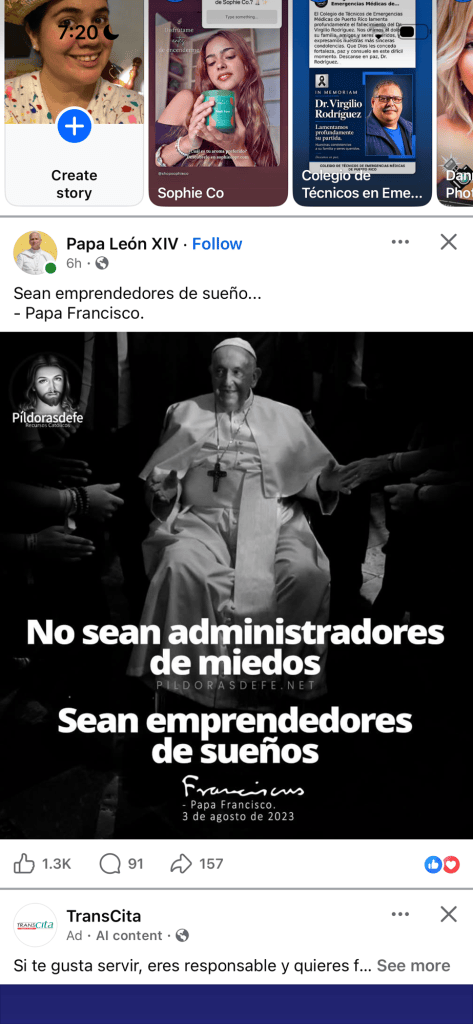
The attachment to the final version of this sketch is at the end of this blog post. I may publish the sketch a last time in the final form of a whole book with longer chapters and more accurate information (I can eventually compilate more accurate information and memories than the ones I achieved to compilate now, especially from my notes in social media, or I can correct information that became better understood later on), adding more meaningul depth at each chapter… but for now, this sketch version is final. Non more changes will be done to it and no more versions of this sketch will be shared.

Jesus Charity, we adore You with our whole growth…

Enjoy growing together in communion!

Memories of a Prisoner of Democracy (Sketch II)

“Where is your brother?” — Genesis 4:9

Here you have the next sketch of Memories of a Prisoner of Democracy.

Yes, these memories contain horrible accounts of so many cults to death offered through these years at the social abortion altar built for enforcing Unbeing to anyone that did not comply with the psychosocial terror tactics! They tell what I endured through covert malignant narcissism that became domestic terrorism, psychological terrorism, social-control tactics, social slavery, and exile from personhood, while a whole Unbeing War was, and still is, unraveling. They tell of years in which I experienced my own personhood as something that could be overridden, surveilled, interpreted by others, controlled, and institutionally displaced. Especially after 2014, they tell the story of a decade of de facto psychiatric imprisonment and psychological warfare: a long period in which coercive psychiatric interventions became entangled with questions of freedom, bodily autonomy, credibility, legal agency, family power, and the right to speak in my own name.

Yes, those are terrible things to write about, but it is also an exercise of historic reflection: why these lessons must be learned in this way to make possible a never more, after a never again, and after a never forget… and why learning these lessons will empower so many to embrace a more fraternal and human civilization? Yes, the details can become grotesque and horribly cruel sometimes… but this is not, ultimately, a tale of terror. It ends becoming a story of Love, a loveful story, because its deepest meaning is not found only in recounting what evil attempted to destroy. Its deepest meaning is found in witnessing what Love´s power triumphed over. These memories bear witness to what Divine Love can do with a history that seems irreparably wounded. They proclaim my conviction that no evil is so deeply corrupted that God cannot bring forth new life in its aftermath—not by calling evil good, not by pretending that injustice never happened, and not by erasing the wounds, but by transforming what comes after them. Love can take what was intended to diminish life and make its aftermath radiate life. Love can make the wounded places become places from which compassion flows. Love can make testimony become service. Love can make memory become mission. Love can make a never again become a responsibility toward those who come after us. This is what I mean when I say that Jesus Charity can transconsecrate and transfigure even the darkest chapters of a human history: the evil itself is never consecrated, but the life that survives it can be offered, transformed, multiplied, and made fruitful. Then something astonishing happens: we keep growing on, glowing on, blooming on, flowing on. Always on.

There is an extraordinarily beautiful image in Ezekiel 16. Jerusalem is portrayed as abandoned and covered in blood, until God passes by and declares that she shall live. Later comes what Scripture calls the “time of love.” God spreads His garment over her, enters into covenant with her, washes away the blood, anoints her, clothes her, and adorns her. The abandoned one is treated as beloved. The blood is washed away. The exposed one is covered. The forgotten one becomes a bride. For me, this image speaks powerfully about the covenant of spousal charity — la alianza de la caridad esponsal. God’s covenant does not mean that history did not happen. The blood was real. The abandonment was real. The suffering was real. But they do not receive the final word. Love does. The covenant changes the direction of the story, and so the memories that began as accounts of captivity can become testimony to liberation. Memories of degradation can become a proclamation of dignity. Memories of isolation can become an invitation into communion. Then the personhood exile and the unbeing imprisonment story becomes a loveful story because Divine Love enters history and refuses to let death determine its ending. That is the paschal mystery we proclaim: death does not receive the final word over life. Christ does.

No, these memories cannot end with me. In Christ Amor, for Christ Amor, through Christ Amor, and with Christ Amor, we are called into growing together in communion, becoming a living work of Divine Love-with-us. We are called to become what we receive: a people given to one another in love, a living Eucharist, a living manifestation of Divine Charity-with-us. We are family. We are Church. We are mission. We are called to embody and make visible His living icon of Divine Love. We are called to become living sacraments of charity: human lives through which another person can encounter mercy, dignity, accompaniment, truth, freedom, and hope, and that necessarily means walking together: walking as He walks, walking as equal brothers and sisters, helping one another to be, helping one another to do, helping one another to grow, helping one another to glow, helping one another to bloom, helping one another to flow… This is not merely something beautiful to contemplate: it carries responsible fraternity. The question asked after Abel’s death remains painfully alive: “Where is your brother?” Cain answers, “Am I my brother’s keeper?” The whole biblical story teaches us to hear how inadequate that answer is. Yes, our brother matters. Our sister matters. The vulnerable person matters. The forgotten person matters. The child whose voice has not yet been heard matters. The person whose suffering is being interpreted away matters. The persons who will someday encounter these memories and recognize something of their own life within them matter too.

That is why I am writing, its an act to adore Jesus Charity with our whole growth: I am responsible for serving as I am called to serve. I am responsible for the growth I am called to radiate. I bear fraternal responsibility today toward brothers and sisters who may grow on, glow on, bloom on, and flow on after these memories have been written and known. Perhaps someone will learn earlier what took me years to understand. Perhaps someone will find language for something they could not name. Perhaps a family will recognize a destructive pattern before it becomes generational. Perhaps an institution will learn to listen differently. Perhaps someone who believes that everything has been taken from them will discover that their capacity to love, create, serve, learn, dream, and grow has not disappeared. Then memory becomes service. Then testimony becomes fraternal responsibility. Then suffering, without ever becoming good in itself, can yield knowledge capable of protecting another human being. So, never again ceases to be merely a cry about the past. It becomes a promise made to the future.

I do not want these memories preserved because terror deserves a monument. I want them preserved because the lessons learned through those years can become seeds. There are lessons about dignity. Lessons about personhood. Lessons about coercion and freedom. Lessons about what happens when another person’s voice ceases to be heard as the voice of a person. Lessons about institutions and families. Lessons about conscience. Lessons about the body. Lessons about psychological freedom. Lessons about the sacred responsibility of caring for another human being without possessing that human being. There are also lessons about surviving without allowing suffering to become the architect of who we become. These are the lessons of this never more.

Yes,  this is a never more — and therefore, what now? Now we build differently. Now we accompany differently. Now we listen differently. Now we love differently. Now we become responsible for making possible conditions in which another human being can flourish. That is how a memory of suffering can become a living work of charity.

I have also thought about Mary Magdalene while writing these words. She comes to the tomb expecting to encounter death. Instead, she encounters the Risen Christ. And then she is sent. That movement matters enormously to me. She encounters new life, and new life immediately becomes mission. The resurrection is not something to possess privately. It sends. It announces. It creates witnesses. This is the movement I want these memories to make: not from suffering into endless contemplation of suffering, but from suffering toward resurrection, and from resurrection toward mission: We are family. We are Church. We are mission (that is the tittle of Jesus Charity´s iconography). We are called to witness that resurrection can become present in the here and now: whenever dignity is restored, whenever communion defeats isolation, whenever another person’s humanity is recognized, whenever somebody helps another human being grow into the fullness of who they are called to become.

Yes, through this story runs gratitude.Gratitude for Mikhael as my guardian angel (today is the guardian angels´feast) and to Jesus Charity, for the infinite gift and joy of giving Him light. Gratitude for the family of Heaven. Gratitude for every moment in which I was guarded, accompanied, redirected toward life, or reminded that darkness was never entitled to define the whole horizon. Today I give thanks for that guardianship—not only for what has already been, but for what I trust will continue more and more, forever more. Because this story is still growing. Its growthful stars are still growing, still glowing, still blooming, still flowing, growing together in more and more communion, on and on, always on.

I imagine that journey through an image that has become deeply meaningful to me: a red lamp-post standing beside the Living Church-boat with its incarnated charity nets full of fishes, that become growthful stars as the sword is raised towards the lamp post, that is color “faro vivo”, as we know it in Jesus Charity´s iconography.  Its signs point toward many destinations. One sign points upward, toward the Moon, sign of walking together as a human family of brothers and sisters that walk in Love, for Love, by Love and with Love. When the goeiz torch-sword is raised toward the lamp, the image says: there is still new life ahead, there is a whole mission ahead as domestic church, as pastores domésticos. This family evangelization project brings new life to darknesses never reached before, radiating His new albor as stars of Heaven that radiate new life in the middle of the world. There are still places we have never reached. There are still brothers and sisters we have never met. There are still children who have not yet been born. There are still lives that may be changed by lessons we choose not to bury. There are still works of charity waiting to become incarnate. There are still new forms of communion waiting to be built. There is still Light enough to show the way.

So… yes: the Memories of a Prisoner of Democracy contain terrible accounts, but terror, torture and cruelty are not their identity. Love is. They are a loveful story because they testify not merely to what happened, but to what Love can bring forth afterward. They tell of wounds, but they are written for growth. They tell of psychological captivity, but they are written toward freedom. They tell of social isolation, but they are written for communion. They tell of the denial of personhood, but they are written in service of a world in which the personhood and inherent dignity of every brother and sister are recognized. They tell of a past that must never be repeated, while asking what we are willing to build so that never again becomes something more than words… because we remain responsible for the wounds we are called to heal in His body, as rebuilders of communion, so His whole living body can grow on, glow on, bloom on and flow on as a mystical body full of a sacramental motherhood that comes from the fruits of the Holy Spirit. We are responsible for the brother, responsible for the sister, responsible for the child, responsible for those whose names we do not yet know, responsible for serving as we are called to serve, responsible for radiating the growth we are called to radiate, mesponsible for helping create the conditions in which another human being can grow on, glow on, bloom on, and flow more and more, forever more. Yes, this is our fidelity to His alliance of charity: allowing Divine Love to shape our lives until we increasingly become what we are called to be—living icons of Divine Charity-with-us as a family, as a domestic Church, as a mission, as a living Eucharist, as a people walking together as equal brothers and sisters, allowing the Holy Spirit to form our whole person so that our lives become a living work of Divine Love.

So, the memories sketching continue. I am still not finished; there is more terror, torture, pain, cruelty, and cults to death pending to be sketched, although the most difficult ones are already written. A possible date to finish this sketch, right now, is on October 12, Día de la Raza… but no matter how much psychological and domestic terrorism are still being sketched, these memories continue not toward terror, but toward testimony; not toward hatred, but toward charity; not toward the grave, but toward resurrection; not toward isolation, but toward communion; not toward the destruction of personhood, but toward its flowering. Yes, we write because we remember. We do forgive those who had tortured me and had made me suffer so greatly and cruelly… but we refuse forget. No, this is not a grudge; the reason to not forget is not because we are holding a grudge. We remember and deliberately choose not holding a grudge but embrace all the lessons. We remember because we are fraternally responsible. We are fraternally responsible because we belong to one another. We belong to one another because Love has entered our history and made covenant with us, and that has changed us forever. May that covenant, His new alliance and His sponsal charity alliance, remain written into everything we become. May every never again become a new beginning. May every lesson become service. May every memory capable of protecting another person be offered with courage. May every brother and sister entrusted to our path encounter a family willing to walk beside them. May we keep walking together beneath that lamp, the torch-sword raised toward the Light, becoming more and more the incarnate Eucharist Jesus Charity calls us to be for His glory, growing on, glowing on, blooming on, flowing on and on, always on, because Love has the final word, and Love keeps making all things new. No matter how deep a wound is, Love can always heal on and on, always on.

Here at the end, you have attached the latest sketch of Memories of a Prisoner of Democracy.

Enjoy growing together in more and more communion, ever more!