An Amazing Journey

During this week my third grade class completed the Project Based Learning (PBL) unit plan. Last Wednesday most students of third grade gave an oral presentation about the page they created. They presented themselves, presented their pages, explained why they created their pages the way they did, explained what media they used to create their pages, explained what they would do better in a next time and gave thanks to their classmates for their attention. Most used crayons and color pencils to make their pages. The most common details they said they would do better a next time is writing a bigger text, coloring the background and align the drawing better.

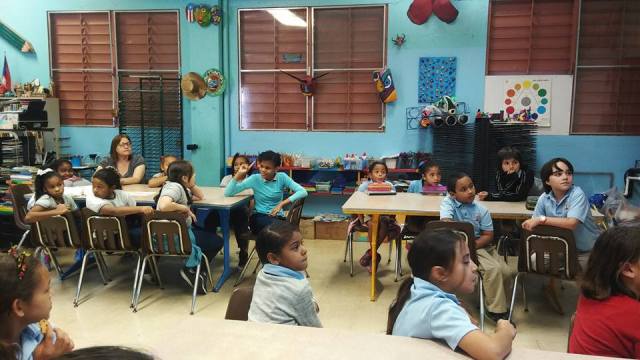
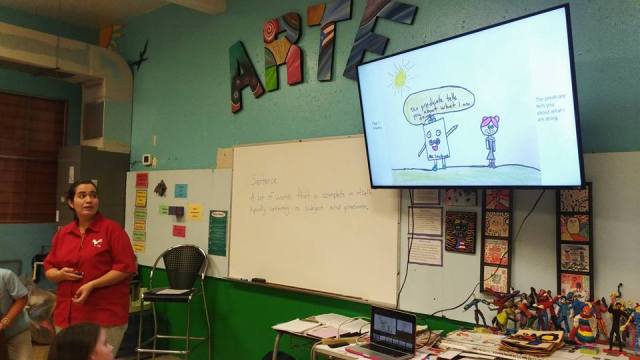
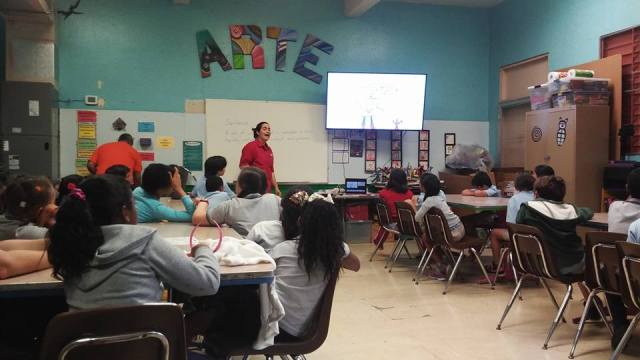
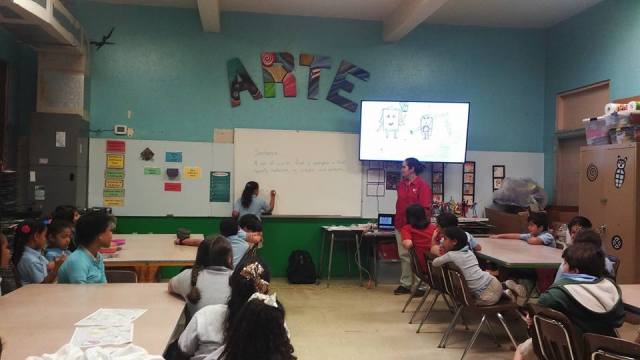
Yesterday we had the read-aloud of the product of the PBL, the e-book, with the third-grade students of the Luis Muñoz Rivera Elementary School, a public school that is just besides the UPR Elementary School. We had a lot of fun learning together! The Arts teacher was kind enough to let me give my class in his classroom. First, we discussed together what is a sentence and how do we usually recognize a sentence. Then I explained the process of creating a “sentence” as a protagonist character for our story: Mr. Sentence. Then I presented the tittle of the e-book: It’s Hard To Be A Sentence! I began to read-aloud the e-book with the help of the students, discussing how we can make Mr. Sentence happy. Through the story we discussed the characteristics of a written sentence, the parts of a complete sentence and the kinds of sentence of sentence. The kids participated actively from the beginning to the end of the read-aloud. After the read-aloud, some students wrote in the whiteboard examples of sentences that would make Mr. Sentence happy. They verified that each example was a complete sentence, they identified which kind of sentence each example was and they corrected the sentence If necessary.  After that they had a time for sharing together a simple snack: gummy worms candy, bananas, Cameos, Oreos, Chips Ahoy and Capri Sun juice, besides the water that is always available at the classroom. I thought they would not eat all the bananas, but they did ate them all, around 25 very big bananas! Actually, they ate everything, as any happy kid would do.

Here are pictures of the read-aloud:

Read-Aloud 1Read-Aloud 2Read-Aloud 3Read-Aloud 4Read-Aloud 5Read-Aloud 6Read-Aloud 7

A few students that were not able to give their oral presentation on Wednesday gave it today. Today the students, all of them, also danced the Weekend song. Here is a video of part of the Weekend song:

p

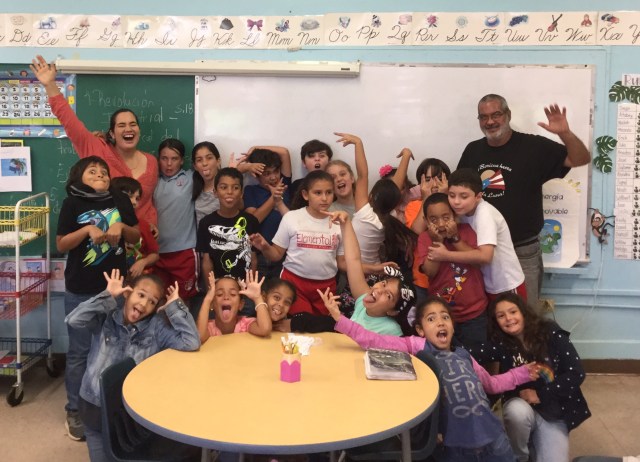
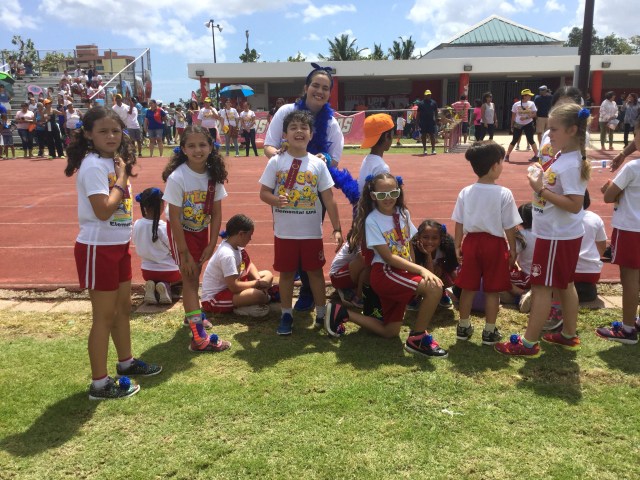
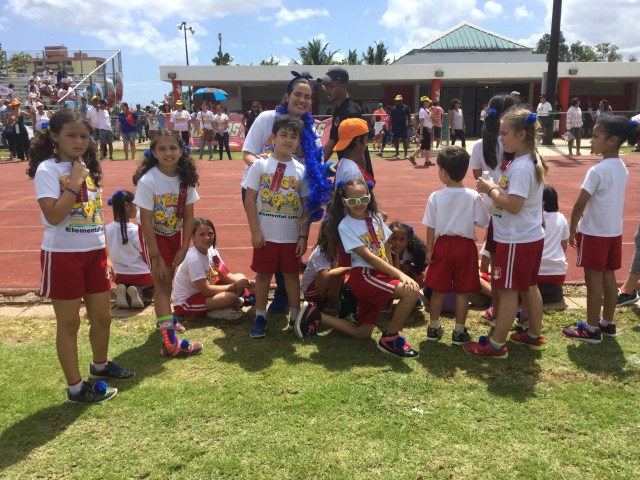
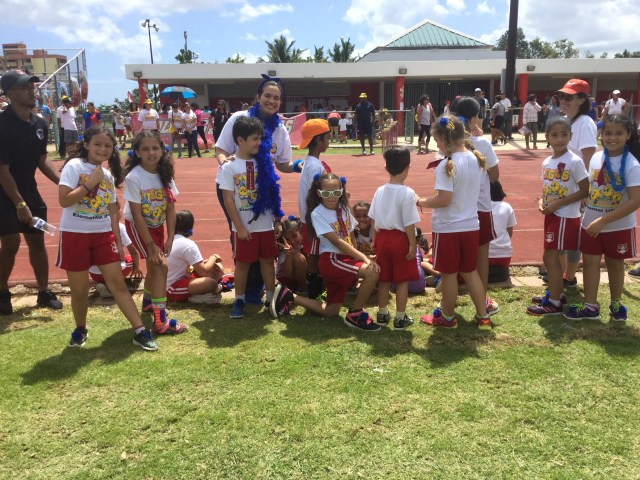
We had a few free minutes today in class, so I asked the students to take a photo together for the e-book. They had casual day today, so today was a perfect day for a photo! Here are the pictures we took together:

Besides sharing it with the students of the nearest elementary public school, the final product of this PBL, the e-book, will be shared with the student’s parents also, via email. I am in the process of gathering all the emails.

Now I am preparing to begin the final unit plan: verbs. It will begin on Monday with an effect of instruction instrument: an instrument to measure how much they know about a theme before beginning to discuss it. Those results are compared with the student’s results of the summative assessment, the evaluation after the theme had been discussed in class. I am enjoying so much my teaching practicum that beginning my last unit plan is a true pity to me. This semester had been truly short for me!

As a personal note, I must say that I am discovering that for me teaching is not only can be a professional vocation: it can be also a faith-based vocation. I believe that being able to teach is a gift given by God to serve others a Jesus did. As I had told in other blog posts, I usually do not talk to the students about my faith in order to let them embrace their own preferred beliefs, but even if I do not say nothing about my faith, I am “radiating” it through my personal formation, through my growth and my works. Discovering this way of living my faith, a way that is not ideological at all but “integractive”, based in helping to be, in helping to do, in helping to grow and in helping to radiate every human being unconditionally (as God does), beginning with my students, had been an amazing journey! I thought all this yesterday, while contemplating how the students were participating in the read-aloud and how to help them to understand better what we were discussing (they were having problems to distinguish between an imperative sentence and a declarative sentence because both may end with a period. I helped them to distinguish the content of an imperative sentence and the content of a declarative sentence). Yes, I am able to pray and teach at the same time without the students noticing it! This doesn’t mean I am perfect, I have a lot of things to improve, but that I am choosing to embrace teaching as a faithful service to my students, as Jesus served His disciples through obeying His Father in unity to the Holy Spirit. I am discovering that teaching can be an amazing way to cultivating faith, to live the works of mercy, to form my personal formation as a work of God’s Love and to grow in communion.

Let’s keep growing!

Two Amazing Opportunities

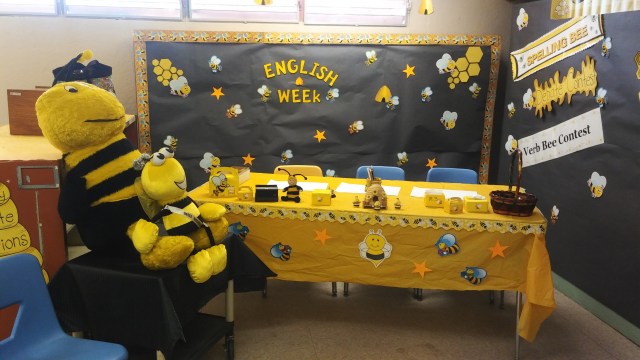
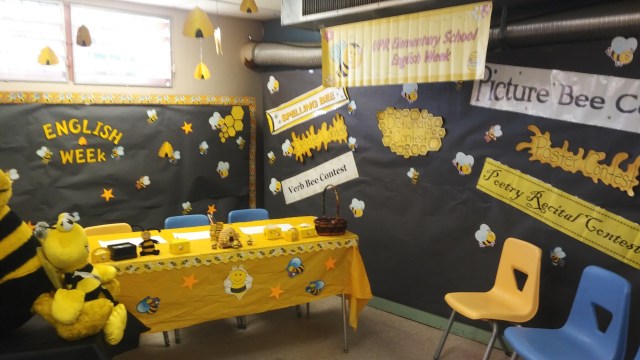
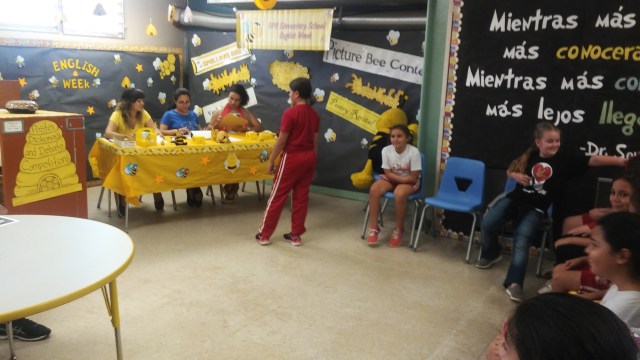
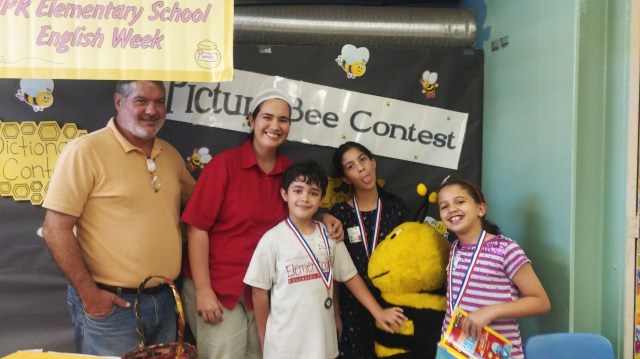
Last week was the school’s English week. The third grade celebrated it with a poetry recital. The ten students who won the place to be in the finals during the try-outs made an outstanding recital of the same poem (The Voice, by Shel Silverstein). The ten students did it great, but a jury composed of three ESL student teachers chose the three students that did it best: two girls (first and third place) and one boy (second place). The first three places won a medal, besides the book I bought for the first three places. The others won a participation ribbon. They did the poetry recital in front of some parents and all their third grade classmates. After the poetry recital, we enjoyed a cookies-and-juice snack together.

Here are some pictures of the poetry recital and a video of the student who won the third place:

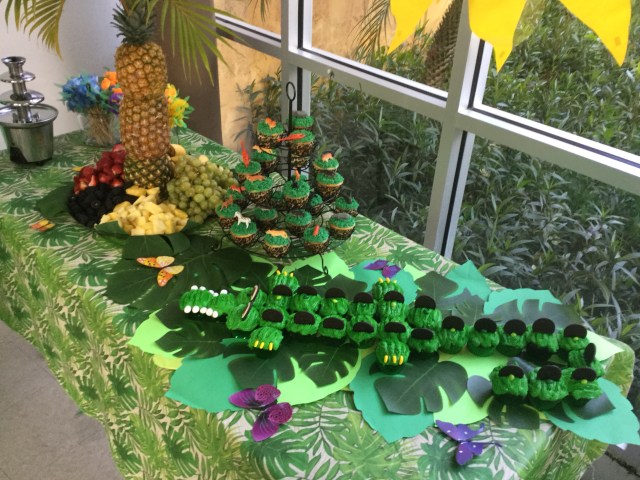
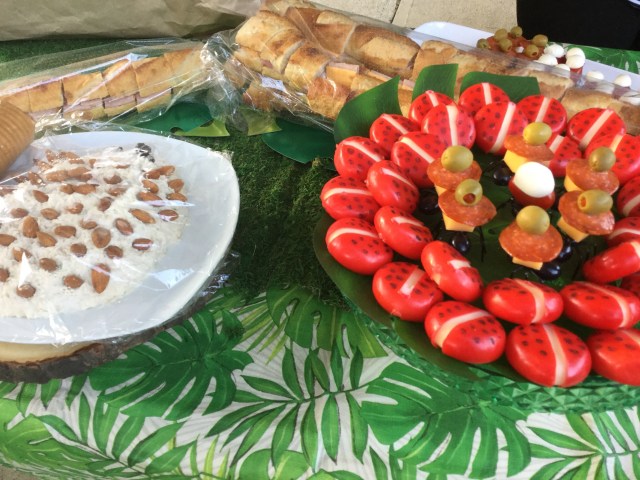
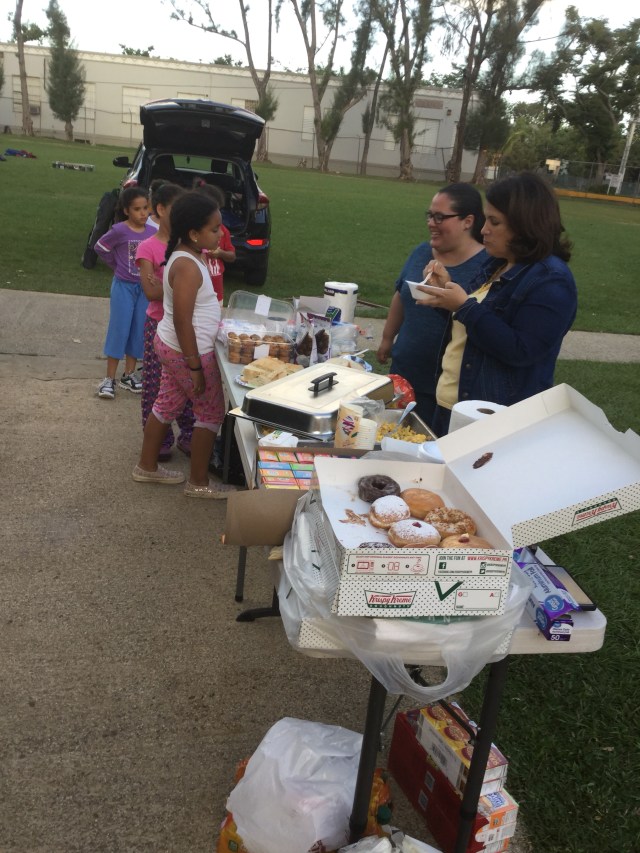
In the night between Friday and Saturday third grade had a sleep over night. That night was full of activities! Look at the pictures of the snack tables prepared by their parents, they were amazing!:

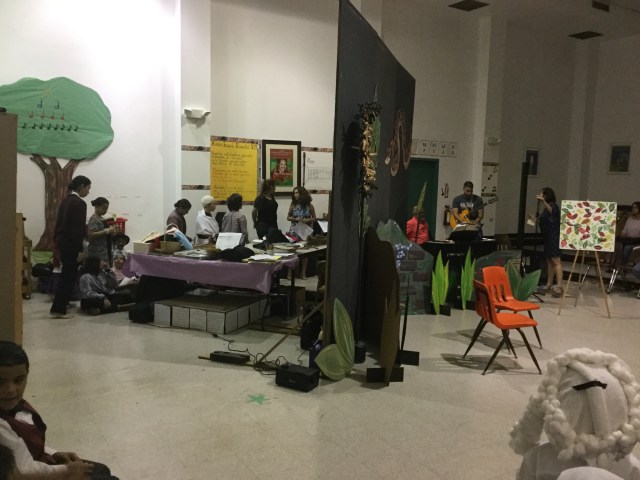
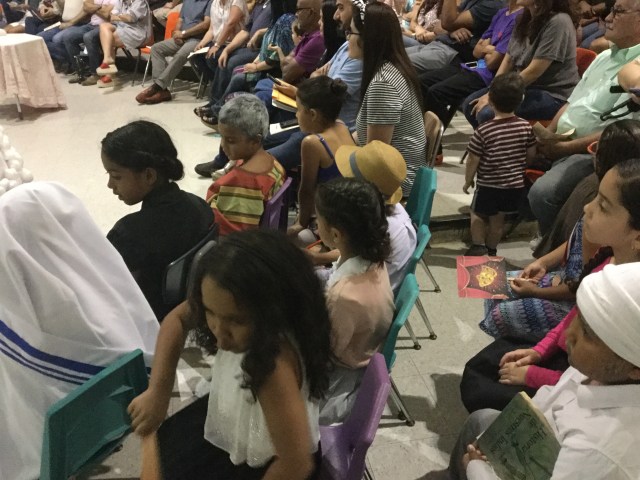
The first activity of the night was a living museum (students dressed like some historical people). After that they participated in a play. After the play, they had a music recital with flutes. You can see in these photos how packed was the music classroom were all these activities happened!:

After the music recital they had dinner, and after that I made an activity with them: a ceramics workshop. We created a clay medal to celebrate what we do best. For example: some made a medal with the inscription “best singer”, or “best student”. There were varied medals. At the end, I kept them in ziploc bags in order to prepare them for the clay oven. My ceramic’s professor helped me a lot with the process of designing the workshop and simplifying my ideas. We had a lot of fun, and they learned to apply the superlative “best” (almost all of them got that superlative adjective wrong in the comparative and superlative adjective test because it’s irregular). Here are some pictures of the medals they sculpted in the ceramic’s workshop:

After the ceramics workshop they had a movie night with popcorn included. They chose to see “Lego Movie”. They began to fall asleep during the movie. I stayed awake until 2 am and there were still voices speaking in very low tones at that hour, but they were very few. Almost most of them were already sleeping.

They woke up at 7:00 am (the parents and teachers woke up around 6:00 to help to prepare everything they needed) with soft hits of pillows given by the teachers. They were too tired to fight the teachers back. After they woke up we suddenly became sleeping bag packing experts: the parents (some parents stayed with us, but not all of them, some arrived early in the morning to prepare the breakfast) and teachers needed to pack around 15 sleeping bags (they were 19 students, and most of them brought sleeping bags) as fast as we could to re-organize the classroom. Meanwhile, the students changed clothes and had some hygiene time. After parents, teacher and students finished to do our respective things, the breakfast was ready. We shared everything with a great joy due being together. We all helped to clean and leave everything as it was before the sleep over. The students played a little bit, received some gift bags, and shortly after we all left.

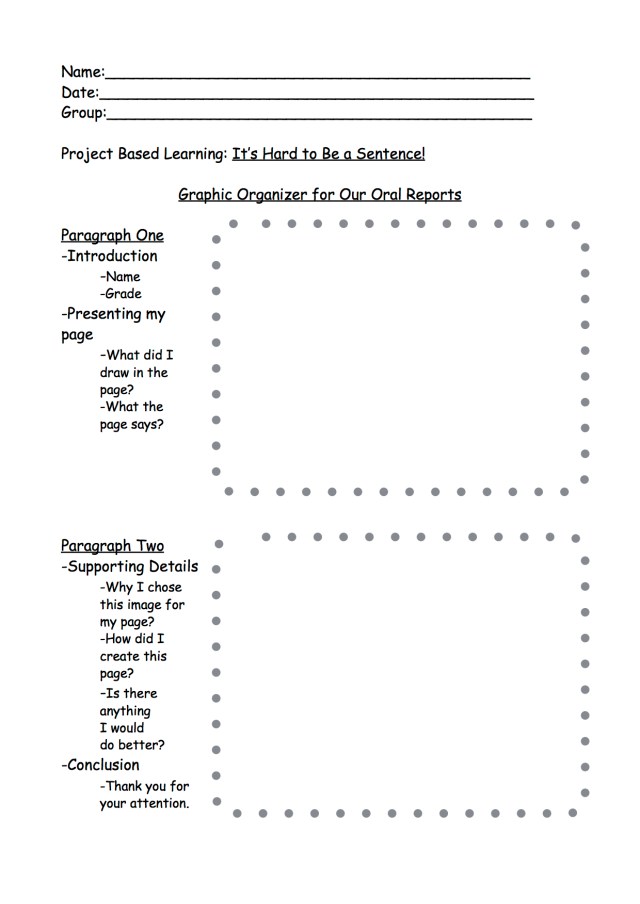
At the beginning of this week the students kept working with their Project Based Learning (PBL) activity. My mentor teacher explained them that his is a good example of team work, because creating this e-book needed the participation of everyone to be a success. Each one created his or her page, and then began working in their tomorrow’s oral presentations. I created a graphic organizer for helping the students to prepare their oral presentations. Here is a picture of the graphic organizer:

Oral Inform Graphic Organizer

The sleeping over and the PBL had been two amazing opportunities for us to experience how to teach and learn with a different approach. I am very grateful for both opportunities!

Let’s keep growing!

It’s Hard To Be A Sentence!

On Friday I prepared a cause and effect summative assessment for my students to conclude that theme. Instead of giving them a test, I gave them an multiple intelligence exercise: writing a cause and effect from the story It’s Hard To Be A Verb!, making a drawing about each one of them and then writing a sentence describing them. Here is an image of the exercise and of the rubric I made to grade the exercise:

Cause and Effect Summative Assessment

Cause And Effect Rubric

For me is very important to do a diverse assessment: to evaluate my students in different ways, not only through tests. For me test should not be more than 50% of the summative assessments. That way I give the students the opportunity to demonstrate his or her learning through different learning styles. I have planned four summative assessments for the time of my teaching practicum: two tests (one about comparative and superlative adjectives, that I already gave, and one about verbs, that will be given during the last week of class), one multiple intelligence exercise (the one I gave yesterday) and one Project Based Learning (PBL) product that they will be creating during these two weeks.

My students of third grade are going to have a sleep over in the school at the end of this week, and I will be with them. I need to have an activity for them, and I thought about a very cool activity. At Saturdays, I have a ceramics class at the University. I have almost completed the two required projects for the class, and I still have one whole bag of clay to use. I have thought to use that bag of clay to give my third-grade students a ceramics workshop during their sleep over. We would be creating clay medals. I have always dreamed about giving a ceramics workshop, I love to teach by modeling things. We would be creating clay medals. For doing this I would need the permission of my ceramics professor, because I would need to review some teaching techniques and he must agree to fire my student’s medals with the University’s clay oven. I asked him this last Saturday about this, showing he a lesson plan for the activity, and he agreed to help me to give a ceramics workshop during the sleepover. I will be modeling the clay medals with the students and he will fire the medals in the University’s clay ovens. I am very happy about giving this workshop!

I am also very happy because today we begin our PBL. I structured it a lot in order to be able to complete that kind of learning method with third graders. Here is the lesson plan of the PBL: It’s Hard To Be a Sentence PBL Lesson Plan

The product of the PBL will be an e-book, we are going to create it together and share it with a read-aloud with third grade students of a public elementary school that is nearby. Today I introduced the PBL with the following Power Point presentation: Its Hard To Be a Sentence! PBL

We also discussed the driving questions of the PBL and designed the e-book story (it must be related with the driving questions) and delineated the PBL schedule. We titled the story “It’s Hard To Be A Sentence!” Here is the story design of the PBL, for a group of 19 students (each student is supposed to design and create one page of the e-book): It_s Hard To Be A Sentence! Story Design

The hardest thing of today’s class for my students was understanding the homework: to bring ideas about “imagining” the sentence as a character. I mean: usually, when we want to visualize a sentence, we write just it, but in this story the sentence is not just written text: it is a character, so it needs to have a concrete image, a body, two eyes, a mouth… They got the idea of “visualizing” the sentence as a character after the third time of explaining it, when I explained it with an example.

Today we were told that on May 3 we are expected to go to the University students’ general assembly, so we should not be teaching in the school that day. I already have a coordinated an activity for my students for that day: the read-aloud of their PBL product (the e-book) to the third-grade students of the nearby elementary public school. Because the activity was already coordinated and it took some effort to choose a day and an hour in which both groups could be together, I was told I could come that day to the school. I had barely come to students’ assemblies, I came to two the last year and I had a lot of anxiety when I was there because I am usually against strikes, and my University campus is very well known for its students’ strikes. I had rarely agreed with doing a student strike, although I had collaborated with food to those students who chose to make a strike because no matter how disagree I could be with that they are human beings and they need food and water. Some people insist we should behave as victims of the powerful, of our limitations, of our lack of resources, of what we can’t do, of all the kinds of crisis that our society faces… I don’t agree with that. I think that we all are always able to keep working and shape ourselves according to what’s inside of us and according to the best person we can be in every circumstance, and by doing so, not by engaging in strikes, we are able to create a better outcome for everyone and for our country. I believe that all my students have the capability to define themselves as person according to who they are meant to be, and my duty as student teacher is not participating in strikes, but to help them to be the best person they can be. This is my opinion. I understand that each student has his or her own approach to strikes and I never have sought to impose to anyone my anti-strike vision. My style of fighting for a better learning community is by investing my class time in affirming the best personal growth possible of those who I am called to serve and teach, not by investing my class time in opposing to someone or something with a strike.

I probably will be going to the students’ assembly as soon as the PBL read-aloud is over. It is important to go, because part of being an University student learning to hear all voices democratically and respectfully, even if you don’t agree with each other.

Let’s keep growing!

A Risky Adventure

These days I had been teaching cause and effect and planning a PBL for the next week. It was supposed to begin today, but the students had been arriving late to my classroom (they have music, physical education or arts before my class) and we lost a class day due another power outage, so I needed extra time to finish the previous lesson plan.

Planning a PBL for third graders is a risky adventure. It needs a lot of structure, and that takes time. I first planned a one week PBL. Due the lost time, I reduced that lesson plan to four days and presented it to my mentor teacher. I still have two more things to cover before classes are over, so I couldn’t extend the PBL more than four days, or so I thought. When my mentor teacher read it, he told me that I could merge one of the next themes into the PBL and extend it to seven days. For him was important to extend the PBL because in the classroom quality is better than quantity. He is right: a seven days PBL is way more better in quality terms. The product of the PBL will be shared with the third grade students of a public school nearby. I want my students to learn to serve others with their learning, and to socialize with kids that are not of their own learning environment.

Today we had the Poetry Recital try outs: all the students recited the poem “The Voice,” by Shel Silverstein, my mentor teacher and I scored them with a rubric and the ten best scores received an invitation for their parents to the Poetry Recital in the library at May 25. The student who got the eleventh best score began to cry when he knew he would not be able to recite the poem in the final Poetry Recital. I talked with my mentor teacher to see if we could squeeze one student more, but my mentor teacher thought that it was better to help that student to learn how to lose. I am a student teacher who still needs to learn a lot about children, so I did what he suggested me. Learning how to lose is a necessary lesson in this life. Some learn it sooner, some learn it later. These are the kind of lessons that are necessary for helping our students to grow as person, not merely helping them to know some skills.

Let’s keep growing!

Growing Opportunities

Today I had plenty growing opportunities. The first thing I did today was completing and correcting the Power Point presentation for tomorrow’s class (it was supposed to be for today’s class, but they came late to class and I used another shorter material), that is aimed to discuss the reading of It’s Hard To Be a Verb! from the cause and effect perspective. This presentation integrates the enduring understanding of the lesson plan: knowing the causes of what we do can help us to change our behavior.

Later I printed, folded and prepared the invitations to our celebration of English Week: the poetry recital of Shel Silverstein’s poem The Voice. Here is an image of the invitation:

PoetryRecitalInvitationEnglish Week Invitation 2

When I went to the library for printing I discovered that the school is having a book fair this week. I love book fairs! I was among the first ones to see the available titles. I went to the classroom to tell my fellow student teachers about the book fair and then I went with them to pick some books. I saved some money last week by eating Chef Boyardee at lunch instead of buying food, so I was able to buy three books for my students: one of National Geographic about famous failures, a graphic novel of Shakespeare and a coloring book about the Dalai Lama. These books will be the prizes for the first three places of the English’s week Poetry Recital. I liked the famous failure’s book so much that I wanted one for myself, but there was only one copy left in the book fair. I ordered it and the librarian will tell me on Wednesday if it is on stock. Here are pictures of the book fair and of the books I bought for my students:

bookfair1

bookfair2

bookfair3

At English class, we first talked about how much we all enjoyed the field day, about what we did on weekend and about the English week. This Wednesday they will have trials for the Poetry Contest (only ten students can participate in the final Poetry Recital) and they need to know it for practicing the poem prior that day. Some of them already know it! I showed them how to recite a poem by reciting myself a poem that I wrote when I was in high school for reciting it in my graduation. The poem is in Spanish, but it works to show how a poem can be recited. The poem is titled Desideratum. I recited it to my students by memory because I still remember how I recited it when I graduated from high school:


Yo creo en mis sueños

Vivo, lucho por ellos.

Cada instante en vuelo

Me remonto alto al cielo.


Ser estrella es mi fin

Siempre seguir, vivir

Proseguir, feliz ir,

Cual el viento existir.


En mi ser tengo fe

Hallo fuerza y poder

Yo digo “lo lograré”

Todo, sé lo podré.


Me Abrazo a Su mano

Y de Él yo me fío

El camino trazado

Recorreré sin desvío.


Sea bueno, sea oscuro,

Será lección, será paso

Cuando llegue el futuro

No miraré el ocaso.


Mis ojos contemplarán

El albor de otros sueños

Y alas me surgirán

En pos de sus destellos.


Con el alma engrandecida

Y el espíritu aventurero

Emprenderé nuevas vías

Recorreré nuevos senderos.


Mas mi corazón aquí queda

Entre sueños y quimeras

Ya mi niñez se aleja

El futuro me espera.


Cuando mire hacia atrás.

Y vea el camino andado.

Mi alma con gozo gritará.

“Lo logré, he triunfado”.


After talking about the Poetry Recital, we discussed some vocabulary words of the reading and some details of its story elements. They wrote in the white board the words they didn’t understand and we learned their meanings together. There was a word that was particularly problematic: the word “sitter”. They all thought it was a person who cares a child, like in “baby sitter”. However, in the story it means something else. I asked them to read the sentence where that word that used to see if they could discover the word’s meaning with its contexts. They read the sentence and they were able to discover the word’s meaning: in this story, “sitter” means “chair.”

I was supposed to be interviewed last week by the professors of the Differentiated Education master degree as part of my process of admission, but then the power outage happened, the Faculty of Education student dean told me that all the activities were cancelled and I left the University without being interviewed. They called me later to let me know that they would be making the interviews in another place, but when I got their call I was too far away to come back to the University. Well, after today’s class that interview was rescheduled for tomorrow at 3:00 pm. I will take it as another growing opportunity, no matter if they admit me or not.

Let’s keep growing!


Reasonable Accommodation

What is reasonable accommodation? Let’s begin with the definition given by United Nations in the Convention on the Rights of Persons with Disabilities:

“Reasonable accommodation means necessary and appropriate modification and adjustments not imposing a disproportionate or undue burden, where needed in a particular case, to ensure to persons with disabilities the enjoyment or exercise on an equal basis with others of all human rights and fundamental freedoms.” In the United States, including Puerto Rico, federal law requires that reasonable accommodations be made for employment, education, housing, courts, and public services. Refusal to make an accommodation is equal to discrimination.

How would I define it in my own words? I would say that reasonable accommodation are some adaptations that are made in order to make possible that the person can function successfully in a concrete environment according to a certain set of rules. What I mean with “function successfully”? I mean that the person can accomplish what is expected to everyone in the same position. What I mean with “concrete environment”? I mean that reasonable accommodations are applied to specific environments. For example: if you can’t swim without assistance, you won’t have that need mentioned in your college reasonable accommodation letter, except if you’re enrolled in swimming classes. What do I mean with “according to a certain set of rules?” I mean that reasonable accommodations are made in relation to some specific standards that are meant to be applied to everyone, not only to the persons with diverse functionality. For example: when a student enrolls in a class his learning must be graded by the class’ professor, that is a rule that is expected to be applied to all University students, no matter if they are functionally diverse or not.

How reasonable accommodation works? It varies. In school, it works as part of an IEP (Individualized Education Program; in Spanish: PEI). I never had one of these. I knew how to blend myself in order to get along. Learning like anyone else was a struggle for me through all my school years. My teachers made some “reasonable accommodations” by their own because I was a “brilliant and creative student” that evidently do not fitted the ordinary circumstances. For example: I was allowed many times to spend more time in the library or in creative projects, instead of being bored in the classroom. The problem was that because there was no IEP, this depended solely in the good will of every teacher. Some teachers allowed me to learn my own way, some didn’t. Some teachers even considered that the adaptations that were made for me where “privileges” that I shouldn’t have. For those teacher, I should learn to be like all other students. When the teachers didn’t make any adaptation, my frustration was a huge problem, I visited the social worker (she was like my counselor) a lot because of that.

Why I never got an IEP through all my school years? Because I learned to compensate my diverse functionality with my giftedness since very young and the schools where I studied both were diverse enough to integrate my twice-exceptional learning style without needing an IEP. For example: I remember myself in kindergarten observing what my classmates made in order to I do the same. I didn’t process the oral instructions, but I did the correct work because I observed what the others were doing. No one taught me this coping system for not understanding the instructions, I realized it by own because I wanted to be able what I was supposed to be doing without any help (I had a strong independent tendency). This was one of the most common coping systems I ever used during my school years. I created many copying systems like that one, that no one taught me, just to do things like my classmates. Another factor to never getting an IEP was that although I clearly did not fit within the normal expectations of all students, I was simply considered a “brilliant student”, so some of the factors that would have been identified in other students as symptoms of ADD or may be Auditive Processing Disorder in me were considered simply a natural part of being “brilliant”. For example: I got bored a lot of times and began to draw and daydream in the classroom, but instead of considering that a problem, I was given time and space to do it in my own terms because I usually ended classwork faster than my classmates once I got the instructions right, so I could have time to spare watching the sky, coloring or creating something. So, I grew up as a “different student”, never as a “disabled student,” and I am grateful of growing up without “disability” labels. My greatest academic problems where maths and sciences, but I achieved A’s and B’s even in those classes. I only got two C’s in my whole school years, both in High School, one in trigonometry and one in chemistry. I repeated trigonometry in summer and got and A. It all depended in how the classes were assessed.

The problem with grades began in college, when I couldn’t compensate any longer and I began having more C’s and D’s, and to fail classes. The first year in the Faculty of General Studies was a dream and easy as eating cake because I love to read (you need to read a lot in first year) and the assessment was mainly essays made at home or tests where made in laboratories. The problem began from the second year and beyond, when I began to fail classes despite all my efforts to pass them, or would have a lower grade than expected for my huge efforts. The circumstances of each failure or underachievement were varied. Among the possible reasons of underachievement or failing were:

-The class was assessed solely by test that depended mainly in memorization of information. I was unable to memorize big chunks information.

-The class were given solely via sequential conference, without any visualization of the information. That meant that I was responsible to visualize all the information by my own, and that can take a lot of time.

-The class assessment depended solely on auditive memory or grammar-translation method, so it was impossible for me to learn something because I do not learn with any of those ways. This happened a lot with learning third languages.

-The class had a specific schedule for delivering exercises and works and I forgot to give them due completely forgetting the delivery date. This happened specially with writing courses: the professors considered me a gifted writer, but I was unable to remember when to give them my works, so I had a bad grade or failed the class simply because not delivering the class works on time of forgetting to deliver them.

-The class had a specific time sequence, like Public Speaking class, and I had no coping mechanism to compensate my lack of time awareness. I am very good at spatial awareness, but I am a mess with calculating time.

-Sometimes I confused the numbers of the test schedules, so I would go the test in the wrong time or to the wrong classroom. For example: if the test was a “8:10, I would read “18:00”, or if the classroom said “12”, I would read “21”.

-I failed some classes simply because was unable to write the test by hand, my handwriting was illegible. I am, in general, very good at writing essay tests, but I am very bad in writing by hand, it was even painful to me. No matter how much I studied about the material, the handwriting was illegible so I could express my knowledge.

-Sometimes I did not hand my works on time due perfectionism: the work was never good enough for me.

A doctor made my first reasonable accommodation letter in 2009, for attention problems. However, it was worthless: the University where I studied at that moment, the University of Navarra, refused to accept the reasonable accommodation letter made by my doctor in Puerto Rico for them because in Spain “those letters were not used” and “the University did not have services for special education students” (sadly, I am quoting literally what I was told in the ecclesiastical faculty of theology). I do not wish to anyone the dreadful experience of finally achieving your academic dream, being accepted in an institution for studying theology and philosophy, and then failing some of your ecclesiastical faculty classes, the “easiest classes of the whole University”, miserably just because you did not had reasonable accommodations available. Eventually I developed test anxiety and psychological trauma (the trauma was not only due forced class failing, but it was part of it), that I overcame with proper treatment and support from the University of Puerto Rico. My shook was double because, as far as I knew, if a university had access to federal funds they must honor reasonable accommodations. I studied in Spain thanks to federal student loans, so if the University of Navarra students had the privilege of being able to request US federal students loans if they were US citizens, like I am, I always assumed without asking prior enrolling the University that they must honor reasonable accommodations according to ADA law. I was wrong, and I discovered it the hard way: when I brought the reasonable accommodation letter they had no idea of what reasonable accommodation was, nor had any interest in learning how to make similar adaptations that could be applied to the Spanish educational culture and would have allowed me to pass the classes I failed. “You need to learn how to be a normal student” was the kindest comment I heard about reasonable accommodations there. I don’t think they did this on purpose, the main issue was the discrepancy between Spanish higher education system and US higher education system. Spanish higher education system is not as inclusive as higher education system in United States. In Spain university assessments mostly depend solely on tests, and they are designed by default to be tests that not every learning style can pass. For example: in Spain, if you are in college and you don’t have the short memory, the attention or the handwriting to write and pass the test, you won’t be usually offered any other kind of assessment because that is not their way of doing things at University. If you are not able to do those things, you simply should not study a career in the University but in something they call “Professional Formation” (in Spanish: “Formación Profesional”, or “FP”).

I tried to get a reasonable accommodation letter for studying in the next university after University of Navarra, but I was unable to demonstrate my failed classes at the Ecclesiastical Faculty of the University of Navarra due a technicality: the Ecclesiastical Faculty of the University of Navarra did not wrote my real grades on the transcripts. Instead of writing the failings I got in some tests, they simply wrote “No presentado”, what means that I simply did not presented to the tests. I discovered this too late to claim it, after I returned to Puerto Rico (I was so frustrated and impotent with the whole situation that I was living that when I left the University of Navarra I only requested one transcript of the ecclesiastical faculty and I only opened it when it was strictly necessary: for discussing it with the new faculty I enrolled; I never requested a transcript of the graduate classes in Philosophy, which I did passed with huge efforts). They probably did this believing that they made me a favor by avoiding to write a low grade in my academic transcript, I knew many students requested the professors to write them a “no presentado” if they did not pass the test. For me it was not a favor: because I was unable to demonstrate that I was failing classes, I couldn’t get the assistance I needed in the next university. Of course, I failed classes again. I also took a psychometric test just to demonstrate that the failings were not caused by lack of intellectual capacity (the result of the IQ test was 140 but I was unable to pass the simplest Hebrew test). Only then, after I failed again and I lost my academic progress again, I began to receive help.

When I arrived to the University of Puerto Rico to study in the Faculty of Education I was better prepared in term of psychological resources, although I still needed to deal with the psychological trauma caused by forced failing and forced testing. I talked clearly about my lack of reasonable accommodation experiences in the office for disabled students of the University of Puerto Rico in my first interview with them, after being admitted to the Faculty of Education to study to be a ESL certified teacher. They assured me that that would not happen again with them: in the University of Puerto Rico I would be able to access to help before I began failing and the reasonable accommodations requested by the doctor would be honored if possible. For example: it was not possible to make a reasonable accommodation for not taking tests at all, but it was possible to make a reasonable accommodation that states that the professor must take into consideration that the student have problems with memorization. That way my assessments could not depend solely on memory-based tests.

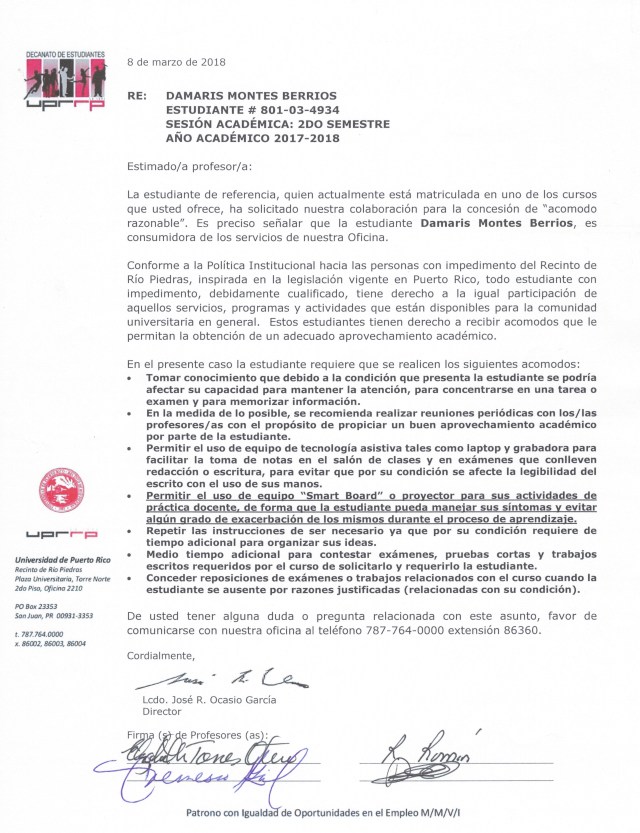
To give you an idea of what reasonable accommodation is, here you can see (in Spanish) my reasonable accommodation letter of the University of Puerto Rico:
Carta Acomodo Razonable

The signatures are the signatures of my professors and my mentor teacher. Each one of them have a copy of this letter and have agreed to follow its guidelines. With this letter I got a B in an elective and “easy” Humanities class whose assessment depended 75% on memory-based multiple choice tests. Besides that class, all other classes’ assessment depended 50% or less in memory-based tests, and I passed them all with A. My usual problems are needing to clarify instructions, needing extra time to finish some works, needed to be reminded of deadlines and sometimes needed to deliver a work incomplete because I was so perfectionist that the professor thought it would be better for me to simply deliver the work as it was, correcting it and allow me to make the corrections and then grade me. My perfectionism ended with the professor’s corrections.

A little comment about this letter: the underlined sections refers to the use of Smart Board or projector instead of a whiteboard or a chalkboard. I think it says so a little bit dramatically, I wouldn’t use those words and my doctor did not use those words neither, those were the University’s words. They chose to write it that way because, due my problems with handwriting, being forced to write by hand had caused anxiety in some classes and they did not want me to have anxiety in my teaching practicum. Due that reasonable accommodation the Faculty of Education assigned me a school with a Smart Board available to make my teaching practicum. Although now I do write by hand sometimes and it does not cause me anxiety, I still rely mostly on technology to give my classes and function as teacher. I am a strongly visual, applicative and meaningful teacher: I always have something to visualize the auditive information, I always seek to apply the information and I always try to help students to give their own meaning to the process of learning that information.

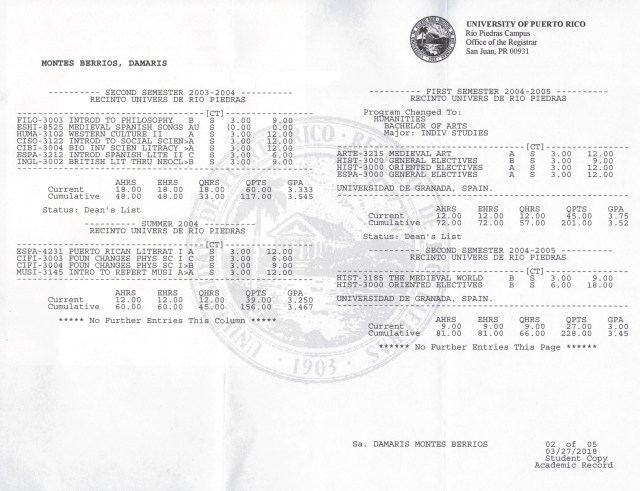
So, the difference between having reasonable accommodation and not having reasonable accommodations can be seen clearly in my transcript of the University of Puerto Rico. Prior 2008 I did not have reasonable accommodation. After 2016 I had reasonable accommodation. You can see the transcript here:

Transcripción de Créditos 1 (1)

Transcript 2 (1)

Transcript 3 (2)

Transcript 4 (1).jpg

Transcript 5 (2).jpg

As you can see, my academic progress is way more stable with reasonable accommodation. Beyond the grades, having reasonable accommodation allows you to give your best without being penalized for being how you are. With it there is no anxiety, no trauma, no stigma. I feel functional with it. I feel integrated and part of where I am studying. I can invest my energies in being the best I can be, instead of investing them in being able to do the things like anyone else does. It is also true that reasonable accommodation by itself is not enough for achieving academic progress, not even using Adderall is enough for that. Learning organizational skills as copying system for attention problems and getting psychological support for dealing with the emotional sensitivity and the perfectionism related with being gifted was also necessary for getting a satisfactory academic progress. My problem with organizational skills was that I was insisting in doing what works for others, numeric-sequential based organization, when what works best for me is visual-spatial based organization. My ESL mentor professor taught me a lot about visual-spatial organizational skills, and that was also important to keeping my best academic progress possible. Learning how to organize and keeping track of time with an Ipad also helped a lot with that, and also helped me to get an app to compensate the lack of time tracking skills needed to pass the Public Speaking class. I repeated that class again and got an A.

I made an interesting question in some of my education classes that I should mention here: should I as teacher wait to an IEP to make a reasonable accommodation? The answer always was a no. Waiting an IEP to make a reasonable accommodation when you see clearly that it is needed can harm the kid academically and specially psychologically. It can cause anxiety. It can interrupt or alter the child’s development. It can disconnect the student from learning. Besides all that, not granting a needed reasonable accommodation dehumanizes you as teacher. The need must be informed to the proper authorities (special education teacher and parents) but action should begin as soon as the need is identified. It is also important to never identify a student that needs a reasonable accommodation as a “disabled student” because that is not true: we all can learn and we all have different capacities. Technically speaking, we are all disabled, we all have things that we can’t do, like speaking Chinese. We generally identify people according to what they can do (He is a doctor, she swims, they are artists…), not according what they can’t do, and that principle should be applied to “disabled” persons too: we must define them according to what they can do. We must learn to embrace everyone’s capacities, so we should identify the students that need reasonable accommodation as “functionally diverse students”, not as “disabled students.” I agree with that. For example: a blind student is not a student that can’t see. A blind student is a student that learns auditively, orally or through touch only.

A last curious detail about reasonable accommodation. Curiously, I do not feel “disabled” with a reasonable accommodation letter, although that letter is given by the “Office for Affairs of Disabled Persons” (In Spanish: OAPI, Oficina de Asuntos para las Personas con Impedimentos) of the University of Puerto Rico. With the reasonable accommodation letter I feel, as I said, funcional, integrated and able to be a part of the place I study as how I am. When I felt really “disabled” was prior the reasonable accommodation letter, specially in the University of Navarra. When you can’t avoid failing classes just because you learn different and need to do things differently you really feel like a “disabled” person. I still remember one of the first things I was told in the process of enrollment in the Faculty of Education of the University of Puerto Rico, when they knew I was being interviewed by OAPI for getting a reasonable accommodation letter: “you are not disabled, you are different. Learning in a different way is not being disabled, is doing things in a diverse way”. The fact is that I had never been “disabled” with the reasonable accommodation letter.

I hope that I can help some students with reasonable accommodations to reach their best because I really know the difference that having reasonable accommodation can make. I truly believe that we are all capable of learning how to give our best with the capacities we are given, and I hope to inspire that to my students, specially to those who are functionally diverse.

Let’s keep growing!

 

Ordered Chaos

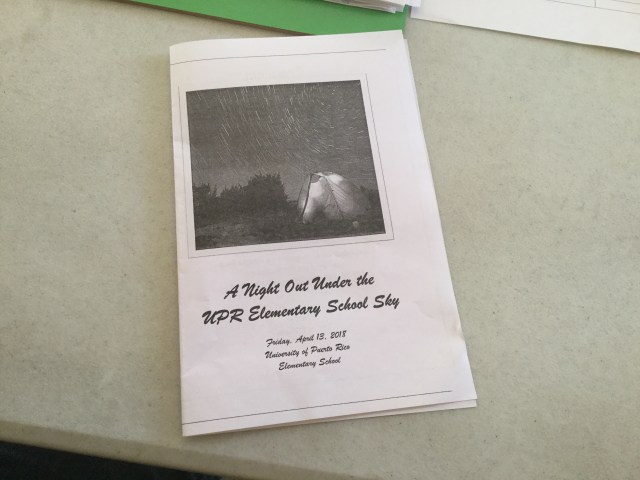
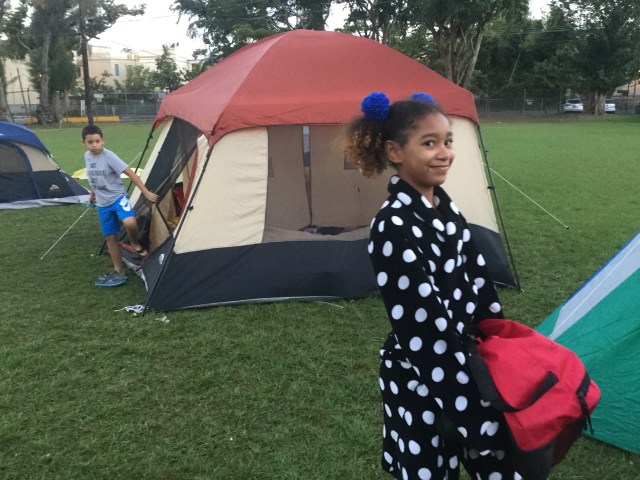
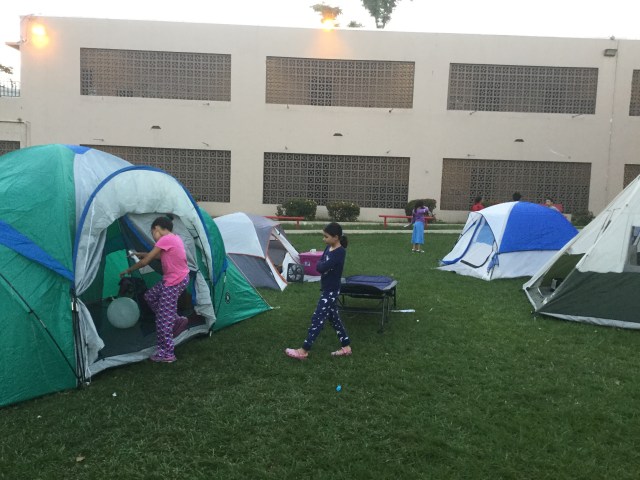
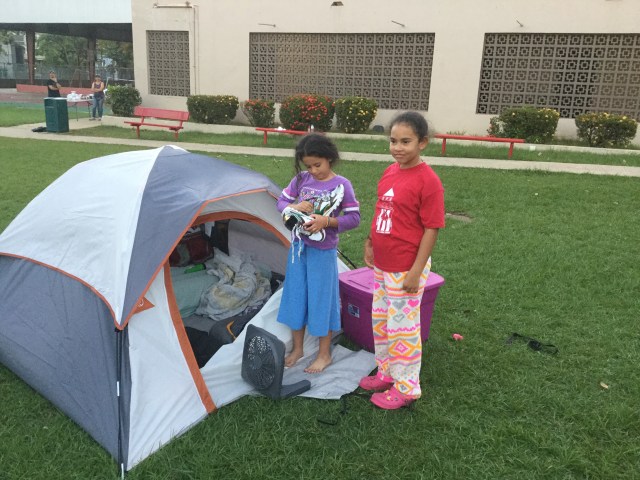
From yesterday at 4:00 pm until today at 8:00 am I had been in a very dynamic activity: a student camping at the school’s playground. After asking for all the necessary permissions, my mentor teacher was granted the opportunity to make a camping in the school for fourth grade as part of the theme of their English class, the universe. Twenty four students of fourth grade stayed a night at the school. The activity was called “A Night Out Under the UPR Elementary School Sky.” There were activities of several classes planned.

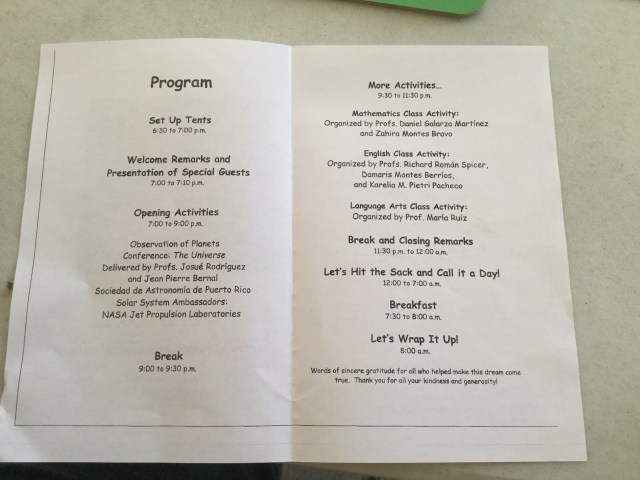
Here is the official program of the activity:

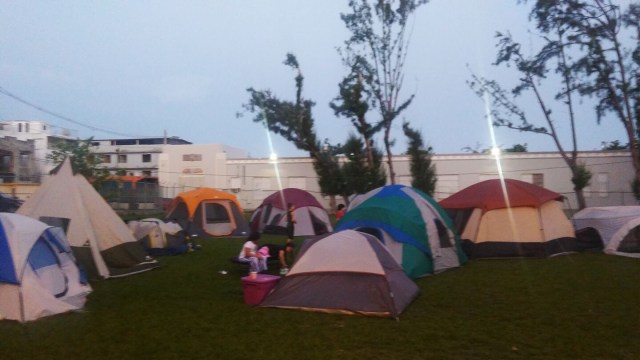
The first thing was building the camp. We organized the tents in a huge circle and left at least one window open in each tent to facilitate the supervision. Here is a picture of our camp:

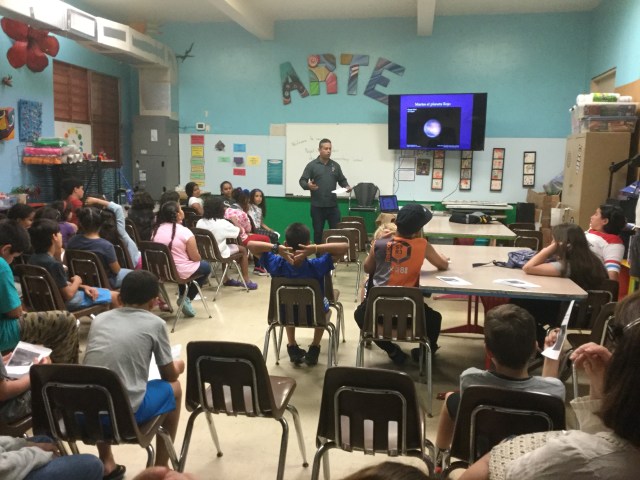
The principal activity was related with the universe: observing the planets and the stars with telescopes of the Puerto Rico Astronomy Society. First they saw Venus. Then the people from the Astronomy Society gave an amazing conference about the Universe for the students. In the conference the students were able to make all kinds of questions about the Universe. For example: why Titan has atmosphere? Here is a video of a very small part of the conference given to the students, along two pictures:

After the conference the students were able to use the telescopes again to see other planets. The teachers and the parents also were able to see them. Everyone learned a lot, including teachers! The Astronomy Society brought two big telescopes. Here is a picture of one of them:

After using the telescopes the students had a night snack. The parents brought so much food and beverages that we the teachers thought that it was enough food to survive a whole hurricane in the school. We were wrong: as soon these kids began eating, they ate it all. I learned to never defy the appetite of a growing kid, specially if he or she spent the whole morning (the field day) and early evening (before the camping stared) playing and running with classmates.

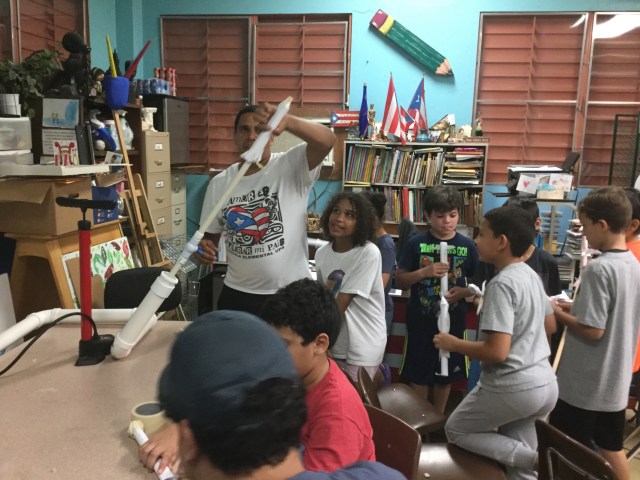
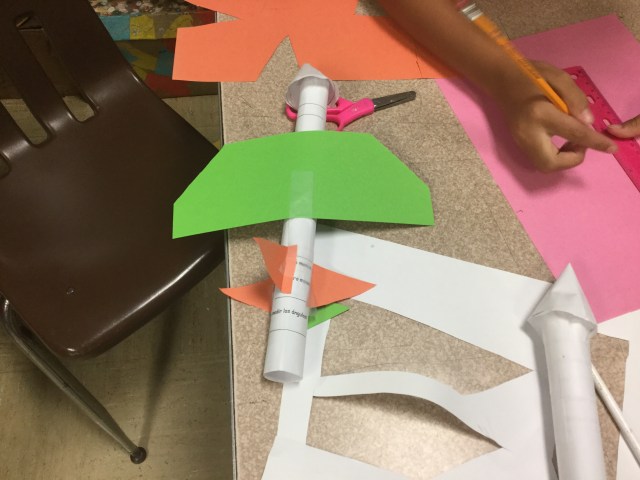
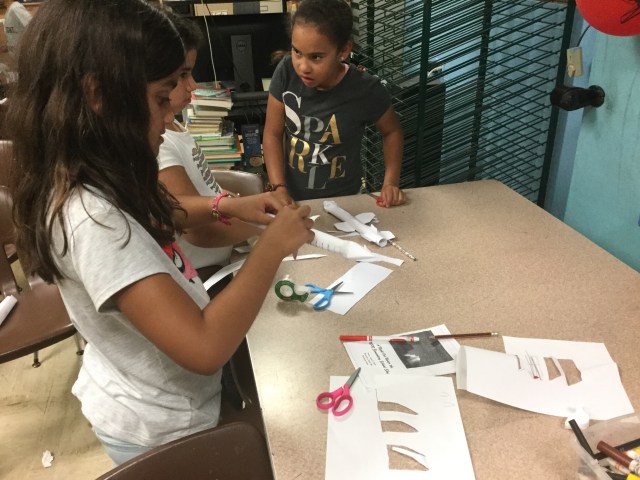
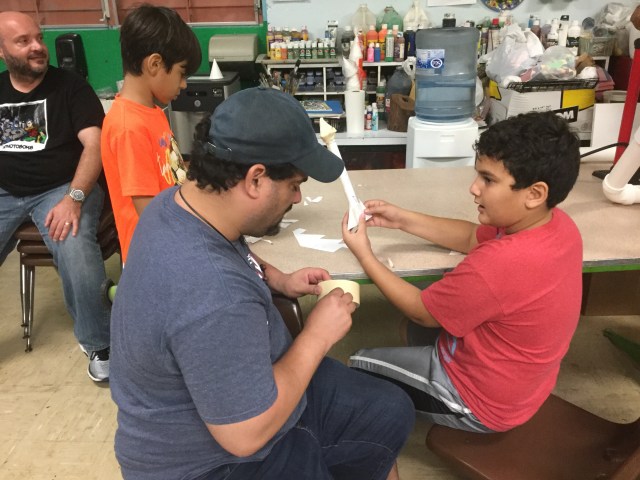
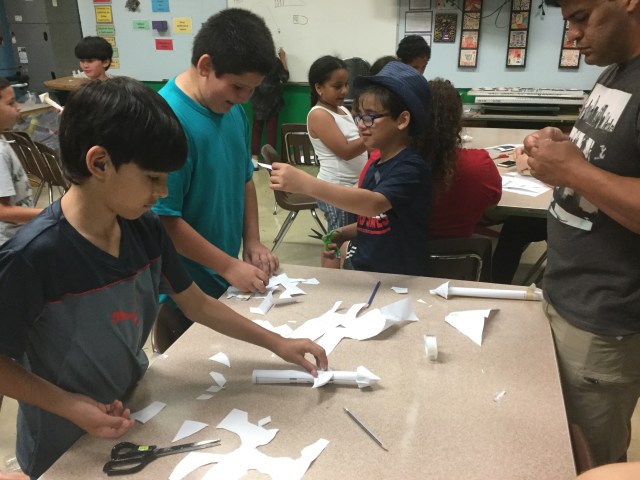
After the snack the maths activity started. The math activity was also related with the theme of the Universe: it was building a paper rocket calculating the measures and then throw it with air propulsion and measuring how far away it went. Some parents helped with the process of building the paper rockets. Both students and parents really enjoyed this activity. This activity took so long and they enjoyed it so much that the English activity and the Language Arts activity were cancelled. Here are a video and pictures of this activity:

It was about 11:30 when this activity ended. The teachers expected that the student would be tired at this point, but they were not yet! So, we sang happy birthday to one of the students:

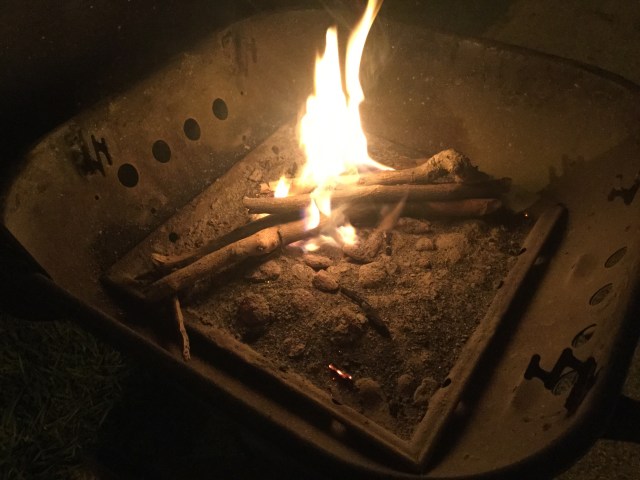
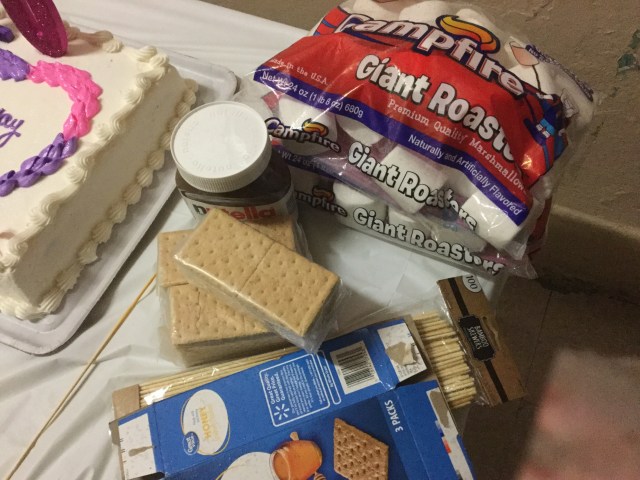
After singing Happy Birthday and eating cake, we made a campfire with marshmallows, honey crackers and Nutella:

After the campfire the students went to the bathrooms to put their pajamas on without any of the teachers telling them so. The parents and the teachers smiled: they were finally tired, or so we thought, so we began organizing for going to sleep. The tents were distributed: some for girls, some for boys. Parents and teachers were distributed too in such way that no tent would be unsupervised.

We discovered too late that giving this kids cake, marshmallows and Nutella before going to bed was a really unpractical idea. Soon the kids began running around and playing along themselves, switching between tents. It was an ordered chaos. Literally.

At 1:00 am we needed some discipline to help them going to sleep. We forbid being out the tent, tent switching, cell phones, tablets and flash lights. Even with those measures, most of them still were talking and laughing at 2:30 am. Teachers put on their pajamas at 3:00 am and many kids still were making chatting and laughing noises inside their tents.

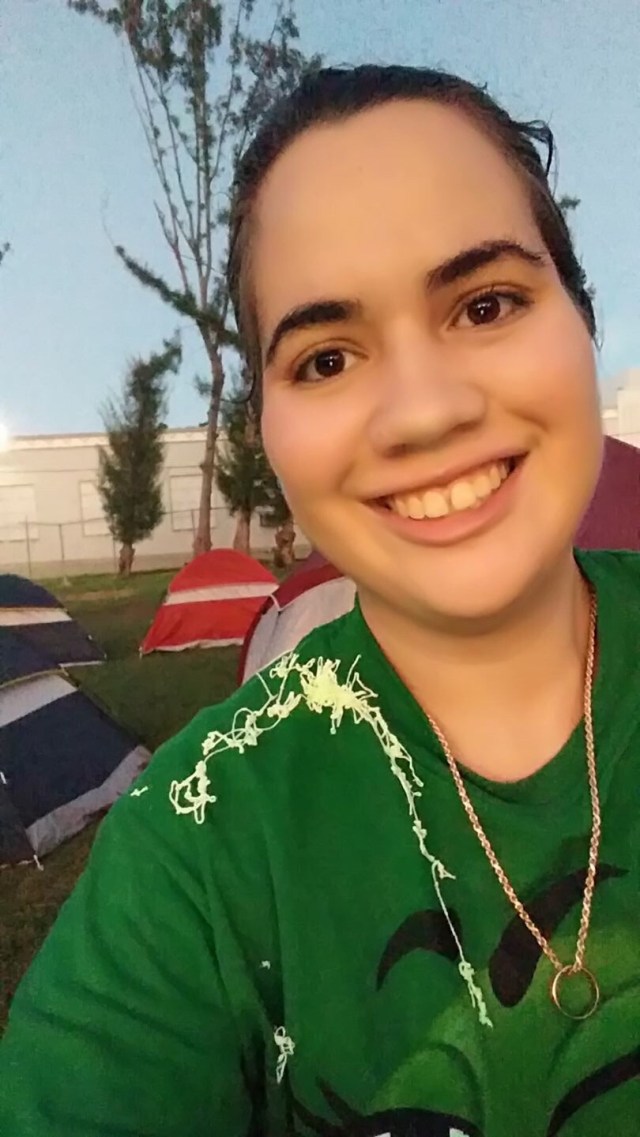
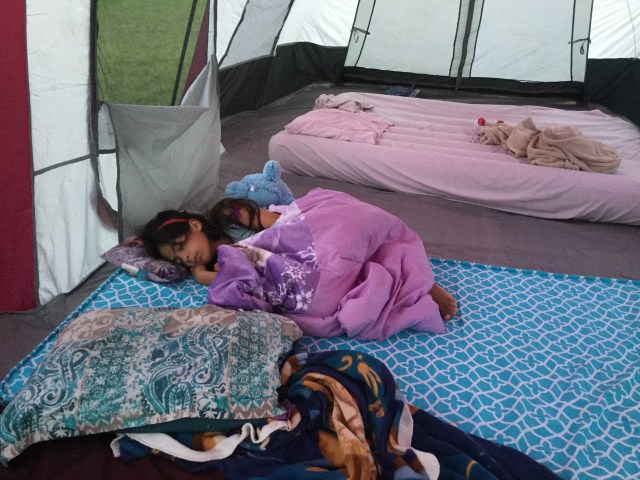
At 3:30 some students complained that they could not sleep, so they were allowed to go out and play silently so the ones that were sleeping in the tents could keep sleeping without being interrupted. Because there were students without sleeping, there were also teachers and parents that would not sleep to supervise them. Of the three teachers that spend the whole night camping with the students, I was the only lucky one who slept something: from around 3:30 am to 6:00 am. I was allowed to sleep because after the school camping I had to go to class at the University, I have a class on Saturdays from 9:00 am to 1:00 pm, and after that class I need to drive home for fifty minutes, so I needed some minimum rest in order to be able to go to class later and drive in the afternoon. The other teachers would go home to sleep immediately after the camping was over. Actually, I was supposed to sleep until 7:30 am, but one of the students felt funny enough to enter to my tent spray me a green substance, so I woke up, to stop him from waking up the three sleeping girls that were in my tent. Here you can see a selfie with the thing they threw inside the tent:

At 7:00 am almost everyone was in their way to the bathrooms, although two kids insisted in keep sleeping:

At 7:30 there were many playing around:

The breakfast began at 7:30. We had scrambled eggs, cereals, oatmeal, donuts, muffins, bread, coffee and juices:

I needed to confiscate this to a student because they were doing a mess with it:

At 8:00 the parents that did not slept at the school began to arrive and the kids began to leave. At 8:30 the three teachers left everything cleaned and organized and closed the school without any student being left inside.

It is true that I am tired, all the teachers and parents that slept at the school were very tired, but we all think that this kind of activities are very important for the personal and academic well being of our kids, so it is worthy. Everyone had a blast in our ordered chaos!

Let’s keep growing!

Field Day

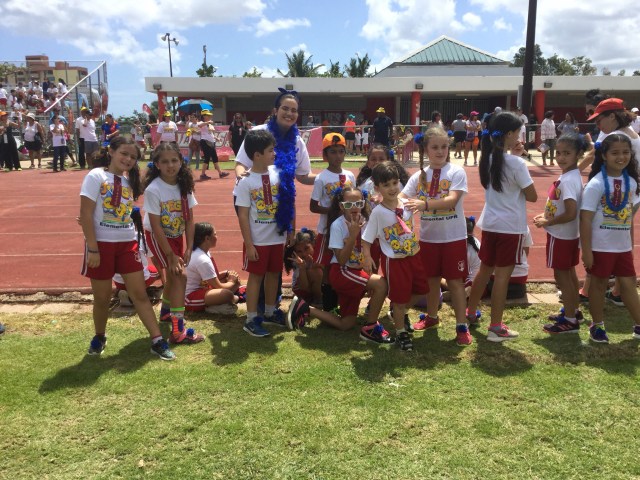
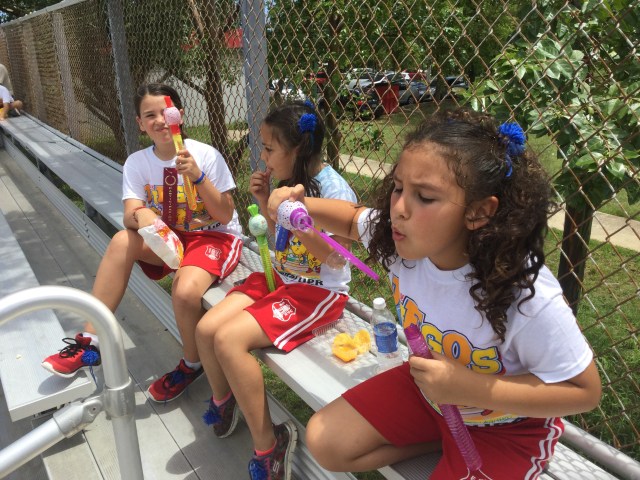
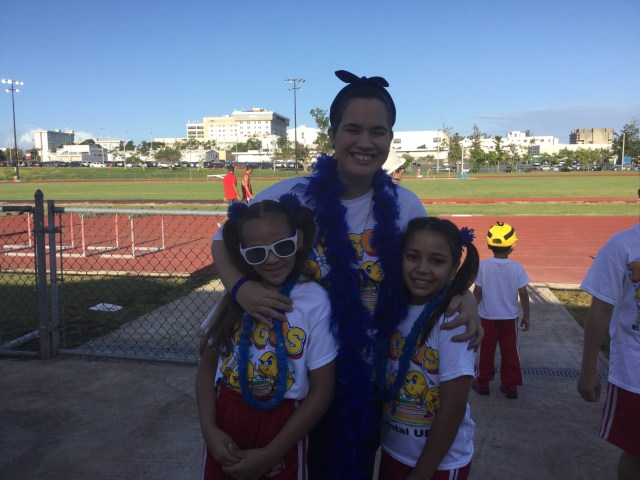
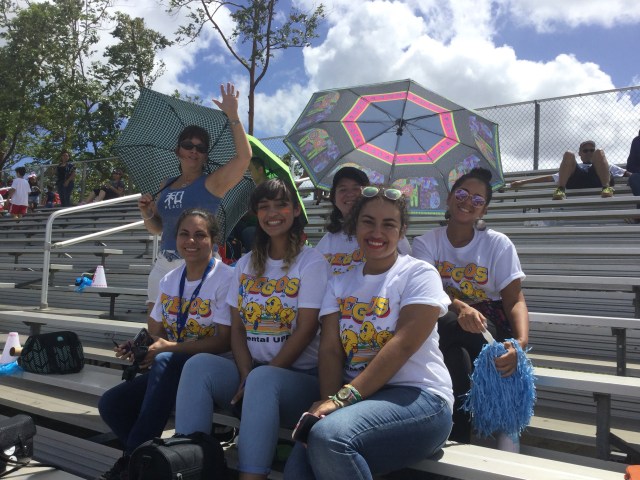
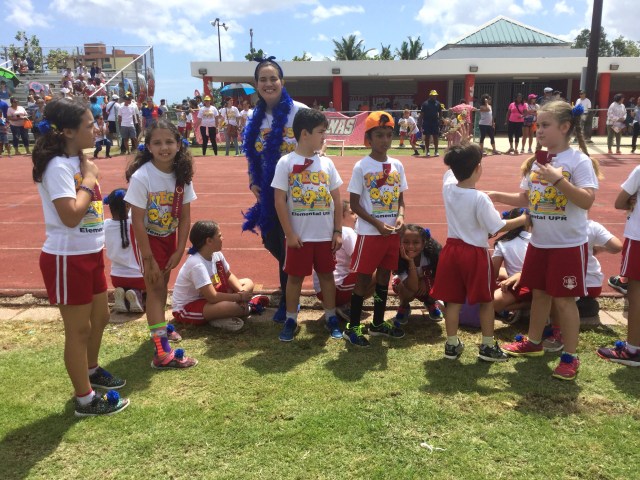
Today was the school’s field day. We really enjoyed it! The kids played a lot and they had a lot of supervision too. The theme of third graders was Jumanji. Here are the videos and pictures of today’s games:

Today’s Adventure

The first thing I did yesterday at the school was correcting my student’s tests. In general, they did amazingly well, I even had several perfect scores. While correcting them I discovered that three students did a part wrong simply because they did not understand the instructions correctly. In the way they did it, their answers were correct, but in the way that the part was supposed to be done, their answers were incorrect. What I should do? After consulting it with my mentor teacher, I went to the third grade classroom in the morning and asked the three students to come to the English classroom during their lunch break to complete that part of the test again. When the break time came, I waited them patiently during thirty minutes. When I realized that they weren’t coming by their own, I went looking for them in the school playground. I found the three students in the library: they totally forgot that I asked them to come to my classroom during their lunch break! They made the test part again, but this time they followed the correct instructions. The three students did the test part almost completely correct!

When those students completed their tests, I could finally grade all the tests. I did it, and I wrote the test results in an excel table that I use as a grade book (I don’t have a physical grade book, all my grades are supposed to be kept digitally).

At the class time I discussed the test. My mentor teacher have an amazing and very practical protocol for doing this in order and avoiding the loss of any test during the discussion, what is important to me because years ago, when I worked as teacher (before studying to be a certified teacher), I accidentally lost a test and I had an awful time due that. How is my mentor teacher’s test discussion protocol? First, the teacher remembers the students that their grades are private and they are only supposed to share them with their parents or guardians. My mentor teacher explained me that I must do that because in third grade they are still learning to take tests and they constantly forget that their grades are private. Then the teacher gave the students their test face down, in such a way that only the student that completed the test could see the test’s grade. After that the teacher discusses the test, asking the students why their answers were correct. It took me so long to discuss the test that I almost did not finish on time for doing the next steps! The next step after discussing the test is asking the students to sign the test in a space, a small circle, provided to them to write their initials after they discussed the test and are agree with the grade. That way there is evidence that they saw and discussed the corrected test. After that, they write their test score in their English notebooks, in a table glued in the end of each notebook. Then they are supposed to give the teacher (me) the tests back in alphabetical order to file them in a plastic document filing box where all their summative assessments are, but I had no time for doing this. Instead, I asked them to give me their tests in alphabetical order and I would file them after the class.

After they left the classroom I took the plastic document filing box and began to file each test in their respective file. Suddenly I realized that one test was missing. I freaked out first but began to think coldly almost immediately: where that test could be if I always had in my hands the folder where I placed all the tests when the students gave them? I thought in several possibilities. The first one, the easiest one, was that the student forgot to give me the test, so I went to ask her. She told me that she gave me the test, so I eliminated that possibility. The next thing I did was checking the working tables to see if there was a test in any of them. There was no test in anyone. Then I realized that I could have filed the lost test in the precedent file in alphabetical order (the students gave their tests in alphabetical order). I mean: if the last name of the student of the lost test begins with “B”, her test could be in the file of the student whose last name begins with “A”.  I checked the files of the last names that begin with A, and I found the lost test! The big difference between the time I lost a test years ago and yesterday is that yesterday I did not spent time feeling awful due losing a test. Yesterday I kept myself thinking were the test could be until I finally found it.

That’s why I did not write a blog post yesterday after my class, as I usually do: I was busy searching for that test.

I made several things for today. First, of course, the new lesson plan for reading and discussing It’s Hard to Be a Verb, by Julia Cook. I will be using that reading for discussing several topics. The first one of them, the one I am discussing in this lesson plan, is the cause and effect reading comprehension strategy. You can see the lesson plan here: It’s Hard To Be a Verb Reading Lesson Plan

Second, I made two handouts for today’s class: one for discussing the story elements and one for discussing the new vocabulary words. These are the pictures of those handouts: Story Elements.jpg

My Vocabulary Words.jpg

Finally, I made a poetry handout for a poetry recital that the students are going to have on April 25 to celebrate English week. The chosen poem for the recital is the one that I proposed, “The Voice,” by Shel Silverstein. They need a handout of the poem for memorizing it for the poetry recital. Here is the picture of that handout:

The Voice.jpg

About thirty minutes before my class the school (along one million of Puerto Ricans) had a power outage, so my lesson plan needed to change because I couldn’t use the Smart Board to show the You Tube read-aloud video. Instead of using a You Tube video for making the read-aloud, I practiced making the read-aloud myself. Two days ago I transcribed the whole story in a single Word document and printed a copy for each student for use them in case of any technological failure, like this one, that do not allowed me to use the You Tube read-aloud video that allows me to show the book pages to everyone at the same time. I practiced the read-aloud by hearing the You Tube read-aloud with my iPad (my iPad has cellular internet). I also practiced the wiggle dance of the story, so I could do it while reading the book to make my students laugh. At the end, giving the class without power made it more fun. I gave a printed document with the story to each student so they could follow the read-aloud, I showed them the images of the story as I read it, and we did the wiggle dance. Another student teacher was so kind she took pictures of me giving class today and sent them to my What’s App. These are the pictures of today’s adventure without power, as my mentor teacher called it:

April12A

April12B.jpg

April12C.jpg

Although I give class to the third grade, I usually work in the fourth-grade classroom because that is the English classroom. Tomorrow is the school’s field day, and the whole school is going to wear the same t-shirt but each group is going to wear accessories of a color. I was told, very seriously, that if I come tomorrow with the color of fourth grade and not with the color of third grade I would be considered a traitor. Oh my goodness, I can’t be considered a traitor of my own students, I told them. I asked them which is third-grade color, and I was told by them that their color is marine blue. Then I asked fourth graders (I will be with them tomorrow for an extracurricular activity after the field day) which is they color. They answered: marine blue. I raised an eyebrow: the two groups have the same color? I asked further among teachers and I was told that there are two competitions in the same field day: one for kindergarten to third grade, and one for fourth grade to sixth grade. That’s why both groups wear the same color: they are in different competitions. So, I told third graders, tomorrow I will be wearing something marine blue (I still didn’t know what at that moment) and I cannot be considered a traitor by anyone because both groups wear marine blue.

I was given the school field t-shirt today. My mentor teacher gave me it as a gift (he paid for it) and I am really thankful for that gesture. I don’t know if there is a competition for student teachers, I hope not, but I will be there for cheering my group of third graders. I will be with the fourth graders tomorrow in the afternoon, but I will write about that in one of the next posts.

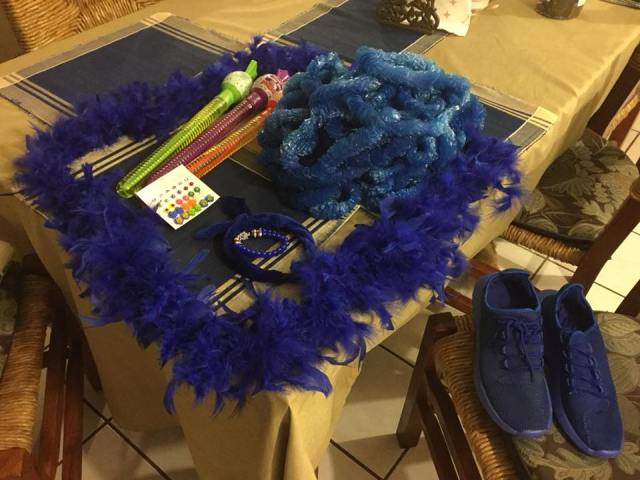
Due the power outage, I needed to take the bus until Bayamon because the urban train didn’t work. I took three very crowed buses to arrive there. Once in Bayamon, the bus left me in a small mall where things are very cheap. I managed to get a pair of tennis, earrings, a headband, a bracelet, a feather boa and some hula necklaces for my third graders (one per student), all in marine blue. I also found some giant bubbles to have fun. Here is the picture of everything I got today for under 40 dollars:

FieldDayAttire.jpg

Tomorrow will be an exciting day! Let’s keep growing!

The Voice

Today my students had a test. I talked with them during their snack break and they have studied the review and seemed prepared. They only asked me if the test had many “different adjectives” (they mean irregular comparative and superlative adjectives). I told them that each multiple selection had only one irregular adjective each. You can see the test here: Test 1.
At the time of the test, my mentor teacher helped me with learning how to give all the test’s instructions with clarity. All students were able to finish the test during class time. The first finished the test in about half the class time and the last student finished three minutes before the bell rang.

Today I also attended a meeting for planning English Week. We planned different activities: a picture bee, a verb bee, a debate… My third graders are going to have a poetry contest. I proposed for them a poem that is relatively short and that has a great message: The Voice, by Shel Silverstein. If you haven’t heard that poem before, here it is:

There is a voice inside of you
that whispers all day long,
‘I feel that this is right for me,
I know that this is wrong.’
No teacher, preacher, parent, friend
or wise man can decide
what’s right for you – just listen to
the voice that speaks inside.

I like this poem a lot because it talks about something we all must learn sooner or later, to listen our own consciences, and because it inspires a richer, deeper and more human learning environment. It can help my students to become better human beings, as I became a better person today by teaching them about resilience with a test!

Let’s keep growing!